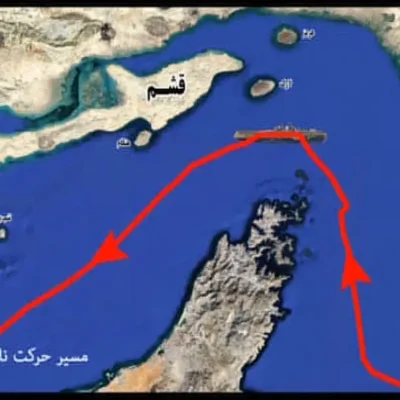

The strategic waterway of the Strait of Hormuz is one of the most important maritime chokepoints in the world. Nearly one-fifth of global oil trade passes through this narrow passage connecting the Persian Gulf with the Gulf of Oman and the Arabian Sea. Because of its strategic and economic significance, tensions in the region often attract international attention. In recent years, discussions have emerged about forming multinational naval coalitions to protect shipping routes in the region. However, many analysts believe that India is unlikely to participate in such a coalition.
One of the primary reasons for this cautious approach is India’s long-standing foreign policy principle of strategic autonomy. Since independence, India has generally avoided formally joining military alliances led by major powers. Even though it has strengthened strategic partnerships with several countries, including the United States, India prefers to maintain flexibility in its foreign policy decisions. Joining a multinational military coalition in a sensitive region like the Strait of Hormuz could be perceived as aligning too closely with one geopolitical bloc.
Another important factor is India’s delicate diplomatic relationship with countries in the Middle East. India maintains strong economic and political ties with multiple regional powers, including Iran, Saudi Arabia, and the United Arab Emirates. Participation in a coalition that might be viewed as targeting or pressuring Iran could complicate India’s relations with Tehran. This is significant because Iran has been an important partner for India in areas such as energy cooperation and regional connectivity projects like the Chabahar Port.
Energy security is another major concern. India is one of the world’s largest importers of crude oil, and a large portion of these imports travels through the Strait of Hormuz. Maintaining balanced relations with all countries in the region helps ensure uninterrupted energy supplies. If India were to join a military coalition perceived as hostile by any regional power, it could potentially threaten its energy interests.
India also prefers to safeguard its maritime interests through independent naval deployments rather than through formal coalitions. The Indian Navy regularly conducts patrols in the Arabian Sea and the Gulf region to protect Indian-flagged vessels and ensure the safety of sea lanes. These operations allow India to protect its trade routes while avoiding entanglement in larger geopolitical conflicts.
Additionally, domestic and strategic considerations play a role. India’s security priorities are largely focused on its immediate neighborhood and the Indo-Pacific region. Maritime initiatives such as the Indo-Pacific strategy and regional partnerships are often viewed as more relevant to India’s long-term strategic interests than involvement in conflicts in the Persian Gulf.
At the same time, India does support the principle of freedom of navigation and secure maritime trade routes. It frequently emphasizes the importance of international cooperation to maintain stability in global shipping lanes. However, this support does not necessarily translate into joining military alliances or coalitions.
Furthermore, India’s balanced diplomatic approach allows it to act as a neutral and credible partner for multiple countries in the region. By avoiding direct involvement in military coalitions, India preserves its ability to maintain constructive relations with both Western powers and Middle Eastern nations.
In conclusion, while the security of the Strait of Hormuz remains vital for global trade and energy supplies, India is likely to continue its cautious and independent approach. Rather than joining a multinational military coalition, India will probably focus on protecting its maritime interests through its own naval presence and diplomatic engagement with all stakeholders in the region. This strategy reflects India’s broader foreign policy goal of maintaining strategic autonomy while safeguarding its economic and security interests.