
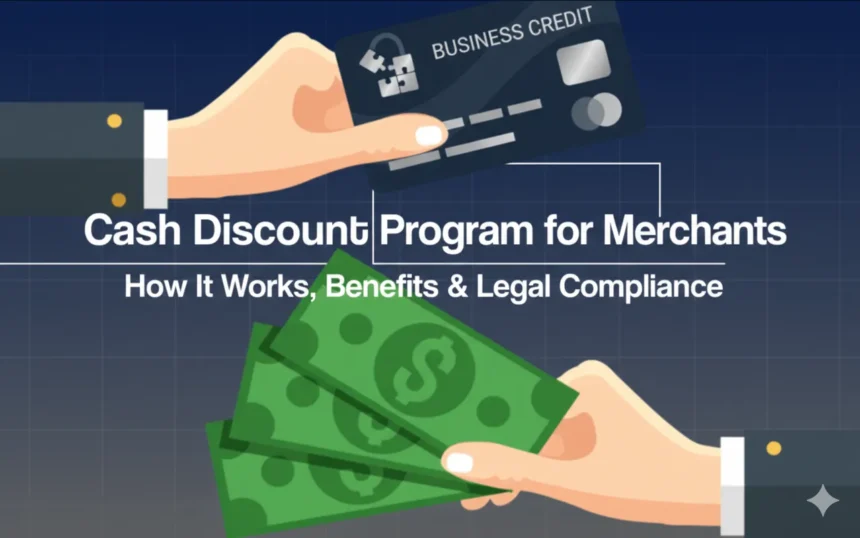

Credit card processing fees continue to cut into small business profits in 2026. With rising transaction costs and tighter margins, business owners are actively looking for smarter ways to manage expenses. A cash discount program has become one of the most effective and compliant solutions.
- What Is a Cash Discount Program?
- Why Businesses Are Switching to Cash Discount Programs in 2026
- How a Cash Discount Program Works
- Benefits of a Cash Discount Program
- Common Challenges and How to Solve Them
- Is a Cash Discount Program Legal in 2026?
- Cash Discount Program vs Surcharge Program
- Best Practices for Implementing a Cash Discount Program
- Who Should Use a Cash Discount Program?
- Final Thoughts
Instead of absorbing card fees, businesses can legally pass the cost to customers who choose to pay with cards, while offering a lower price for cash payments. This approach helps protect profit margins without increasing base prices across the board.
What Is a Cash Discount Program?
A cash discount program is a pricing strategy where businesses display two prices:
- A standard price (for card payments)
- A discounted price (for cash payments)
Customers who pay with cash receive a small discount, while card users cover the processing cost indirectly. This method is fully legal in the U.S. when implemented correctly and with proper signage.
Why Businesses Are Switching to Cash Discount Programs in 2026
1. Rising Payment Processing Costs
Credit card fees typically range between 2% to 4% per transaction. Over time, this adds up to thousands of dollars annually for small businesses.
2. Better Profit Margins
By shifting the processing cost to card users, businesses can retain more of their revenue without increasing prices.
3. Transparent Pricing
Customers clearly see the pricing difference, which builds trust and avoids hidden fees.
How a Cash Discount Program Works
- The listed price includes card processing costs
- A discount is applied at checkout for cash payments
- Proper signage informs customers of the pricing structure
- The POS system automatically adjusts pricing
This setup ensures compliance while keeping operations smooth and simple.
Benefits of a Cash Discount Program
Reduced Operational Costs
Businesses eliminate most credit card processing fees, improving overall profitability.
Increased Cash Flow
Cash payments provide immediate access to funds without waiting for settlement periods.
Competitive Advantage
Lower cash prices can attract price-sensitive customers.
Common Challenges and How to Solve Them
Customer Confusion
Solution: Use clear signage and train staff to explain pricing simply.
Compliance Concerns
Solution: Follow card network rules and state regulations carefully.
POS Integration Issues
Solution: Use modern systems designed for cash discount pricing.
Is a Cash Discount Program Legal in 2026?
Yes, cash discount programs are legal across most U.S. states when implemented properly. The key requirement is transparency. Businesses must clearly communicate pricing and avoid misleading customers.
Cash Discount Program vs Surcharge Program
| Feature | Cash Discount Program | Surcharge Program |
|---|---|---|
| Pricing Model | Discount for cash | Fee for card |
| Customer Perception | Positive | Often negative |
| Compliance Complexity | Moderate | Higher |
| Popularity in 2026 | Growing fast | More regulated |
Best Practices for Implementing a Cash Discount Program
- Use clear and visible signage
- Train employees to explain pricing confidently
- Choose a reliable POS system
- Keep pricing simple and consistent
- Monitor customer feedback and adjust if needed
Who Should Use a Cash Discount Program?
This strategy works best for:
- Retail stores
- Restaurants and cafes
- Service-based businesses
- Small and mid-sized merchants
If your business processes a high volume of card payments, this program can significantly reduce expenses.
Final Thoughts
A cash discount program is not just a trend in 2026—it’s a practical solution for businesses looking to stay profitable in a high-fee environment. When implemented correctly, it improves margins, maintains transparency, and gives customers flexible payment options.