

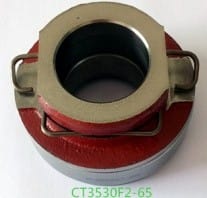

The manual transmission is a masterpiece of mechanical timing, and at the center of this system lies the clutch release bearing (also known as the throw-out bearing). This small but critical component is the bridge between your foot on the pedal and the power of the engine. At NMR Bearing, we understand that a drivetrain is only as reliable as its weakest link. That is why we engineer our release bearings to withstand the high-torque, high-heat environments of modern automotive and industrial applications.
- What is a Clutch Release Bearing?
- The Problem-Solution Framework: Identifying Failure
- 1. Unusual Noises When the Pedal is Pressed
- 2. Vibrations Through the Clutch Pedal
- 3. Difficulty Shifting or “Clutch Drag”
- Technical Specifications for Professionals
- Why Choose NMR Bearing for Your Drivetrain?
- Installation Best Practices
- Conclusion
What is a Clutch Release Bearing?
The clutch release bearing is a specialized thrust bearing located between the clutch fork and the pressure plate. When you press the clutch pedal, the bearing moves forward, pressing against the diaphragm spring of the pressure plate. This action temporarily disengages the engine from the transmission, allowing you to shift gears smoothly.
Because the bearing is stationary while the pressure plate spins at thousands of RPMs, it must be capable of handling extreme rotational speeds and axial loads simultaneously. At NMR Bearing, we ensure our components are up to this high-friction task.
The Problem-Solution Framework: Identifying Failure
As industry experts, we believe in a “problem-based” approach to maintenance. You don’t just replace a part; you solve a mechanical issue. Here are the primary “red flags” that your clutch release bearing is failing:
1. Unusual Noises When the Pedal is Pressed
The Problem: If you hear a chirping, squealing, or growling sound specifically when your foot is on the clutch pedal, the internal lubrication of the bearing has likely dried out or the ball bearings have begun to “pit.”
The Solution: An NMR Bearing replacement uses high-grade synthetic grease that maintains viscosity even at peak operating temperatures, ensuring silent operation for the life of the clutch.
2. Vibrations Through the Clutch Pedal
The Problem: When the bearing races become uneven, they can no longer apply uniform pressure to the diaphragm spring. This creates a pulsating sensation or “shudder” in your foot.
The Solution: Our bearings are manufactured to GCr15 chrome steel standards with precision-ground faces to ensure a perfectly flat contact surface, eliminating harmonic vibrations.
3. Difficulty Shifting or “Clutch Drag”
The Problem: A seized bearing may fail to fully depress the pressure plate, meaning the engine and transmission are never completely disconnected.
The Solution: By maintaining strict ABEC tolerances, NMR Bearing components provide the exact travel distance required for a crisp, clean gear change every time.
Technical Specifications for Professionals
For the expert buyer or fleet manager, the technical details are what matter most. NMR Bearing products are designed to outperform OEM specifications in three key areas:
Load Capacity: Our bearings feature a high-carbon steel cage that prevents the balls from bunching under the heavy axial load of heavy-duty pressure plates.
Sealing Technology: We use specialized rubber seals (2RS) that are heat-resistant up to 150°C, preventing the “spinning out” of lubricant which is common in low-quality alternatives.
Self-Aligning Features: Many of our modern release bearings include a self-centering mechanism. This allows the bearing to automatically align with the center of the pressure plate, reducing uneven wear and extending the life of the entire clutch kit.
Why Choose NMR Bearing for Your Drivetrain?
In the 2026 industrial market, sourcing from nmrbearing.com means choosing a partner with deep domain expertise in the automotive and bearing sectors. We don’t just supply a part; we supply an engineered solution.
Industrial Strength: Our bearings undergo V1/V2/V3 vibration testing to ensure they meet the quietest operating standards in the industry.
First-Time Fit: We provide extensive cross-referencing for major brands and OEM part numbers, ensuring that when the transmission is pulled, the replacement part fits perfectly.
Comprehensive Support: From the VKJP boot kits to the AH229175 agricultural bearings, our catalog is built on the same foundation of precision and durability.
Installation Best Practices
Replacing a clutch release bearing is a labor-intensive process that usually requires removing the entire transmission. To ensure the longevity of your NMR Bearing investment, follow these professional tips:
Lubricate the Input Shaft: Apply a very thin layer of high-temp grease to the shaft or “quill” that the bearing slides on. Too much grease will attract clutch dust and cause the bearing to stick.
Inspect the Pressure Plate: If the fingers of the pressure plate are worn or uneven, they will destroy a new bearing in weeks. Always inspect the contact points.
Never “Ride” the Clutch: Keeping your foot lightly on the pedal keeps the bearing in constant contact with the spinning pressure plate, leading to premature wear and heat failure.
Conclusion
The clutch release bearing is a small component with a massive responsibility. It must be tough enough to handle thousands of pounds of pressure, yet precise enough to spin at 6,000 RPM without a sound. At NMR Bearing, we take that responsibility seriously.
By focusing on high-grade materials, precision engineering, and real-world “problem-solution” feedback, we have established nmrbearing.com as the go-to resource for both expert mechanics and new buyers. Don’t let a noisy bearing turn into a snapped clutch fork or a damaged transmission. Choose the reliability and technical excellence of NMR Bearing for your next service.