
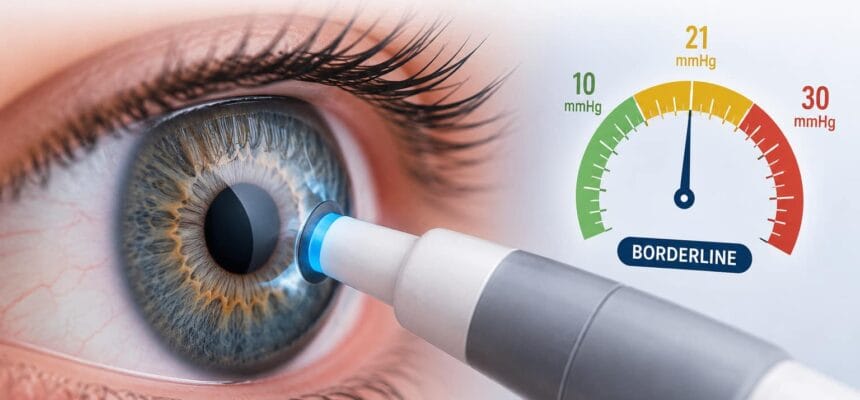

Summary: Eye pressure can fluctuate normally, but chronic changes or high pressure are indicative of danger. To prevent such complications as glaucoma, borderline intraocular pressure must be closely monitored. Regular check-ups and professional evaluation by a Private Ophthalmologist in Berlin can help in the early identification of changes, and therefore proper treatment and lifelong care of eye health.
Intraocular pressure (IOP) is one of the many sensitive mechanisms that help ensure the eye’s good health. However, similar to most body functions eye pressure does not remain the same. It fluctuates throughout the day, and the symptoms are not always noticeable.
But at what point does this natural variability push over the edge to something that needs to be noticed?
Borderline Intraocular Pressure: What Is It?
When the readings of IOP are close to the upper limit of the normal range, which is 20-21 mmHg, but there are no clear indicators of glaucoma, it is referred to as a borderline intraocular pressure. This can not necessarily be a sign of disease but this is a grey area that should be closely monitored.
Borderline-level patients usually have no symptoms, so regular eye check-ups are necessary. The issue is not in one reading, but in trends; it is possible that constant high levels or a great variation over time may result in the probability of optic nerve damage.
What is the Importance of Fluctuating Eye Pressures?
The changes in eye pressure are not necessarily dangerous. Nonetheless, it is the size and the rate of these changes that define their clinical relevance.
1. Effect on The Optic Nerve
The optic nerve is very sensitive to pressure variations. The presence of repeated spikes, even in the borderline ranges, could lead to the progressive destruction over time.
2. Risk of Glaucoma
It is believed that glaucoma is related to a high IOP, but it may also occur in patients with variable or near-normal levels. This is why regular checkups are very important especially when one has a history of the condition within a family.
3. Hidden Progression
The silent progression of eye pressure related conditions is one of the challenges. Loss of vision when it happens is normally slow and permanent. The best defense is early detection.
When to Worry?
Not all fluctuations need to be intervened. Nonetheless, there are some trends that may lead to a professional assessment:
- Repeated readings that is higher than usual.
- Considerable discrepancies in measurements at various time of the day.
- Family history of glaucoma.
- Changes in vision, e.g., blurred or narrowed peripheral vision.
When any of these factors is involved, then a full eye check is not just a routine check, but it is a preventive check.
The Function of Advanced Eye Tests
Contemporary ophthalmology focuses on accuracy in diagnosis to measure eye pressure patterns and general eye condition. An extensive evaluation might involve:
- Tonometry to determine the intraocular pressure.
- Optic nerve imaging to identify early structural changes.
- Visual field test to identify functional visual loss.
Such assessments give the full image and the specialists are able to differentiate between the harmless changes and the initial indicators of the disease.
Controlling Borderline and Fluctuating Eye Pressure
In people with nearly intraocular pressure, treatment is usually preventive and not reactive. It is aimed at prevention as well as monitoring.
Some lifestyle changes can be used to stabilize eye pressure:
- Eating a balanced diet with lots of antioxidants.
- Staying physically active
- Managing stress levels
- Not consuming a lot of caffeine.
- Regular Monitoring
Regular eye examinations will help to monitor any developmental changes early. Following trends in pressure throughout time is much more informative than taking a single reading.
Professional Guidance
A visit to a private ophthalmologist in Berlin provides the opportunity to receive an individual approach, sophisticated diagnostic methods, and a personalized monitoring strategy. The borderline range should be given special attention in terms of professional supervision, where even minute alterations may have long-term consequences.
The Importance of Early Attention
The health of the eyes tends to take a rather silent course, problems emerge slowly, without any alarming symptoms. This is especially so in pressure related conditions. Symptoms might have changed a lot before they occur.
By dealing with fluctuations at an early stage, it is possible to:
- Timely intervention
- Less risk of nerve impairment of the eye (optic nerve).
- Maintaining long-term vision.
Instead of regarding variability of eye pressure as an independent measure, it is best to see it as a component of a larger clinical image.
A Balanced Perspective
Elevation and depression of eye pressure should be approached with mindfulness and objectivity. Not all variations imply a threat, but it is not that the regular changes can be disregarded. It is all a matter of informed observation and professional evaluation.
For many people, the changes do not exceed a safe margin and do not necessitate anything beyond regular observation. In others, especially those who have borderline intraocular pressure, they can act as an early warning, and then preventive efforts can be initiated to safeguard vision in the long term.
FAQs
1. Is a daytime change in eye pressure normal?
Yes, the intraocular pressure varies according to biological rhythms, activity levels and so forth. Even slight differences are not dangerous.
2. What is thought of as borderline intraocular pressure?
Borderline intraocular pressure is considered a value that is close to the upper normal limit of approximately 20-21mmHg and does not show any obvious indicators of glaucoma.
3. Does the changing eye pressure cause glaucoma?
The risk can be higher with frequent or significant changes, particularly when other risk factors are present, such as family history.
4. Does it have symptoms of elevated or variable eye pressure?
The majority of the population does not show any symptoms, so eye check-ups are crucial to detect the disease at an early stage.
5. Who should I see a specialist?
In case of high readings regularly, when you can see clearly, and when your family has a history of eye disease, it will be advisable to visit a private ophthalmologist in Berlin.