

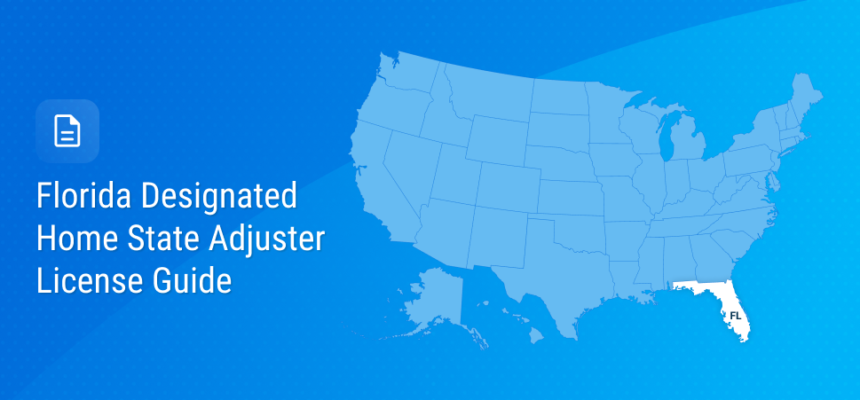
In the United States insurance industry, adjuster licensing is a core requirement for handling claims legally across different states. However, not all states issue adjuster licenses, which creates a compliance gap for professionals who want to operate beyond their resident state.The Florida Designated Home State (DHS) adjuster license provides a structured pathway to address this issue. It allows individuals from non-licensing states to designate Florida as their licensing authority and build a compliant multi-state licensing framework.In modern insurance operations, this model is widely used by insurance agencies, carriers, and MGAs to ensure regulatory compliance while scaling across jurisdictions.
- What Is a Florida DHS Adjuster License?
- Who Needs a DHS Adjuster License?
- Why Florida Is Commonly Chosen
- Licensing Requirements and Eligibility
- Continuing Education and Renewal Requirements
- Step-by-Step Licensing Workflow
- Multi-State Compliance Challenges
- Role of Agenzee in Licensing and Compliance
- Why Compliance Management Is Critical
- Best Practices for Insurance Organizations
- Supporting Scalable Insurance Operations
- Conclusion
What Is a Florida DHS Adjuster License?
A designated home state adjuster license is a non-resident licensing option designed for individuals who cannot obtain a resident adjuster license in their home state.In this model, Florida acts as the regulatory “home base.” This enables adjusters to meet licensing requirements and apply for additional non-resident licenses in other states through A DHS license functions as a compliance foundation. Without it, adjusters in non-licensing states may not be able to legally work in states that require licensing.
Who Needs a DHS Adjuster License?
The Florida DHS license is intended for specific categories of insurance professionals:
- Adjusters living in states that do not issue licenses
- Company adjusters in states that only license independent adjusters
- Professionals expanding into multi-state claims handling
According to industry guidelines, this license allows such individuals to establish a valid home state license, which is often required to obtain additional state licenses.
Why Florida Is Commonly Chosen
Florida is one of the most preferred designated home states due to its strong regulatory framework and widespread reciprocity.
Key advantages include:
- Reciprocity with more than 30 states
- Streamlined online application systems
- Faster licensing timelines
- Well-recognized compliance standards
These benefits make Florida a strategic choice for insurance professionals aiming to expand operations across multiple states.
Licensing Requirements and Eligibility
Insurance compliance requires meeting specific regulatory conditions. For a Florida DHS adjuster license, the requirements typically include:
- Minimum age of 18 years
- Completion of required application through NIPR
- Passing the Florida All-Lines Adjuster exam or holding an approved designation
- Fingerprinting and background verification (if required)
Florida regulations also require license holders to meet competency standards and demonstrate knowledge of insurance laws.
In some cases, applicants can bypass the exam by completing approved certification programs.
Continuing Education and Renewal Requirements
Maintaining a DHS license involves ongoing compliance obligations.
Florida requires:
- 24 hours of continuing education every two years
- Timely license renewal
- Accurate record maintenance
These requirements ensure that adjusters remain updated with regulatory changes and industry practices.Failure to meet continuing education requirements can result in license suspension or compliance violations.
Step-by-Step Licensing Workflow
In modern insurance operations, licensing follows a structured workflow to ensure compliance:
- Verify eligibility based on resident state
- Complete pre-licensing education or certification
- Apply through NIPR
- Submit fingerprints and required documents
- Pass examination (if applicable)
- Receive license approval
- Track renewals and compliance status
This workflow is critical for maintaining regulatory alignment across jurisdictions.
Multi-State Compliance Challenges
Managing licensing across multiple states introduces operational complexity.
Common challenges include:
- Tracking multiple licenses and expiration dates
- Managing continuing education requirements
- Ensuring compliance with different state regulations
- Avoiding gaps in licensing
Even a small lapse in compliance can result in penalties, delays in claims processing, or reputational damage.
Role of Agenzee in Licensing and Compliance
Many insurance organizations rely on platforms like Agenzee to manage licensing efficiently.
Agenzee functions as:
- Insurance compliance software
- Producer licensing management system
- Appointment tracking platform
- Insurance automation solution
It helps agencies, carriers, and MGAs:
- Centralize license tracking
- Automate renewal reminders
- Manage producer and adjuster records
- Maintain compliance visibility across states
In regulated environments, automation reduces manual errors and improves operational efficiency.
Why Compliance Management Is Critical
Insurance compliance is not optional—it directly impacts business operations.
Failure to maintain proper licensing can lead to:
- Regulatory penalties
- Claims processing delays
- Loss of operational authorization
- Increased audit risks
Insurance organizations must ensure that every adjuster is properly licensed before handling claims in any jurisdiction.Simplify your insurance compliance, license tracking, and automation with a centralized platform:https://agenzee.com/
Best Practices for Insurance Organizations
Industry best practices recommend:
- Centralizing licensing and compliance data
- Using automated systems for tracking and alerts
- Conducting periodic compliance audits
- Integrating licensing with producer management workflows
These strategies help reduce risk and improve efficiency in multi-state insurance operations.
Supporting Scalable Insurance Operations
As insurance organizations expand, compliance complexity increases.Florida DHS licensing provides a scalable foundation for multi-state operations, while compliance platforms ensure that licensing requirements are consistently met.Agencies and carriers must combine licensing strategies with automation to maintain operational efficiency and regulatory accuracy.
Conclusion
The Florida designated home state adjuster license is a critical component of modern insurance compliance. It provides a structured pathway for professionals in non-licensing states to operate across multiple jurisdictions while meeting regulatory requirements.However, maintaining compliance requires more than obtaining a license. It involves continuous tracking, structured workflows, and reliable systems.To understand the complete licensing process and compliance requirements, refer to this detailed guide:https://agenzee.com/florida-designated-home-state-adjuster-license-what-you-need-to-know/