


Introduction: Why Modern Manufacturing Needs a Smarter System
ERP manufacturing systems are changing how factories and other businesses that make things work, and the results are clear. Things are different in manufacturing now than they were 20 years ago. There are more links in the supply chain. Customer needs change more quickly. And the price of making a mistake keeps going up.
- Introduction: Why Modern Manufacturing Needs a Smarter System
- Section 1: Common Challenges Manufacturers Face Every Day
- Section 2: How ERP Manufacturing Systems Work
- Section 3: Improving Production Efficiency With ERP
- Section 4: Cost Reduction Through ERP Manufacturing Systems
- Section 5: Business Benefits Beyond Efficiency and Cost
- Section 6: Is ERP Right for Your Manufacturing Business?
- Conclusion: ERP Manufacturing Systems Are a Long-Term Business Investment
Most manufacturers still have to deal with data that is spread out over spreadsheets, old software, and departments that don’t talk to each other. One group doesn’t know what the other is up to. Production goes down. Costs go up. This is where ERP manufacturing systems come in. They connect everything, including production, inventory, procurement, finance, and people, into one system. What happened? A leaner operation, quicker decisions, and fewer mistakes.
Section 1: Common Challenges Manufacturers Face Every Day
Before you understand the solution, it helps to know the real problems on the floor.
Production Delays
A machine goes down. A part is out of stock. A shipment arrives late. Any one of these can stall an entire production line. When teams work in disconnected systems, nobody sees the problem coming until it’s already too late.
Production delays don’t just hurt delivery timelines, they damage customer trust and eat into profit margins.
Inventory Inefficiencies
Too much inventory ties up cash. Too little causes stockouts. Most manufacturers struggle to find the balance because they don’t have real-time visibility into what they have, where it is, and how fast it’s moving.
Manual counts and outdated records make things worse. Errors pile up. Waste increases. And the true cost of poor inventory management often goes unnoticed until it shows up in the financial reports.
Lack of Real-Time Visibility
Management makes decisions based on data. But if that data is a week old, or sitting in a spreadsheet no one has updated, those decisions are built on guesswork.
Without live visibility into production status, inventory levels, and supplier performance, manufacturers simply cannot respond fast enough to change.
Section 2: How ERP Manufacturing Systems Work
An ERP (Enterprise Resource Planning) system for manufacturing is a centralized software platform. It connects every department and function of the business through a single database.
Here’s a simple breakdown of how it works:
| Function | What ERP Does |
|---|---|
| Production Planning | Schedules jobs, assigns resources, tracks progress |
| Inventory Management | Monitors stock levels in real time |
| Procurement | Automates purchase orders and supplier communication |
| Finance | Tracks costs, budgets, and margins across production |
| Quality Control | Logs inspections and flags defects early |
| HR & Workforce | Manages shifts, skills, and labor costs |
Centralized Data Management
ERP manufacturing systems eliminate data silos. Every department, production, purchasing, HR, finance, feeds data into and pulls data from the same source.
When the purchasing team places an order, the production scheduler sees it instantly. When a machine operator marks a job complete, the inventory manager sees it right away. Everyone operates on the same truth.
Production Planning and Scheduling
ERP systems give production managers a full picture of capacity, materials, and timelines. They can plan jobs weeks in advance, spot potential conflicts before they happen, and adjust schedules dynamically.
This means fewer surprises on the shop floor and more predictable output.
Inventory and Procurement Integration
ERP manufacturing systems connect inventory data directly to procurement workflows. When stock drops below a set threshold, the system can automatically trigger a purchase order. Suppliers receive requests faster. Lead times shrink. Stockouts become rare.
Section 3: Improving Production Efficiency With ERP
Efficiency isn’t just about working harder, it’s about working with better information.
Real-Time Monitoring of Operations
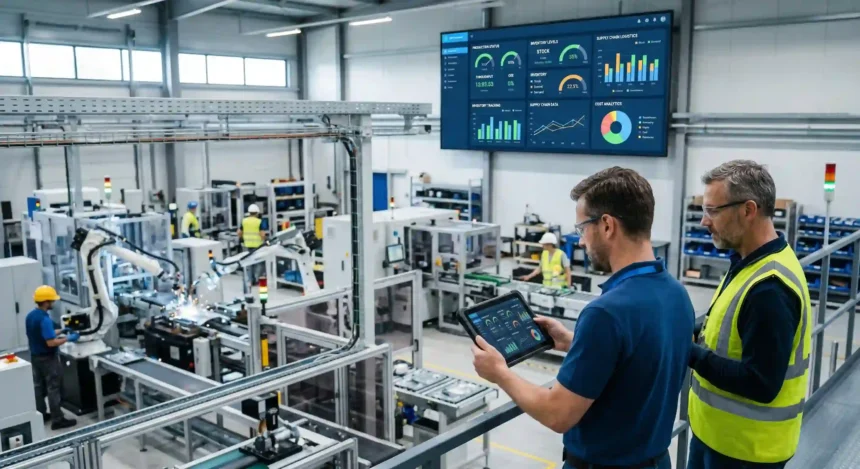
ERP manufacturing systems give managers a live view of every production stage. You can see which jobs are on track, which machines are running, and where bottlenecks are forming, all from a single dashboard.
This visibility is powerful. It moves decision-making from reactive to proactive. Instead of finding out about a delay after it happens, managers can spot warning signs early and act before things go sideways.
Reducing Downtime
Unplanned downtime is one of the biggest efficiency killers in manufacturing. According to industry research, unplanned downtime costs manufacturers an estimated $50 billion per year globally.
ERP systems address this by enabling preventive maintenance scheduling. They track machine usage, log maintenance history, and alert technicians before a breakdown occurs. The result: fewer surprise shutdowns and longer equipment life.
Optimizing Resource Allocation
ERP manufacturing systems show managers exactly where labor, materials, and machines are being used. When a resource is underutilized, the system flags it. When demand spikes, the system helps reallocate capacity quickly.
This kind of dynamic resource management reduces idle time and keeps production running at full potential.
Section 4: Cost Reduction Through ERP Manufacturing Systems
Improving efficiency and cutting costs go hand in hand. Here’s where ERP manufacturing systems directly impact the bottom line.
Lower Inventory Carrying Costs
Carrying too much stock is expensive. Warehouse space costs money. So does insurance, spoilage, and the capital tied up in unsold goods.
ERP manufacturing systems use demand data and production schedules to optimize inventory levels. Businesses hold just what they need, no more. This alone can reduce inventory carrying costs by 20–30% for many manufacturers.
Better Demand Forecasting
ERP systems pull historical sales data, current order books, and market trends together. They generate demand forecasts that help production teams plan ahead with confidence.
When you know what customers will likely need next month, you can prepare materials and labor without overspending. Forecasting accuracy improves. Waste goes down. Margins go up.
Reduced Waste and Overproduction
Overproduction is a silent profit killer. When manufacturers make more than they can sell, they absorb the cost of materials, labor, and storage, often without recovering it.
ERP manufacturing systems align production output with actual demand. They also track material usage at every step, helping teams identify where waste occurs and fix it quickly.
| Cost Area | Without ERP | With ERP |
|---|---|---|
| Inventory Carrying Cost | High (excess stock) | Optimized (lean inventory) |
| Waste & Overproduction | Frequent | Reduced significantly |
| Downtime Losses | Unpredictable | Minimized via maintenance alerts |
| Procurement Errors | Common | Automated and accurate |
| Labor Efficiency | Reactive scheduling | Planned and optimized |
Section 5: Business Benefits Beyond Efficiency and Cost
ERP manufacturing systems deliver benefits that go beyond the production floor.
Increased Profitability
Lower costs plus higher output equals better margins. It’s straightforward math, but ERP makes it achievable consistently.
When every part of the business runs on accurate, real-time data, small gains in efficiency compound over time. Manufacturers that implement ERP systems report an average 15–20% improvement in operational efficiency within the first two years.
Better Supply Chain Management
ERP manufacturing systems give businesses full visibility into their supplier network. Managers can track order status, monitor lead times, and identify suppliers that consistently underperform.
This visibility strengthens supplier relationships and makes the entire supply chain more predictable. When disruptions happen, and they will, businesses with ERP can respond faster and with more control.
Faster Decision-Making
Speed matters in manufacturing. Markets shift. Customer orders change. Raw material prices fluctuate.
ERP manufacturing systems put accurate data in front of decision-makers immediately. No waiting for a report. No digging through spreadsheets. Just clear, current information, available whenever it’s needed.
A finance manager can check production costs in real time. A sales manager can confirm delivery timelines instantly. A plant manager can track output without walking the floor.
This speed of information translates directly into speed of action.
Section 6: Is ERP Right for Your Manufacturing Business?
ERP manufacturing systems are not just for large enterprises. Mid-sized and even small manufacturers benefit significantly, especially those dealing with:
- Multiple product lines or SKUs
- Complex production schedules
- Growing supplier networks
- Regulatory compliance requirements
- Rising material and labor costs
If any of these describe your business, an ERP system is worth serious consideration.
What to Look for in an ERP System for Manufacturing
Not all ERP platforms are built the same. Here’s what matters most for manufacturers:
- Real-time production tracking : You need live data, not end-of-day reports
- Inventory and procurement integration : These two must work together seamlessly
- Demand forecasting tools : Built-in analytics make planning easier
- Scalability : The system should grow as your business grows
- Industry-specific features : Manufacturing ERP differs from retail or service ERP
- User-friendly interface : Adoption depends on how easy it is to use
- Strong implementation support : The go-live phase is critical
Conclusion: ERP Manufacturing Systems Are a Long-Term Business Investment
Manufacturing businesses that run on disconnected systems will always face the same problems, delays, waste, poor visibility, and rising costs. These problems don’t go away on their own. They compound.
ERP manufacturing systems solve these problems at the root. They centralize data, connect departments, automate routine tasks, and put accurate information in front of the people who need it. The result is a more efficient, more profitable, and more competitive manufacturing operation.
This isn’t just software. It’s a foundation for sustainable growth.
If you’re ready to take the next step, explore ERP for Manufacturing Industry, a purpose-built solution designed to meet the real demands of modern production businesses.
And if you want to see how it works in practice, Intersoft ERP offers manufacturing-focused ERP solutions that help businesses cut costs, improve output, and build stronger supply chains, without unnecessary complexity.
The right system makes all the difference. Now is a good time to find yours.