

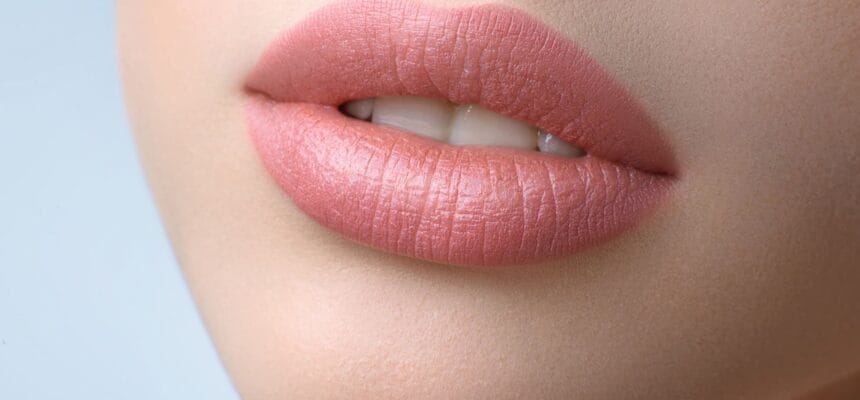

Lip fillers have evolved into one of the most sought-after aesthetic enhancements for those looking to refine their facial symmetry and boost confidence. Unlike the dramatic trends of the past, the modern approach focuses on subtle enhancement and anatomical harmony.
By utilizing advanced dermal fillers, practitioners can sculpt the lips to look fuller while maintaining a soft, believable texture. For individuals seeking Lip Fillers Injection in Abu Dhabi, understanding the science behind the procedure and the artistic approach required for natural volume is essential for achieving the best results.
Modern Aesthetics: Focuses on subtle refinement rather than over-exaggeration.
Anatomical Harmony: Ensures the enhancement fits the individual’s unique facial structure.
Natural Texture: Modern fillers aim to mimic the feel of natural lip tissue.
Patient Education: Understanding the process leads to more realistic expectations.
The Evolution of Lip Enhancement Techniques
The journey of lip augmentation has transitioned from permanent, often rigid materials to temporary, biocompatible gels. In the early days, the goal was often “more is better,” leading to results that didn’t always move naturally with the face. Today, the philosophy has shifted toward “rejuvenation and restoration.”
High-quality fillers now allow for a tiered approach where volume is added gradually. This prevents the “puffy” look and allows the filler to integrate seamlessly with the underlying muscle and fat pads of the lips.
Material Shift: Moving from permanent implants to safe, dissolvable fillers.
Philosophy Change: Prioritizing rejuvenation over simple enlargement.
Tiered Approach: Adding volume in stages for better integration.
Natural Movement: Fillers are designed to flex and move with facial expressions.
Understanding the Role of Hyaluronic Acid
The cornerstone of natural-looking volume is Hyaluronic Acid (HA). HA is a naturally occurring sugar molecule found in the human body, specifically in the skin and connective tissues. Its primary function is to retain moisture, capable of holding up to 1,000 times its weight in water.
When used as a filler, HA provides a dual benefit: it adds physical structure immediately and provides deep hydration to the lip tissue. This hydration is what gives the lips a healthy, youthful “glow” and a soft-to-the-touch feel that synthetic materials cannot replicate.
Biocompatibility: HA is naturally found in the body, minimizing the chance of rejection.
Moisture Retention: Draws water into the lips for a hydrated appearance.
Structural Support: Provides a scaffold for the lip shape.
Soft Texture: Ensures the lips remain pliable and soft.
The Science of Cross-Linking
Not all HA fillers are created equal. The process of “cross-linking” determines how thick or thin the gel is and how long it lasts. For the lips, a specific balance of cross-linking is required to ensure the filler is robust enough to provide lift but flexible enough to move when you speak or smile.
Viscosity Control: Adjusting the thickness of the gel for specific needs.
Durability: Cross-linking prevents the body from breaking down the HA too quickly.
Flexibility: Allows the filler to withstand the high-movement environment of the mouth.
Defining the Natural Lip Shape
A natural lip isn’t just a “fuller” version of a thin lip; it follows specific mathematical ratios. The most common aesthetic standard is the “Golden Ratio,” where the lower lip is slightly fuller than the upper lip (approximately a 1:1.6 ratio).
To create natural volume, the focus is often on defining the borders—the Cupid’s bow and the philtrum columns—rather than just filling the “meat” of the lip. This creates a crisp, youthful silhouette that reflects light beautifully without looking heavy.
Proportional Balance: Maintaining the ideal ratio between the upper and lower lips.
Cupid’s Bow Definition: Enhancing the “M” shape of the upper lip for a classic look.
Philtrum Columns: Adding subtle support to the lines leading from the nose to the lips.
Refining Borders: Creating a clear distinction between the lip and the surrounding skin.
Customizing Volume for Different Face Shapes
Every face is unique, and lip enhancement must be tailored to the individual’s existing features. A style of lip that looks stunning on a heart-shaped face might look out of place on a square-shaped face.
The goal of natural volume is to complement the chin, nose, and cheekbones. For example, if someone has a prominent chin, slightly more volume in the lower lip can help balance the profile. If the distance between the nose and the lip is long, adding volume to the upper border can create the illusion of a shorter, more youthful mid-face.
Facial Symmetry: Using lip volume to balance other facial features.
Profile Balancing: Ensuring the lips look as good from the side as they do from the front.
Individualized Mapping: Creating a bespoke plan based on the user’s anatomy.
Youthful Contouring: Using volume to address age-related thinning.
Addressing Asymmetry Naturally
Many people have naturally asymmetrical lips, where one side is slightly thinner or higher than the other. Strategic placement of filler can correct these imbalances. By adding tiny amounts of volume to the specific area of deficiency, a more uniform and “balanced” look is achieved without changing the overall character of the face.
Precision Placement: Micro-injections to target specific areas of unevenness.
Corrective Enhancement: Balancing the left and right sides of the mouth.
Subtle Refinement: Improving symmetry without looking “worked on.”
The Importance of Product Cohesivity
Cohesivity refers to how well the filler stays together and integrates with the tissue. In the lips—which are constantly moving due to talking, eating, and expressing—cohesivity is vital. High-cohesivity fillers don’t migrate or form lumps; they spread evenly and sit naturally within the lip’s layers.
When a filler has high tissue integration, it becomes almost indistinguishable from the natural lip. This is the secret behind those “is she or isn’t she” results where the lips look naturally blessed rather than medically enhanced.
Tissue Integration: The filler blends into the lip’s natural structure.
Migration Prevention: Stays exactly where it is placed.
Smooth Finish: Eliminates the risk of visible bumps or “beading.”
Dynamic Performance: Behaves like natural tissue during high-movement activities.
Achieving the “No-Filler” Look
The “No-Filler” look is the pinnacle of modern aesthetic medicine. It involves using minimal amounts of product to achieve a maximum aesthetic impact. This is often done using a “micro-droplet” technique, where the filler is placed very precisely in small amounts.
This approach focuses on “pillowing” the lips from within. Instead of creating a sharp, projected edge, the filler provides a subtle lift that mimics the collagen density of a younger person.
Micro-droplet Technique: Using tiny amounts for precise control.
Internal Support: Lifting the lip structure from the inside out.
Subtle Projection: Creating fullness without the “duck” effect.
Collagen Mimicry: Replicating the natural bounce of youthful skin.
Longevity and Maintenance of Volume
While the initial volume is immediate, the way the filler settles over the first few weeks is crucial. HA fillers are hydrophilic, meaning they continue to pull in moisture for a short period after the procedure, often leading to a “softening” of the result.
Maintenance is about longevity. Because the lips are so active, filler tends to break down faster here than in the cheeks or jawline. However, regular, conservative top-ups can help maintain the natural volume over time without the need for a full re-treatment.
Settling Period: Allowing the filler to fully integrate and hydrate.
Hydrophilic Nature: The filler’s ability to soften and look more natural over time.
Conservative Top-ups: Maintaining volume with minimal product.
Long-term Planning: Developing a schedule to keep the look consistent.
Frequently Asked Questions
How does the filler feel inside the lips once it settles?
Once the initial settling period is complete, high-quality HA fillers are designed to be virtually indistinguishable from your natural lip tissue. They are soft, pliable, and move naturally when you speak, smile, or kiss.
Can fillers help with fine lines around the mouth?
Yes, by adding volume to the border of the lips and the immediate surrounding area, fillers can help smooth out “smoker’s lines” or vertical lip lines. This provides a more youthful overall appearance to the lower face.
Will my lips look deflated if I stop getting fillers?
No. Hyaluronic acid actually stimulates a small amount of natural collagen production. When the filler eventually dissolves, your lips typically return to their original state, and in some cases, they may even retain a slightly improved texture compared to before.
Is the volume increase immediate?
While you will see an immediate change in the shape and size of your lips, the final “natural” result is usually visible after any initial swelling has subsided. This allows the product to fully hydrate and settle into the tissue.