
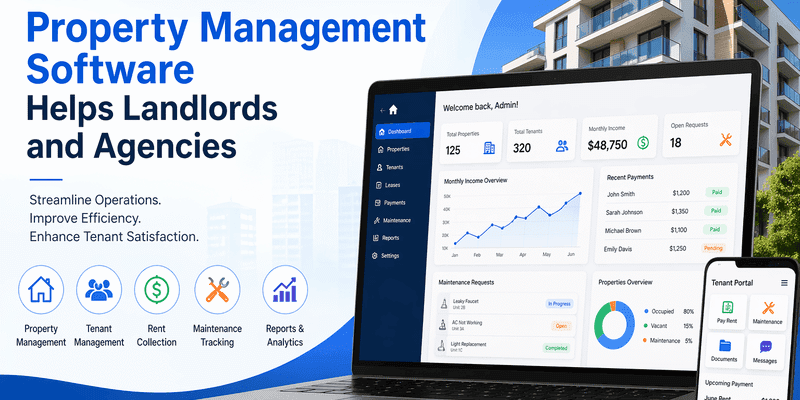

Managing properties today is no longer limited to collecting rent and maintaining records in spreadsheets. As portfolios grow and tenant expectations rise, landlords and real estate agencies are increasingly relying on digital tools to streamline operations. Property management software has emerged as a practical solution that simplifies complex processes, improves efficiency, and enhances tenant satisfaction.
- What is Property Management Software?
- Key Ways Property Management Software Helps Landlords and Agencies
- 1. Centralized Property and Tenant Management
- 2. Simplified Rent Collection and Payment Tracking
- 3. Efficient Maintenance Management
- 4. Improved Communication with Tenants
- 5. Automated Lease and Document Management
- 6. Financial Reporting and Insights
- 7. Scalability for Growing Portfolios
- 8. Reduced Operational Costs
- 9. Better Compliance and Record Keeping
- 10. Enhanced Tenant Experience
- Why Custom Software is Becoming Popular
- Conclusion
- FAQs
- 1. What is property management software used for?
- 2. How does property management software help landlords?
- 3. Can small agencies use property management software?
- 4. Is custom property management software better than ready-made solutions?
- 5. How long does it take to develop property management software?
This article explains how property management software helps landlords and agencies manage their operations more effectively and make better business decisions.
What is Property Management Software?
Property management software is a digital platform designed to help landlords, property managers, and real estate agencies handle day-to-day operations. It centralizes tasks such as tenant management, lease tracking, rent collection, maintenance requests, and reporting into one system.
Instead of using multiple tools or manual processes, everything can be managed from a single dashboard, making operations more organized and less time-consuming.
Key Ways Property Management Software Helps Landlords and Agencies
1. Centralized Property and Tenant Management
One of the biggest advantages of property management software is the ability to manage all properties and tenants in one place. Landlords and agencies can store tenant details, lease agreements, payment history, and communication records without relying on paperwork.
This centralization reduces errors and ensures that important information is always accessible when needed.
2. Simplified Rent Collection and Payment Tracking
Collecting rent manually can be time-consuming and prone to delays. Property management software enables automated rent collection through online payment systems.
Landlords can:
- Set automated reminders for tenants
- Track payment status in real time
- Generate invoices and receipts instantly
This not only improves cash flow but also reduces administrative workload.
3. Efficient Maintenance Management
Handling maintenance requests can be challenging, especially when managing multiple properties. Property management software allows tenants to submit maintenance requests directly through the platform.
Landlords and agencies can:
- Assign tasks to maintenance staff
- Track request status
- Maintain service history
This ensures quicker resolution and better tenant satisfaction.
4. Improved Communication with Tenants
Clear communication is essential in property management. With built-in messaging systems, landlords and agencies can communicate with tenants directly through the software.
This reduces miscommunication and keeps a record of all interactions, which can be useful for resolving disputes or tracking issues.
5. Automated Lease and Document Management
Managing lease agreements manually can lead to missed deadlines and errors. Property management software helps automate lease tracking by sending alerts for renewals and expirations.
Important documents such as contracts, IDs, and agreements can be stored securely and accessed anytime.
6. Financial Reporting and Insights
Property management software provides detailed financial reports that help landlords and agencies understand their business performance.
Users can generate reports on:
- Rental income
- Expenses
- Profit and loss
- Occupancy rates
These insights support better decision-making and long-term planning.
7. Scalability for Growing Portfolios
As landlords and agencies expand their portfolios, manual processes become difficult to manage. Property management software is scalable and can handle multiple properties without increasing workload significantly.
Whether managing a few units or hundreds of properties, the system adapts to business growth.
8. Reduced Operational Costs
By automating repetitive tasks and reducing paperwork, property management software helps lower operational costs. Less time spent on administrative work means more focus on business growth and tenant relationships.
Working with a reliable Property Management Software Development Company ensures that the solution is tailored to specific business needs, improving efficiency even further.
9. Better Compliance and Record Keeping
Keeping accurate records is important for legal and compliance purposes. Property management software maintains organized records of transactions, leases, and communications.
This reduces the risk of disputes and ensures that landlords and agencies stay compliant with regulations.
10. Enhanced Tenant Experience
A smooth and transparent experience improves tenant satisfaction. Features like online payments, quick maintenance responses, and easy communication create a positive experience for tenants.
Happy tenants are more likely to renew leases, reducing vacancy rates and improving long-term profitability.
Why Custom Software is Becoming Popular
While many ready-made solutions are available, businesses are increasingly opting for custom-built platforms. A Property Management Software Development Company can create solutions tailored to specific workflows, business models, and market needs.
Custom software offers:
- Better flexibility
- Integration with existing systems
- Improved security
- Scalable architecture
Choosing the right Property Management Software Development Company ensures that the software aligns perfectly with business goals.
Conclusion
Property management software has become an essential tool for landlords and real estate agencies looking to improve efficiency, reduce manual work, and deliver better tenant experiences. From rent collection to maintenance tracking and financial reporting, it simplifies every aspect of property management.
As the real estate industry continues to evolve, adopting the right digital solutions can provide a strong competitive advantage. Teqnovos helps businesses build scalable and efficient property management systems tailored to their unique needs. If you are planning to develop a custom solution, choosing the right technology partner can make all the difference.
FAQs
1. What is property management software used for?
Property management software is used to manage properties, tenants, rent collection, maintenance, and financial reporting in a centralized system.
2. How does property management software help landlords?
It helps landlords automate tasks, track payments, manage tenants, and improve overall efficiency.
3. Can small agencies use property management software?
Yes, property management software is suitable for both small agencies and large enterprises, as it can scale according to business needs.
4. Is custom property management software better than ready-made solutions?
Custom software offers more flexibility and can be tailored to specific business requirements, making it a better choice for growing businesses.
5. How long does it take to develop property management software?
The development timeline depends on features and complexity, but it typically ranges from a few months to longer for advanced solutions.