


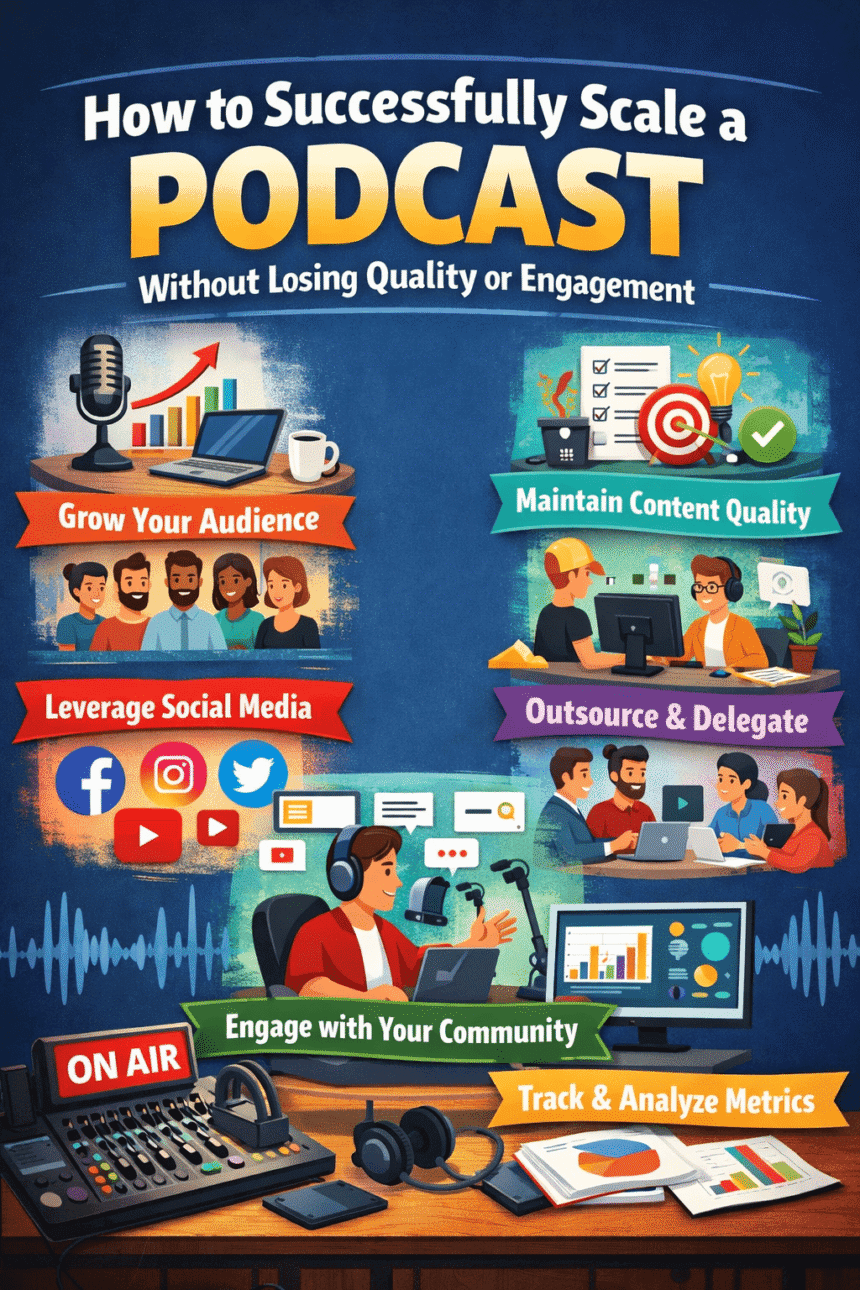

Podcasting has grown into one of the most powerful content platforms over the last decade. From niche hobbyists to global brands, podcasts allow creators to share knowledge, tell stories, and engage with audiences on a personal level. However, as podcast audiences grow, maintaining quality and engagement becomes increasingly challenging. Scaling a podcast isn’t just about increasing episode frequency or attracting more listeners—it’s about sustainable growth without sacrificing the essence that makes the podcast valuable.
- 1. Define Clear Growth Goals
- 2. Maintain Consistent Quality in Content
- 3. Optimize Episode Frequency and Scheduling
- 4. Enhance Audience Engagement
- 5. Utilize Data and Analytics
- 6. Invest in Marketing Strategically
- 7. Automate and Streamline Production
- 8. Expand Content Formats
- 9. Monetization Without Compromising Quality
- 10. Maintain Host and Team Wellbeing
- 11. Community Building as a Growth Strategy
- 12. Experiment and Innovate Carefully
- 13. Case Studies of Successful Scaling
- 14. Avoid Common Pitfalls
- 15. Continuous Review and Adaptation
This guide offers a comprehensive, step-by-step approach to scaling a podcast while ensuring content quality and audience engagement remain intact.
1. Define Clear Growth Goals
Before scaling, it’s essential to identify what “success” looks like for your podcast:
- Audience Growth: Determine your target listener numbers over a specific period.
- Monetization Goals: Decide whether growth means attracting sponsors, paid subscriptions, or merchandise sales.
- Content Reach: Identify the platforms you want to expand into—Spotify, Apple Podcasts, YouTube, or social media clips.
- Community Engagement: Decide metrics for engagement, such as listener feedback, social shares, or live event participation.
Having clear goals ensures every scaling decision aligns with your overall strategy.
2. Maintain Consistent Quality in Content
High-quality content is the foundation of podcast growth. Without it, scaling efforts risk alienating listeners.
- Plan Episodes Strategically: Map out episode themes, topics, and formats in advance. Consistency in tone and quality keeps listeners returning.
- Invest in Audio Production: High-quality microphones, editing software, and sound engineering elevate listener experience. Poor audio can drive audiences away, no matter how engaging the content is.
- Engage Expert Guests: Inviting knowledgeable and charismatic guests adds credibility and variety to your episodes.
- Content Depth: Avoid superficial topics. Provide actionable insights, storytelling, or entertainment value to maintain listener trust.
Even as you scale, these practices ensure your podcast retains the same level of professionalism and value that attracted listeners initially.
3. Optimize Episode Frequency and Scheduling
Increasing your output can help scale your podcast, but overloading your production schedule risks quality deterioration:
- Find a Sustainable Rhythm: Whether weekly, biweekly, or monthly, pick a schedule that balances consistency with production capability.
- Batch Production: Record multiple episodes in one session to maintain consistency while freeing time for editing and marketing.
- Release Predictably: Listeners appreciate knowing when new episodes drop. This encourages habit-forming listening behavior.
Scaling isn’t about quantity alone—it’s about providing content reliably without compromising quality.
4. Enhance Audience Engagement
Scaling a podcast effectively requires deep listener engagement. Engaged listeners become advocates who share your podcast, leave reviews, and participate actively:
- Call to Action: Encourage listeners to subscribe, leave reviews, or share episodes with friends.
- Social Media Integration: Use social platforms to interact with listeners, answer questions, and share behind-the-scenes content.
- Listener Feedback: Regularly solicit and incorporate feedback to make episodes more relevant and enjoyable.
- Live Events and Q&A: Hosting live recordings or Q&A sessions allows listeners to interact directly with hosts, strengthening the community.
Strong engagement ensures that as the audience grows, it remains loyal and connected to your podcast’s brand.
5. Utilize Data and Analytics
Data is a critical tool in scaling a podcast intelligently. Understanding listener behavior allows creators to make informed decisions:
- Download Metrics: Track episode downloads to identify which topics, formats, or guests perform best.
- Listener Retention: Measure how long people stay engaged within an episode. High drop-off rates indicate areas for improvement.
- Geographic Insights: Knowing where your audience resides helps target promotions or guest selection.
- Engagement Tracking: Monitor comments, reviews, and social shares to gauge audience response.
Analyzing these insights helps creators focus resources on strategies that yield maximum growth while avoiding pitfalls that compromise quality.
6. Invest in Marketing Strategically
Marketing is essential to scaling a podcast, but it must be done thoughtfully to avoid alienating listeners:
- Cross-Promotion: Partner with other podcasts in your niche to reach new audiences authentically.
- Social Media Campaigns: Share clips, highlights, and teasers on platforms like Instagram, Twitter, and LinkedIn.
- Email Newsletters: Send episode updates and exclusive content to build a loyal following.
- Podcast Directories: Ensure your podcast is available on all major directories for maximum reach.
At this stage, many creators hire a Best Podcast Marketing Company to manage promotions, optimize discoverability, and implement advanced strategies like ad campaigns, SEO for podcasts, and audience growth funnels. A specialized company ensures scaling efforts are targeted and professional without overextending the host’s time and resources.
7. Automate and Streamline Production
As your podcast grows, manual processes can become bottlenecks. Automation helps maintain quality while increasing output:
- Editing Tools: Use software that automates audio leveling, noise reduction, and intro/outro insertion.
- Scheduling Tools: Platforms like Anchor, Podbean, or Libsyn allow scheduled episode releases across multiple directories.
- Workflow Templates: Create standardized templates for show notes, social media posts, and transcriptions.
Streamlining operations frees creators to focus on content creativity while maintaining consistent quality.
8. Expand Content Formats
Scaling successfully often requires diversifying how content is delivered:
- Video Podcasts: Recording video versions of episodes for YouTube or social media platforms can reach visual audiences.
- Clips and Highlights: Short snippets optimized for TikTok, Instagram Reels, or LinkedIn maximize shareability.
- Transcripts and Blogs: Converting episodes into written content improves SEO and provides another consumption avenue for audiences.
- Bonus Content: Behind-the-scenes, Q&A sessions, or extended interviews can reward loyal listeners.
Multiple formats allow podcasts to reach new listeners without compromising the main show’s quality.
9. Monetization Without Compromising Quality
Monetization can support scaling efforts, but it must be handled carefully to avoid alienating listeners:
- Sponsorships and Ads: Integrate ads naturally. Consider mid-roll placements rather than disruptive pre-rolls.
- Listener Support: Platforms like Patreon allow fans to support the podcast in exchange for bonus content.
- Merchandising: Branded merchandise can be a revenue stream without affecting content quality.
- Events and Workshops: Organize live events, webinars, or workshops to monetize while building deeper engagement.
Revenue supports growth initiatives like better equipment, guest bookings, or professional marketing, all while preserving the listener experience.
10. Maintain Host and Team Wellbeing
Scaling a podcast can be demanding, and burnout is a real risk that can compromise quality:
- Team Collaboration: Delegate tasks like editing, marketing, or social media management to avoid overburdening hosts.
- Time Management: Schedule regular breaks and avoid overloading recording sessions.
- Professional Support: Consider coaches, producers, or a Podcast Marketing Company to maintain consistency without sacrificing creativity.
A healthy, well-supported team ensures consistent output and high-quality episodes.
11. Community Building as a Growth Strategy
A loyal community amplifies scaling efforts naturally:
- Listener Forums: Encourage discussion in private forums, Discord channels, or subreddit communities.
- Engagement Challenges: Contests, Q&A prompts, or fan-submitted questions foster participation.
- Feedback Loops: Implement suggestions from the community to make listeners feel heard.
Communities create organic growth, turning listeners into advocates who promote the podcast voluntarily.
12. Experiment and Innovate Carefully
Scaling requires innovation, but experimentation must not dilute core quality:
- Test New Segments: Introduce mini-series, themed episodes, or recurring features gradually.
- Monitor Audience Response: Use analytics to track engagement and retention before committing to new formats.
- Iterate: Refine new ideas based on feedback without abandoning the established voice and style.
Balanced innovation ensures scaling doesn’t compromise what made the podcast successful in the first place.
13. Case Studies of Successful Scaling
Examining successful podcasts provides practical insights:
- Niche Podcasts: Shows targeting specific interests often scale by creating content communities and leveraging social media engagement.
- Interview-Based Podcasts: Many grow by consistently booking influential guests, increasing both reach and credibility.
- Storytelling Podcasts: High production value and consistent narrative hooks retain audience loyalty even as listenership increases.
Common lessons include prioritizing quality, engaging communities, and leveraging professional marketing support.
14. Avoid Common Pitfalls
Scaling can backfire if approached incorrectly. Avoid these mistakes:
- Overproducing Episodes: Increasing frequency at the cost of content depth alienates listeners.
- Neglecting Listener Feedback: Ignoring your audience reduces engagement and loyalty.
- Poor Audio Quality: Even with good content, bad audio drives audiences away.
- Over-Monetization: Excessive ads or aggressive promotions can harm trust.
Awareness of pitfalls ensures growth is sustainable and audience-focused.
15. Continuous Review and Adaptation
Scaling is an ongoing process. Regular review ensures strategies remain effective:
- Monthly Analytics Review: Assess downloads, listener retention, and engagement.
- Content Audit: Identify which topics, formats, or guests perform best.
- Strategy Adjustment: Pivot where necessary without losing core quality or audience focus.
Flexibility and ongoing assessment guarantee that growth efforts continue to align with audience expectations.
Conclusion
Successfully scaling a podcast is about more than increasing output or chasing downloads—it’s about maintaining quality, engagement, and listener trust while implementing strategies for growth. Key steps include:
- Defining clear growth goals
- Maintaining high-quality content
- Optimizing scheduling
- Leveraging audience engagement and analytics
- Strategic marketing, including support from a Podcast Marketing Company
- Expanding formats thoughtfully
- Monetizing without alienating listeners
- Supporting host and team wellbeing
- Building strong communities and testing innovations
By following these strategies, podcasters can scale sustainably, reach wider audiences, and achieve long-term success without losing what makes their podcast unique.
Scaling a podcast is a journey that balances growth, creativity, and audience connection. When done carefully, it transforms a small show into a powerful platform with engaged, loyal listeners.