

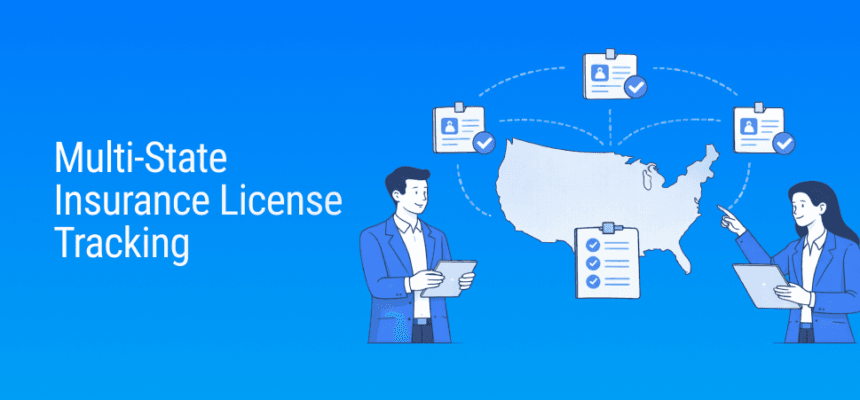

Insurance organizations operating across multiple U.S. states must comply with diverse regulatory requirements that vary significantly from one jurisdiction to another. Each state defines its own rules for insurance licensing, renewal cycles, continuing education requirements, and carrier appointment structures.As insurance agencies, MGAs, and carriers expand their footprint nationally, managing producer licensing becomes increasingly complex. What is manageable in a single-state operation becomes fragmented and high-risk at scale.Compliance teams often deal with inconsistent licensing data, missed renewal deadlines, and disconnected tracking systems. These issues not only reduce operational efficiency but also increase regulatory exposure.In modern insurance operations, compliance is no longer a manual administrative task. It is a structured, system-driven function that requires centralized data, automation, and continuous regulatory alignment.This is why insurance organizations increasingly rely on platforms like Agenzee, an insurance compliance software designed to streamline licensing, carrier appointment tracking, and multi-state regulatory operations.
- Why Managing Insurance Licensing Across Multiple States Is Difficult
- State-Specific Licensing Rules
- Complex Renewal Timelines
- Carrier Appointment Variability
- Large-Scale Producer Management
- Fragmented Compliance Systems
- Core Components of Insurance License Compliance Systems
- License Verification Through NIPR
- Carrier Appointment Tracking Systems
- Producer Code Management
- License Renewal Monitoring
- Operational Risks of Poor License Tracking
- Unauthorized Producer Activity
- Compliance Violations
- Carrier Relationship Risks
- Audit Failures
- Revenue Disruptions
- How Automation Improves Insurance Compliance
- Centralized Compliance Dashboard
- Real-Time Regulatory Synchronization
- Automated Renewal Alerts
- Carrier Workflow Integration
- Reduced Manual Dependency
- Best Practices for Scaling Multi-State Insurance Compliance
- Standardize Producer Data
- Centralize Compliance Operations
- Automate Renewal Management
- Integrate Regulatory Databases
- Conduct Regular Compliance Audits
- Conclusion: Building a Scalable Insurance Compliance Framework
Why Managing Insurance Licensing Across Multiple States Is Difficult
Multi-state insurance licensing introduces complexity due to fragmented regulations and operational limitations.
State-Specific Licensing Rules
Each U.S. state enforces independent insurance licensing requirements. These include eligibility criteria, background verification, continuing education obligations, and renewal conditions. A license valid in one state does not automatically apply to another.
Complex Renewal Timelines
Different states follow different renewal cycles. Some require annual renewals, while others operate on multi-year schedules. Without centralized tracking, missed renewals become common.
Carrier Appointment Variability
Insurance carriers must formally appoint producers before they are authorized to sell products. Appointment rules differ by carrier and must comply with state regulations.
Large-Scale Producer Management
Insurance organizations often manage hundreds or thousands of producers. Tracking their licensing status manually becomes inefficient and error-prone without automation.
Fragmented Compliance Systems
When licensing data is stored across spreadsheets, emails, or disconnected platforms, inconsistencies arise. This leads to compliance gaps and reporting issues.
Core Components of Insurance License Compliance Systems
Effective multi-state compliance requires structured systems that unify licensing, appointment, and regulatory workflows.
License Verification Through NIPR
Insurance license validation is performed through the NIPR, which acts as a centralized database for producer licensing across the United States.It ensures that insurance carriers and agencies can verify producer credentials accurately and in real time.
Carrier Appointment Tracking Systems
Carrier appointment tracking ensures that producers are officially authorized to represent insurance carriers.Without an active appointment, a producer cannot legally sell insurance products, making appointment tracking a critical compliance requirement in regulated insurance operations.
Producer Code Management
A producer code is a unique identifier assigned by insurance carriers to track producers across internal systems.It connects licensing data, commission structures, and carrier reporting workflows. Without standardized producer code management, organizations face duplication errors and inconsistent reporting.
License Renewal Monitoring
License renewal tracking is essential in multi-state insurance operations.Each state has different renewal cycles, and missing deadlines can lead to license suspension, compliance violations, or loss of revenue. Continuous monitoring ensures proactive compliance.
Operational Risks of Poor License Tracking
Organizations that rely on manual or fragmented systems face significant operational risks.
Unauthorized Producer Activity
Producers may operate with expired or inactive licenses, leading to regulatory violations.
Compliance Violations
Insurance regulators enforce strict requirements. Inaccurate or missing data can result in penalties or enforcement actions.
Carrier Relationship Risks
Carriers expect strict compliance adherence. Repeated failures can damage long-term business relationships.
Audit Failures
Incomplete records increase the likelihood of failed audits during regulatory inspections.
Revenue Disruptions
Inactive licenses directly impact commission flows and sales performance.
How Automation Improves Insurance Compliance
Modern insurance organizations are shifting toward automation to eliminate manual inefficiencies and improve accuracy.Platforms like Agenzee function as insurance compliance platforms that centralize licensing, carrier appointments, and regulatory workflows. Learn more –https://agenzee.com/best-practices-for-managing-multi-state-license-tracking-at-scale/
Centralized Compliance Dashboard
All producer licensing and appointment data is managed in a single unified system.
Real-Time Regulatory Synchronization
Systems continuously sync with regulatory sources to ensure accurate and updated licensing information.
Automated Renewal Alerts
Compliance teams receive proactive alerts before license expiration dates.
Carrier Workflow Integration
Appointment data is automatically synchronized across carriers and internal systems.
Reduced Manual Dependency
Automation eliminates spreadsheet-based tracking and reduces human error.
Best Practices for Scaling Multi-State Insurance Compliance
Insurance organizations that operate successfully across multiple states follow structured compliance strategies.
Standardize Producer Data
Maintain consistent data formats across all systems to ensure accuracy and alignment.
Centralize Compliance Operations
Use a unified system for licensing, appointments, and renewal tracking.
Automate Renewal Management
Prevent compliance failures through automated alerts and tracking systems.
Integrate Regulatory Databases
Ensure continuous synchronization with NIPR and state regulatory systems.
Conduct Regular Compliance Audits
Identify inconsistencies early and correct them before they become regulatory issues.
Conclusion: Building a Scalable Insurance Compliance Framework
Multi-state insurance license tracking is a critical operational requirement in the U.S. insurance industry. As organizations expand across jurisdictions, regulatory complexity increases significantly across licensing, appointments, and renewals.Manual systems are no longer sufficient to manage this scale effectively. Insurance organizations must adopt structured workflows, centralized platforms, and automation to maintain compliance accuracy and operational efficiency.Platforms like Agenzee enable insurance agencies, MGAs, and carriers to manage producer licensing, carrier appointment tracking, and compliance operations at scale with improved visibility and reduced risk.A scalable compliance infrastructure ensures long-term regulatory stability and operational efficiency across all states .