

In modern insurance operations, verifying an agent’s license is a critical requirement for maintaining regulatory compliance and ensuring operational integrity. Insurance carriers, agencies, and MGAs must confirm that each producer is properly licensed before allowing them to sell insurance products.As the United States insurance industry continues to operate under strict state regulations, license verification has become more complex, especially in multi-state operations. Insurance organizations must rely on structured workflows to manage producer licensing effectively.This guide explains how to verify insurance agent licenses in 2026, outlines risks associated with non-compliance, and highlights how automation platforms like Agenzee support compliance processes.
- Why License Verification Matters in Insurance Operations
- Role of NIPR in Producer Licensing Verification
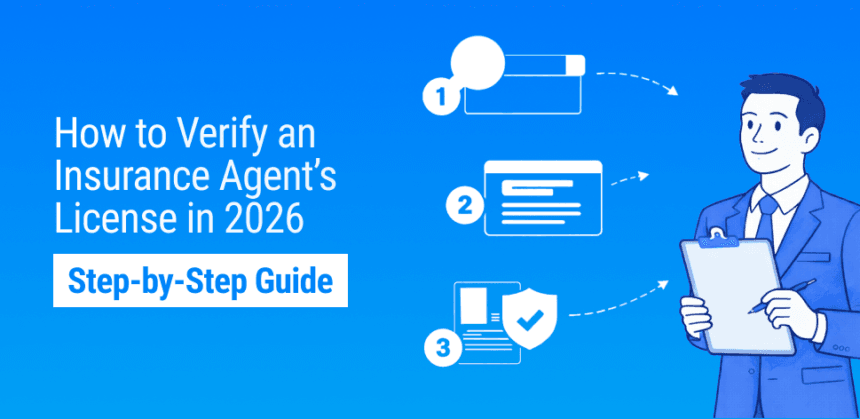
- Step-by-Step Process to Verify Insurance Licenses
- 1. Collect Producer Details
- 2. Conduct License Lookup
- 3. Validate License Status
- 4. Verify Carrier Appointment
- 5. Assign Producer Code
- 6. Sync with Compliance Systems
- Risks of Inadequate License Verification
- How Automation Improves Compliance Efficiency
- Best Practices for License Verification in 2026
- Conclusion
Why License Verification Matters in Insurance Operations
Insurance compliance means meeting regulatory requirements defined by state authorities. One of the most important responsibilities is ensuring that producers hold valid licenses.
Insurance carriers must verify:
- License status is active
- Authorization matches product lines
- State approvals are valid
Regulatory guidelines state that unlicensed agents must not sell insurance products. Non-compliance can result in penalties, audits, and operational delays.
Compliance teams often face challenges such as managing multiple state licenses, tracking renewals, and maintaining accurate records. In regulated environments, verification ensures that producer activities align with legal requirements.
Role of NIPR in Producer Licensing Verification
The National Insurance Producer Registry (NIPR) provides a centralized system for accessing licensing data across states. It simplifies the process of verifying producer credentials and supports compliance efforts.
A producer license includes:
- License status (active or inactive)
- Lines of authority
- State approvals
- Expiration dates
Many insurance organizations use NIPR to validate licensing information before onboarding or appointing producers. However, integrating this data into internal compliance systems is essential for ongoing monitoring.
Step-by-Step Process to Verify Insurance Licenses
Insurance organizations follow a structured workflow to ensure compliance.
1. Collect Producer Details
Gather key information such as:
- Full name
- National Producer Number (NPN)
- Licensing state
The NPN acts as a unique identifier across regulatory systems.
2. Conduct License Lookup
Search the producer in NIPR or state insurance department portals to retrieve licensing details.
3. Validate License Status
Ensure that the license is active and approved for the required lines of authority.
4. Verify Carrier Appointment
A valid license alone is not sufficient. Producers must be appointed by insurance carriers to sell products.
5. Assign Producer Code
A producer code is a unique identifier assigned by carriers to track commissions, reporting, and compliance activities.
6. Sync with Compliance Systems
Modern insurance organizations use platforms like Agenzee to centralize license tracking, appointment tracking, and producer management.
Risks of Inadequate License Verification
Failure to properly verify licenses can lead to significant risks.
Regulatory Risk
Non-compliance can result in fines and penalties from state regulators.
Financial Risk
Incorrect licensing data can lead to commission errors and revenue loss.
Operational Risk
Manual processes slow onboarding and increase administrative workload.
Data Risk
Disconnected systems create inconsistencies in producer records.These risks are amplified in multi-state insurance operations.
How Automation Improves Compliance Efficiency
Modern insurance systems require automation to handle complex compliance processes. Manual verification is no longer scalable.
A compliance automation platform like Agenzee enables:
- Automated license tracking
- Real-time appointment tracking
- Renewal monitoring
- Centralized producer management
Many insurance organizations rely on automation to improve accuracy, reduce manual errors, and maintain compliance in regulated environments.
Explore more insights:https://www.tumblr.com/agenzee1/812495551532859392/new-york-2025-premium-tax-rules-brokers
Best Practices for License Verification in 2026
Industry best practices recommend:
- Using NPN for accurate identification
- Verifying licenses before appointments
- Monitoring expiration and renewals
- Maintaining centralized compliance systems
- Implementing automation tools
For a detailed explanation, refer to this guide:
https://agenzee.com/how-to-verify-an-insurance-agent-license-in-2026-step-by-step-guide/
Conclusion
Insurance license verification is a fundamental part of compliance management in 2026. As regulatory requirements continue to evolve, insurance organizations must adopt structured workflows and automation tools.From NIPR verification to carrier appointment validation and producer code management, each step ensures compliance and operational efficiency.Platforms like Agenzee support insurance organizations by centralizing licensing, compliance, and producer management into a unified systems