

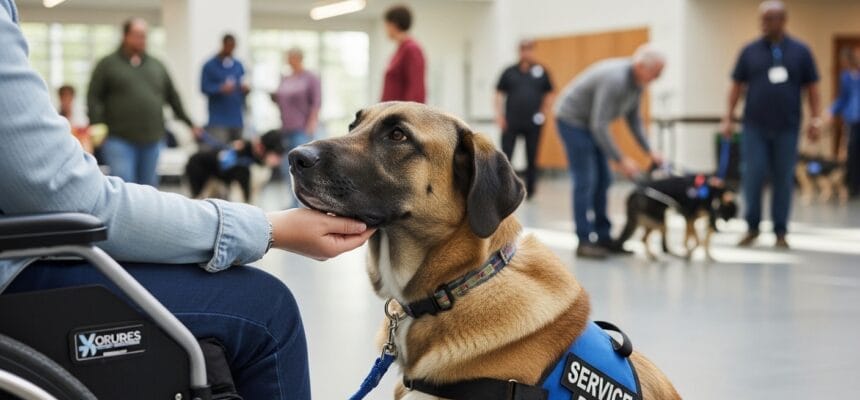

The Anatolian Shepherd is a magnificent breed with ancient roots and powerful protective instincts. Yes, the breed is legally eligible to be a service dog but its suitability depends heavily on temperament, training, and handler needs. While any dog breed can technically qualify under U.S. law, choosing an Anatolian Shepherd for service work presents unique challenges that prospective handlers must understand before committing to this path.
- Origin and History of the Anatolian Shepherd
- Key Breed Traits and Characteristics
- Why Anatolian Shepherds Face Service Dog Challenges
- Rare Exceptions: When an Anatolian Might Work
- Better Breed Alternatives for Service Work
- Training Considerations for Anatolian Shepherds
- Making the Right Choice About the Anatolian Shepherd
- How to Care for an Anatolian Shepherd Service Dog
- Health Problems in Anatolian Shepherd Service Dogs
- Frequently Asked Questions
For individuals who need to establish housing rights alongside service dog arrangements, a valid ESA letter from a licensed mental health professional provides the documentation needed to verify disability-related need. Whether the chosen breed is an Anatolian Shepherd or a more traditional service dog breed, proper documentation protects handler rights under federal law. Those who also benefit from an emotional support animal at home can explore ESA letter renewal to keep housing accommodation documentation current alongside any service dog arrangements.
This guide explores whether this guardian breed is truly suitable for service dog work and what factors matter most when making that decision.
Origin and History of the Anatolian Shepherd
The Anatolian Shepherd has protected livestock for over 6,000 years. This breed originated in Anatolia, modern-day Turkey, specifically from the Kangal district of Sivas province. Ancient artifacts from 668 BCE show Kangal-type dogs performing guardian duties. Turkish shepherds bred these dogs to work independently on distant hillsides, needing dogs that could make quick decisions without human direction. The harsh Anatolian climate shaped the breed’s physical characteristics summers bring extreme heat while winters drop well below freezing. These dogs wore iron-spiked collars to protect against predators, and their job was simple: guard the flock at any cost. This breeding purpose created the temperament challenges seen today when considering service dog work.
Key Breed Traits and Characteristics
Anatolian Shepherds are large, powerful dogs weighing between 80 and 150 pounds and standing 27 to 29 inches tall. The breed displays strong protective instincts bred over centuries, independence in working style as they were trained to think for themselves, and natural suspicion of strangers that keeps them alert to threats. Their calm appearance can be deceiving while they seem relaxed, Anatolians constantly monitor their surroundings, evaluating every situation and deciding independently whether action is needed. This is a trait that conflicts directly with service dog requirements. The breed’s coat comes in various colors including fawn, white, brindle, and red fawn, with many having black or brown masks. They shed heavily twice yearly when their thick undercoat comes out.
Why Anatolian Shepherds Face Service Dog Challenges
Anatolian Shepherds were originally bred as livestock guardian dogs, which means independence and strong protective instincts are deeply ingrained in their temperament. Service dogs must remain calm, neutral, and focused in crowded environments filled with strangers, noise, and distractions. Anatolians tend to be naturally wary of unfamiliar people and may become overstimulated in busy public spaces. Their strong territorial instincts can also conflict with the consistent public access behavior required of service dogs.
Independent Nature
Anatolian Shepherds were bred to work alone they evaluate situations and make decisions without checking with their owner, a trait that served them well guarding remote flocks but creates reliability issues in service work. Service dogs need the opposite trait, constantly looking to their handler for guidance. When a command is given, most service dogs obey immediately. An Anatolian evaluates whether the command makes sense given their own threat assessment and may choose not to follow directions if they perceive danger. This means an Anatolian might miss medical alerts or ignore mobility assistance cues while focused on a perceived threat. Understanding the full difference between emotional support animals and service animals helps clarify exactly why task reliability and handler focus are non-negotiable requirements for legitimate service work.
Protective Aggression
Guardian breeds show protective behaviors that violate service dog standards. Growling at strangers is desirable in a livestock guardian the same behavior in a service dog results in removal from public spaces. Anatolians naturally view unfamiliar people with suspicion and assess whether strangers pose threats to their charges. In public settings, this creates constant stress for the dog. The breed may not allow strangers to approach their handler, which becomes particularly problematic during medical emergencies when emergency responders might face resistance from a dog protecting an incapacitated owner.
Attentiveness Issues
Service dogs must focus primarily on their handler, but Anatolian Shepherds direct their attention to environmental scanning constantly watching for potential threats rather than monitoring their owner. Medical alert dogs need extreme focus on their handler’s condition, and an Anatolian might be too distracted by nearby people to detect blood sugar changes because guardian instincts override training. This divided attention reduces reliability significantly, as a service dog should respond within seconds to the handler’s needs.
Size and Presence
Large size benefits some service tasks like mobility support. However, Anatolian Shepherds’ massive presence can intimidate others and makes them cumbersome in tight public spaces. Many businesses have narrow aisles and crowded seating that a 120-pound dog struggles to navigate. Transportation presents additional challenges buses and trains have limited space, and the dog’s size might prevent other passengers from sitting nearby.
Handlers in states like ESA Letter Alaska considering an Anatolian Shepherd should note that Alaska follows federal FHA minimums without a state-level 30-day therapeutic relationship requirement Alaska residents who need housing documentation for an ESA rather than a service dog can obtain ESA documentation through a single evaluation with an Alaska-licensed provider. For handlers who ultimately determine that the Anatolian is not suitable for service work but still want the animal’s therapeutic companionship documented for housing purposes, the ESA housing protection pathway is straightforward and well-supported. An independent guide to how the distinction between service dogs and ESAs affects both training requirements and housing documentation is available in Real vs Fake ESA Letters in 2026 – What RealESAletter.com Does Right, which covers the documentation standards that distinguish legitimate ESA housing letters from fraudulent certificates in the context of the 2026 enforcement environment.
Rare Exceptions: When an Anatolian Might Work
Some individual Anatolians possess unusually calm temperaments showing less suspicion toward strangers and more focus on their owner. With extensive training, these dogs might succeed as service dogs. Specific tasks could suit their natural abilities: their size helps with certain mobility tasks, their alertness might benefit psychiatric support in controlled environments, and home-based assistance works better than public access for this breed.
One handler reported success with an Anatolian for seizure alerts where the dog remained calm and focused on the handler’s needs. PTSD handlers sometimes prefer protective breeds because they feel more secure with a dog that projects strength, though this requires exceptional training to prevent aggressive responses. For those managing PTSD specifically, reviewing what psychiatric service dogs versus ESAs offer helps determine whether task-trained support or companionship-based support better fits individual needs. These cases represent exceptions rather than the rule.
Better Breed Alternatives for Service Work
Certain breeds are generally more suitable than livestock guardian breeds like the Anatolian Shepherd. Labrador Retrievers, Golden Retrievers, and Standard Poodles are widely preferred due to their stable temperament, trainability, and comfort in public settings. A full overview of proven options is available in the service dog breeds guide.
Labrador Retrievers rank as the most popular service dog breed. They possess friendly, eager-to-please personalities, their intelligence makes training straightforward for complex tasks, they excel at guide work and mobility support, remain calm in public, and rarely show aggression. These dogs naturally focus on their handlers and want to please their people above all else, making them highly reliable for medical alert work.
Golden Retrievers share many traits with Labs and display exceptional patience and gentle temperaments. Their ability to sense emotions makes them ideal for psychiatric support. These dogs handle stress well in public environments, ignore distractions while maintaining focus on their handler, and respond quickly to training cues. Exploring the full list of best emotional support dog breeds provides helpful comparisons for handlers deciding between service dog and ESA roles.
German Shepherds have served as service dogs since the 1920s, combining intelligence with a strong work ethic. Unlike Anatolians, German Shepherds readily defer to human direction and stay focused on their handler in public. Their protective nature remains controlled through proper training. For those exploring emotional support dog training as a starting point before formal service work, German Shepherds respond exceptionally well to structured training programs.
Standard Poodles offer hypoallergenic coats for allergic handlers and rank among the most intelligent breeds. Their trainability rivals that of retrievers, and they adapt to various service roles including hearing dogs, guide dogs, and psychiatric support dogs.
Large Breeds for Mobility Great Danes, Newfoundlands, and Leonbergers suit handlers needing substantial physical support. All three breeds remain manageable in public despite their size, naturally moving slowly and carefully with gentle dispositions that prevent aggressive responses. The Great Pyrenees service dog guide explores how another large guardian breed compares when considered for service work, offering useful context for handlers weighing large breed options.
Handlers in states like ESA Letter Wyoming considering service dog versus ESA pathways should note that Wyoming follows federal FHA minimums without a state-level 30-day requirement Wyoming residents whose dogs provide therapeutic benefit without specialized task training can obtain ESA documentation through a single evaluation with a Wyoming-licensed provider, protecting their housing rights without the extensive training investment that service dog work requires. An independent guide to how ESA documentation for dog owners works in states like Wyoming and what evaluation standards ensure those letters hold up under landlord verification is available in Are Online ESA Letters Legal in 2026? What RealESAletter.com Customers Say, which covers how legitimate ESA documentation performs in real-world housing accommodation requests across different state frameworks.
Training Considerations for Anatolian Shepherds
Training an Anatolian Shepherd as a service dog requires professional guidance as essential rather than optional, and the training timeline extends far beyond typical service dog preparation.
Socialization Requirements: Early socialization is critical but may not overcome instinctive behaviors. Exposing a puppy to hundreds of people, animals, and situations starting before 16 weeks of age is essential. Even with extensive socialization, guardian instincts often emerge as the dog matures many Anatolians become more protective between 18 months and 3 years old, which coincides with the service dog training completion period. Public access training requires double the typical time to work against natural protective behaviors.
Professional Training Support: Owner-training an Anatolian presents extreme difficulty, and first-time service dog handlers should not attempt this breed. Even experienced trainers struggle with their independent nature. Professional service dog organizations rarely use Anatolian Shepherds because the washout rate would be prohibitively high. Any trainer hired should have specific experience with guardian breeds and understand that standard service dog training methods may not work.
Energy and Exercise Needs: Anatolian Shepherds require substantial daily exercise that proves difficult for many disabled handlers. The dog needs space to roam and patrol, meaning apartment living rarely suits this breed. Without proper exercise, behavior problems increase significantly. Mental stimulation is equally important these intelligent dogs need jobs to do, and simple obedience training does not satisfy their working drive.
Making the Right Choice About the Anatolian Shepherd
Honestly evaluating disability-related needs means listing every task the service dog must perform and assessing whether an Anatolian’s traits support or hinder those tasks. Key questions include whether 18 or more months of intensive training is manageable, whether there is preparation for potential failure after significant investment, whether backup plans exist if the dog cannot perform service work, and whether there is capacity to handle an independent, strong-willed dog that may not obey commands immediately.
Cost Considerations: Training an Anatolian Shepherd as a service dog costs significantly more than standard breeds, with professional training potentially reaching $20,000 or more due to the extended timeline. Many Anatolians wash out of service dog training, meaning handlers must be prepared to keep the dog as a pet. Veterinary costs run higher for giant breeds, which experience more joint problems and shorter service careers than medium-sized breeds. For handlers who ultimately pursue psychiatric service dog documentation, understanding the process at psychiatric service dog resources helps clarify what legitimate documentation looks like. Handlers in states like ESA Letter Montana should note that Montana requires a 30-day therapeutic relationship before an ESA letter can be issued Montana residents need to begin the evaluation process with a Montana-licensed provider at least 30 days before they need the letter, making advance planning especially important for handlers in Montana who may be transitioning from service dog training to an ESA documentation pathway. An independent guide to the evaluation timeline and documentation quality standards that matter for handlers in states with 30-day requirements is available in Can You Trust an Online Emotional Support Animal Letter? RealESAletter.com 2026 Guide, which covers the evaluation depth and provider credentialing that determines whether online ESA documentation meets housing provider requirements across different state frameworks.
How to Care for an Anatolian Shepherd Service Dog
Caring for an Anatolian Shepherd service dog requires structure, consistency, and experienced handling. A working service dog must receive daily mental stimulation, obedience reinforcement, and controlled social exposure to remain reliable in public settings. Regular exercise in a secure area is essential given their large size and strong guardian instincts. Ongoing training is critical because Anatolian Shepherds are bred to think independently handlers must consistently reinforce commands and public-access behaviors to maintain focus and responsiveness.
Grooming Needs: Anatolian Shepherds are relatively low-maintenance for grooming their thick double coat only requires brushing every couple of weeks under normal conditions. However, during seasonal shedding in spring and fall, weekly brushing helps remove loose fur. Routine paw checks are especially important for a service dog working on varied surfaces.
Shedding and Allergies: Anatolian Shepherds are moderate to heavy seasonal shedders due to their dense double coat. Because they produce noticeable dander, they are not considered hypoallergenic and may not be suitable for handlers with pet allergies.
Health Problems in Anatolian Shepherd Service Dogs
Although the breed is generally hardy, large size places Anatolians at risk for certain conditions. Hip dysplasia and bloat (gastric torsion) can occur, and both are serious concerns for any large working dog expected to perform reliably in public settings. One of the more common breed-specific conditions is entropion, a disorder where the eyelid rolls inward and irritates the eye, which can typically be corrected surgically. Anatolians are also prone to ear infections if ears are not checked and cleaned regularly, and may show sensitivity to anesthesia. For a service dog, consistent veterinary monitoring is essential to maintain peak working condition.
Anatolian Shepherds possess remarkable qualities as livestock guardians. Their intelligence, loyalty, and protective nature make them exceptional in their traditional role. However, these same traits create significant challenges for service dog work. The breed’s independent thinking conflicts with constant handler focus requirements, natural suspicion of strangers violates service dog behavior standards, and size and presence can intimidate others in public spaces. While rare exceptions exist, most Anatolian Shepherds are unsuitable for service dog work. Handlers seeking reliable assistance should consider breeds specifically developed for biddability and public access temperament.
Frequently Asked Questions
How much does an Anatolian puppy cost?
An Anatolian Shepherd puppy typically costs between $800 and $2,000 USD from a reputable breeder, depending on bloodline, breeder reputation, and region. Always factoring in additional costs like vaccinations, microchipping, training, and supplies gives a realistic picture of the total investment.
Are Anatolian Shepherds good therapy dogs?
Anatolian Shepherds have calm, loyal temperaments, but they are not common therapy dogs. Therapy work requires consistent sociability with strangers, calmness in unpredictable settings, and eagerness to engage. Many Anatolians can be loving family companions, but only those properly socialized and temperament-tested are suitable for therapy work environments. For handlers exploring whether an ESA rather than a therapy or service animal better fits their needs, reviewing how to qualify for an emotional support animal outlines the straightforward path to housing protections without the demands of full service dog training.
Will an Anatolian Shepherd be protective?
Yes, Anatolian Shepherds have strong protective instincts. They were bred to guard livestock and are naturally watchful and territorial. With proper training and socialization, many Anatolians will protect their family and home. Good training ensures they distinguish real threats from normal situations rather than responding with unnecessary aggression.
Are Anatolian Shepherds good with other dogs?
Anatolian Shepherds can be good with other dogs, but it depends heavily on early socialization, training, and individual temperament. Bred as independent livestock guardians, they can be territorial and dominant especially toward unfamiliar dogs of the same sex. When raised with other dogs from a young age, many Anatolians coexist peacefully within their household. Proper introductions, consistent leadership, and ongoing socialization are essential.
How long do Anatolian Shepherd service dogs live?
Anatolian Shepherds typically live 11 to 13 years, which is average for a giant breed. For a service dog handler, longevity matters because service training represents a significant investment of time and resources. Lifespan depends heavily on genetics, preventive healthcare, nutrition, workload, and overall management.
What should an Anatolian Shepherd service dog eat?
An Anatolian Shepherd service dog should eat a high-quality diet formulated for large, active breeds. Proper nutrition supports joint health, sustained energy, cognitive function, and overall stamina critical factors for any working dog. On average, an adult Anatolian may consume 4 to 6 cups of food daily depending on weight, age, metabolism, and activity level. Maintaining a lean body condition is especially important to reduce joint stress in a working service role.