

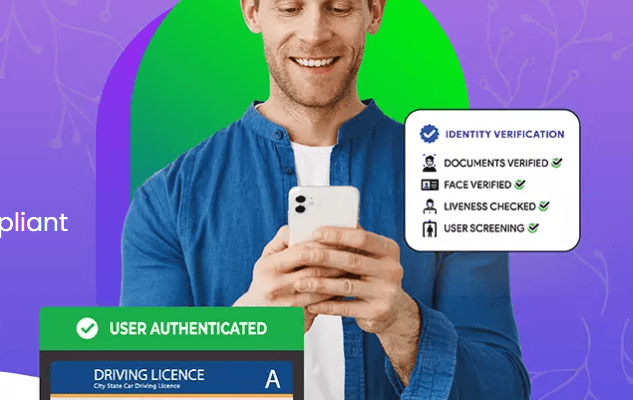
In today’s fast-paced digital ecosystem, businesses are increasingly relying on advanced technologies to ensure secure and seamless user authentication. Two of the most powerful solutions driving this transformation are NFC verification and face verification. Together, they offer a robust framework for identity verification, helping organizations prevent fraud while enhancing user experience.
What is NFC Verification?
Near Field Communication (NFC) verification is a technology that enables secure data exchange between devices placed in close proximity. It is widely used in identity verification processes, especially for ePassports, national ID cards, and smart cards embedded with chips. NFC verification allows systems to extract encrypted data directly from these documents, ensuring authenticity and minimizing the risk of tampering.
One of the biggest advantages of NFC verification is its ability to access original, government-issued data. This makes it highly reliable for KYC (Know Your Customer) processes in industries such as banking, fintech, travel, and telecom. By simply tapping a smartphone against an NFC-enabled document, users can quickly verify their identity without manual data entry.
Understanding Face Verification
Face verification, on the other hand, uses biometric technology to match a user’s live facial image with the photo stored in official documents. This process ensures that the person presenting the ID is its rightful owner. Advanced face verification systems use AI-powered algorithms to detect facial features, analyze patterns, and provide highly accurate results within seconds.
Modern face verification solutions also include liveness detection, which helps distinguish between a real person and a spoof attempt such as a photo, video, or mask. This adds an extra layer of security, making it extremely difficult for fraudsters to bypass the system.
The Power of Combining NFC and Face Verification
When NFC verification is combined with face verification, the result is a highly secure and efficient identity verification system. NFC ensures that the document is genuine, while face verification confirms that the user is the rightful owner. This dual-layer approach significantly reduces identity fraud and enhances trust.
For example, during digital onboarding, a user can scan their NFC-enabled ID and then complete a quick face verification step. Within moments, the system verifies both the document and the individual, streamlining the entire process.
Benefits for Businesses and Users
The integration of NFC and face verification offers numerous benefits. Businesses can reduce onboarding time, improve compliance with regulatory requirements, and minimize fraud risks. Users, on the other hand, enjoy a seamless and hassle-free verification experience without the need for physical visits or lengthy paperwork.
Conclusion
As digital interactions continue to grow, the demand for secure and efficient identity verification solutions will only increase. NFC verification and face verification are at the forefront of this evolution, providing a powerful combination of security, accuracy, and convenience. Organizations that adopt these technologies will be better equipped to build trust, ensure compliance, and deliver superior user experiences in the digital age.