

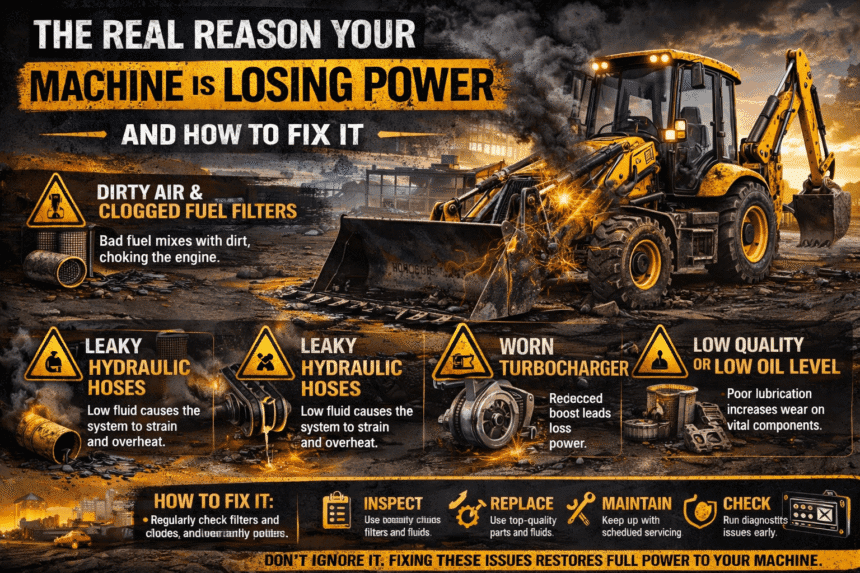

There is nothing more frustrating for a machine operator than a JCB that feels weak. The engine is running. The machine is moving. But the power is just not there. Digging feels harder than it should. Lifting feels slower. The machine that used to cut through hard soil without effort is now struggling with simple tasks.
Power loss on a JCB machine is one of the most common complaints from machine owners across India. And the frustrating thing is that most operators and owners do not know what is causing it. They assume the machine is old. They assume it just needs to work harder. Or they take it to a local mechanic who replaces a random part and hopes for the best.
The truth is that power loss on a JCB machine almost always has a specific, identifiable cause. And once you know what to look for, fixing it becomes much simpler than most people think.
This article will walk you through the most common causes of power loss on JCB backhoe loaders and excavators, what each cause means technically, and exactly what needs to be done to restore full machine performance.
Understanding What Powers Your JCB Machine
Before we look at causes of power loss, it helps to understand where your machine’s power actually comes from and how it reaches the working attachments.
Your JCB engine burns diesel to produce mechanical power. This power does two things simultaneously. It drives the transmission which moves the machine forward and backward. And it drives the hydraulic pump which creates the pressurised hydraulic flow that powers the boom, dipper, bucket, and all other attachments.
So when you experience power loss, it can be coming from one of two places — the engine itself is not producing enough power, or the hydraulic system is not converting that power into effective attachment movement efficiently.
Identifying which system is the source of the problem is the first step to fixing it correctly.
Cause 1 — Blocked Air Filter
This is the single most common cause of engine power loss on JCB machines working on dusty construction sites — and it is also the easiest and cheapest to fix.
Your engine needs air to burn diesel. For every litre of diesel it burns, it needs approximately 15 to 20 litres of air. All of that air passes through the air filter before entering the engine. On a dusty construction site, the air filter can block up surprisingly fast — sometimes within 100 to 150 hours of operation in very dusty conditions.
When the air filter is blocked, the engine cannot get enough air. It is like trying to breathe through a cloth over your face. Performance drops. The engine struggles under load. Black smoke appears from the exhaust as the engine tries to burn diesel without enough air to combust it properly.
The fix is simple — inspect the air filter regularly. On dusty sites, check it every 100 hours. Clean it carefully if it is a dry filter type. Replace it immediately if it is damaged or heavily contaminated. This one simple action restores engine power almost instantly in many cases.
Cause 2 — Dirty or Blocked Fuel Filter
Your engine cannot produce full power without a clean, consistent supply of fuel. The fuel filter sits between the diesel tank and the injection system. Its job is to remove dirt, rust particles, and water from the fuel before it reaches the injectors.
When the fuel filter is blocked, fuel flow to the engine is restricted. The engine starves for fuel under heavy load. You notice this as power loss particularly when the machine is working hard — digging in hard soil, lifting heavy loads, or climbing slopes.
Poor quality diesel makes this problem worse. Diesel in India can sometimes contain water contamination or particulate matter that blocks filters faster than expected. If your machine loses power specifically under heavy load but seems normal at idle, a blocked fuel filter is a very likely cause.
Replace the fuel filter at every 500-hour service. If you are using lower quality diesel or working in areas where fuel quality is questionable, consider replacing it more frequently.
Cause 3 — Worn or Faulty Fuel Injectors
If replacing the air filter and fuel filter does not restore full power, the next thing to investigate is the fuel injectors. Injectors atomise diesel into a fine mist that burns efficiently in the combustion chamber. When injectors are worn or blocked, they deliver fuel in an uneven or incomplete spray pattern. Combustion becomes inefficient and power drops.
Signs of injector problems include:
- Rough engine running especially at idle
- Black or grey smoke from the exhaust
- Increased fuel consumption with reduced power
- Engine misfiring under load
Injector testing and cleaning or replacement should be done by a qualified diesel mechanic with the right equipment. This is not a job for a general mechanic without proper tools.
Cause 4 — Low or Contaminated Hydraulic Oil
If your engine seems to be running well but the boom, dipper, and bucket feel weak and slow, the problem is likely in the hydraulic system rather than the engine.
The most common hydraulic cause of attachment power loss is low hydraulic oil level or contaminated hydraulic oil. Low oil means the hydraulic pump cannot maintain the pressure needed to move attachments with full force. Contaminated oil causes wear on pump components which reduces the pump’s ability to generate and maintain pressure.
Check the hydraulic oil level first. If it is low, find and fix the leak before topping up. Then check the hydraulic oil condition. If it looks dark, milky, or smells burnt — it needs to be changed completely along with the hydraulic filter.
Cause 5 — Worn Hydraulic Pump
The hydraulic pump is the heart of your attachment power system. It takes mechanical energy from the engine and converts it into hydraulic flow and pressure. When the pump wears internally, it loses efficiency. It cannot generate the same pressure it once could. Attachments move slowly and feel weak even when the engine is running perfectly.
Signs of a worn hydraulic pump include:
- Gradual reduction in attachment speed over many months
- Unusual whining or moaning noise from the hydraulic system
- Hydraulic oil overheating faster than normal
- All attachments feeling equally weak — not just one
A worn hydraulic pump needs to be rebuilt or replaced by a qualified hydraulic mechanic. Using contaminated hydraulic oil and not changing the hydraulic filter on schedule are the two main causes of premature pump wear.
Cause 6 — Engine Compression Loss
If none of the above causes explain the power loss, the problem may be internal to the engine itself. Over time, engine components wear — piston rings, cylinder liners, valves. When these wear, the engine loses compression. Low compression means the fuel and air mixture does not burn with full force and power drops significantly.
A compression test done by a qualified mechanic will confirm whether this is the cause. If compression is low, the engine needs internal work — new piston rings, rebored cylinders, or valve grinding depending on what the inspection reveals.
This is the most expensive cause of power loss to fix but it is also the most preventable. Engines that have been maintained properly with regular oil changes, genuine filters, and clean fuel maintain good compression for far longer than neglected engines.
Why Genuine Parts Matter for Power and Performance
Every cause of power loss we have discussed comes back to the same root issue — parts that are worn out, blocked, or of insufficient quality to do their job properly.
Using genuine replacement parts when servicing your machine is the most direct way to maintain full power and performance over the long term. Genuine filters flow correctly and filter effectively. Genuine seals hold pressure without leaking. Genuine pump components maintain efficiency over their full service life.
When you source your construction equipment components and OEM backhoe loader parts from a trusted supplier, you are investing in the performance of your machine — not just ticking a maintenance box. For genuine jcb parts that meet full OEM specifications, Robot India supplies the complete range to contractors, dealers, and machine owners across India and internationally. Their parts are manufactured to the tolerances that JCB machines are designed around — which means they perform correctly and last as long as they should.
For filter related power loss — which is by far the most common and most preventable cause — using a genuine jcb filters range ensures your engine breathes properly, your fuel system flows cleanly, and your hydraulic system stays free of contamination. A matched set of genuine filters serviced on schedule is the simplest and most cost effective way to maintain full machine power over the long term.
A Simple Power Loss Diagnosis Checklist
When your JCB machine starts losing power, work through this checklist in order before calling a mechanic:
First, check the air filter — inspect it visually and clean or replace if blocked. Second, check the fuel filter — if it is past its service interval, replace it. Third, check hydraulic oil level and condition — top up or change if needed. Fourth, check the hydraulic filter — replace if overdue. Fifth, listen to the engine for unusual sounds and check for smoke — this points to injector or compression issues that need a mechanic.
Following this checklist in order means you fix the cheapest and most common causes first before spending money on more complex diagnosis and repair.
Final Thoughts
Power loss on a JCB machine is frustrating but it is almost always fixable. The key is identifying the correct cause rather than guessing and replacing parts randomly. Use the causes and checklist in this guide to diagnose the problem systematically.
More importantly — the best way to deal with power loss is to prevent it in the first place. Regular servicing with genuine parts, clean fuel, and fresh filters keeps your machine producing full power every single working day.
A powerful, responsive machine is a productive machine. And a productive machine is a profitable machine. Take care of the parts that deliver that power and your JCB will never let you down when you need it most.