


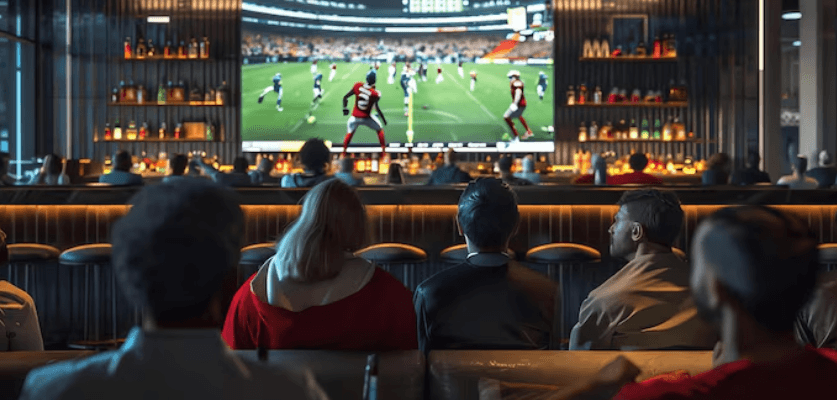

India has always had two great loves: food and cricket. But for a long time, experiencing both of them together at the same time in the same place was not really an option. You ate at a restaurant or you watched the match at home. The idea of a venue that took both seriously and built a complete evening around them simply did not exist in most Indian cities.
- How Indian Bar Culture Actually Got Here
- Cricket, IPL, and the Engine Behind the Growth
- What Makes a Sports Bar Work in the Indian Context
- Cities Leading the Sports Bar Movement
- The Food Side of the Sports Bar: Why It Matters More Than People Think
- What the Future of Sports Bars in India Looks Like
- Conclusion
- Faqs
That has changed in a significant way over the last few years. The sports bar has arrived in India, and it has arrived properly. Not as a novelty concept limited to five-star hotel lobbies, but as a mainstream and genuinely popular entertainment format that is now finding its way into city high streets, mall food courts, residential neighborhoods, and even smaller tier two cities. A well-run sports bar with live music in India today offers something that restaurants and nightclubs separately cannot: a single venue where a great meal, a live match on a big screen, cold drinks, and real atmosphere all come together on the same evening.
India’s pub, bar, café, and lounge market reached USD 2.8 billion in 2024 and is projected to grow to USD 5.8 billion by 2033, with a CAGR of 7.4 %. The sports bar is one of the fastest-growing formats within that market. Understanding why this is happening tells you a great deal about how Indian cities and Indian consumers have changed, and where the evening-out culture is going next.
How Indian Bar Culture Actually Got Here
The story of how India developed a genuine bar and pub culture is worth understanding because it explains why the sports bar specifically has taken off the way it has. For most of India’s post-independence history, drinking in public was either legally restricted, socially stigmatized, or both. Bars existed but they were mostly utilitarian, dimly lit, and not places that attracted a broad or mixed crowd. The shift started gradually in the 1990s and accelerated significantly through the 2000s as economic liberalization brought rising incomes, global exposure through satellite television and international travel, and a generation of young urban Indians who were comfortable socializing in public spaces in ways their parents were not.
Theme restaurants emerged first. Then dedicated pubs and lounges. Then craft breweries. Each stage widened the audience and made the idea of an evening out at a bar more normalized and socially mainstream. By the early 2010s, going to a pub was a completely ordinary thing for young professionals in Bengaluru, Mumbai, Delhi, and Hyderabad. The groundwork for the sports bar as a format was already laid.
What the sports bar added to this existing culture was a specific and compelling reason to choose it over every other option. Cricket gave people a calendar of shared events they all cared about. The sports bar gave them a place to experience those events together, with food and drinks they did not have to cook or fetch themselves, in a room full of people who were as invested in the outcome as they were.
Cricket, IPL, and the Engine Behind the Growth
It is impossible to talk about the rise of sports bars in India without talking about the Indian Premier League. IPL does for sports bar bookings in April and May what Christmas does for retail. It creates a concentrated, predictable burst of demand that gives venues a reason to invest in proper infrastructure and gives consumers a reason to change their habits.
But what IPL has really done is introduce people to the sports bar experience in large numbers for the first time. A fan who goes to a live sports bar for an IPL match and has a genuinely good evening does not just remember that match. They remember the experience of watching it in that room, with that crowd, and that food and those drinks on the table. That memory is what brings them back for the next match and the one after that, and eventually for things that have nothing to do with cricket at all.
This is how the best sport bar in any Indian city builds loyalty. It starts with cricket because cricket is the shared cultural currency. But the regulars who keep coming back are coming for the place, not just the sport. A venue in Sector 18 in Noida that fills up for every IPL match also fills up for Champions League football nights, Formula 1 race weekends, and regular Friday evenings when nothing is being screened at all. The sport is the hook. The experience is what keeps people.
What Makes a Sports Bar Work in the Indian Context
A sports bar that succeeds in India has to do something that is culturally specific to this market. It has to take food as seriously as it takes the screens. In most Western markets, sports bar food means chicken wings, nachos, and a burger menu. In India, the expectation is different and higher. The best sports bar to watch cricket match in any Indian city needs a menu that spans tandoori snacks, grilled platters, Indian street food-inspired bites, and international options, because the crowd is a mix of people who want different things and who take what they eat as seriously as what they drink. A kitchen that delivers consistently good food to a table of eight in the middle of a tense last over is genuinely part of the entertainment offering, not an afterthought.
The other thing that defines a great Indian sports bar is the integration of music. A sports bar with live music creates a different kind of energy in the room compared to one that just plays recorded tracks in the background. Between cricket innings, a DJ set or a live acoustic performance keeps the room alive. After the match ends, the music is what extends the evening and keeps people there. This is why the hybrid sports-bar-and-nightlife format has become so dominant. It covers more of the evening and gives people more reasons to stay.
Impresario Entertainment and Hospitality, the group behind Social and other successful venue concepts in India, understood early that the Indian consumer wants spaces that do more than one thing well. That philosophy is exactly what the best sports bars in the country are built around.
Cities Leading the Sports Bar Movement
The growth is not happening equally in all cities, and understanding the geographic picture is useful for anyone looking at this industry. Delhi and the wider NCR region, which includes Noida and Gurgaon, is currently the most active market for sports bar growth in India. Delhi surpassed Mumbai for the first time in India’s top bar rankings in 2025, claiming 11 spots compared to Mumbai’s 10, with the wider NCR region growing from 12 to 15 entries in the national list. Sports Bar in Noida has become a genuinely competitive category as venues in Sector 18, Sector 50, and Sector 62 invest in better screen setups, expanded menus, and live entertainment programming specifically to capture the growing demand.
Bengaluru continues to grow as a cocktail and nightlife hub. Hyderabad has seen perhaps the most dramatic transformation of any Indian city. Hyderabad’s nightlife economy, currently valued at nearly Rs 8,500 crore, is projected to reach over Rs 26,000 crore by 2031 at a CAGR of over 20 percent. The city went from a handful of quality nightlife venues to over 200 clubs and entertainment bars in five years. Sports bars have been a significant part of that growth because they appeal to the large working professional population in the city’s IT corridors.
What is newer and arguably more significant for the long-term story is the expansion into tier two cities. Urban centres like Ranchi, Surat, Jaipur, and Bhopal are seeing steep growth in youth culture, nightlife, and disposable income, with consumers in these cities expecting the same quality experience they would get in Mumbai or Delhi. Franchiseable sports bar concepts like Studs Sports Bar and Grill are already moving into these markets, which signals that the format has moved well beyond being a metro-only phenomenon.
The Food Side of the Sports Bar: Why It Matters More Than People Think
People often focus on the entertainment side of sports bars and underestimate how central the food experience is to whether a venue succeeds or fails. In India, this is even more true than in most markets. A live sports bar and grill format works in India because it treats the kitchen as a co-equal part of the offering rather than a support service. Sharing platters that arrive quickly, snacks designed for eating while watching a screen, a menu that has enough variety to satisfy a table with very different preferences, and cocktails and drinks that feel considered rather than just functional. These details are what separate the sports bars that build loyal repeat crowds from the ones that only fill up during the biggest matches.
Zomato and MagicPin data consistently show that sports bars with strong food ratings outperform those with weaker kitchen reviews even on match nights, which tells you that people are making decisions about where to watch based on food quality alongside screen size and atmosphere. The Indian consumer will put up with a smaller screen at a venue with better food more readily than they will put up with mediocre food at a venue with a better screen. Knowing this is the difference between building a venue that survives its first year and one that does not.
What the Future of Sports Bars in India Looks Like
The trajectory is clear and it is steep. More venues, more cities, higher quality standards, and a broader calendar of sports and entertainment events driving demand throughout the year.
The next phase of growth will be defined by a few specific developments. The expansion of live entertainment programming beyond cricket into football, Formula 1, and global boxing and basketball will make the sports bar a genuinely year-round destination rather than one that peaks during IPL and goes quiet for three months. The integration of better technology, from premium audio systems to multiple screen zones within a single venue, will raise the quality floor for what counts as a good experience. And the move into tier two cities will bring the format to a much larger audience that is ready for it.
Conclusion
The sports bar in India is not a borrowed concept that has been transplanted from the West and left to find its audience. It has evolved into something specific to this country: a venue that takes cricket culture seriously, takes food seriously, builds an evening around both, and creates a shared social experience that no other entertainment format currently replicates.
A great sports bar with live music in an Indian city in 2026 is one of the most complete and enjoyable evenings available to any urban consumer. From a live sports bar in Noida to the rooftop screening venues of Mumbai and the packed cricket nights in Bengaluru’s Koramangala, the format is proving itself across every market it enters. The rise of sports bars in India is not a trend that is peaking. It is a shift in how cities entertain themselves, and it is still very much in its early chapters.
Faqs
Q1. Why are sports bars becoming so popular in India?
Sports bars in India are growing because they solve something that restaurants and nightclubs separately cannot. They bring together a live match on a big screen, good food, drinks, music, and a crowd that shares the same energy all under one roof. With IPL, football, and Formula 1 building passionate fan communities across Indian cities, people want somewhere to experience those moments with others rather than alone at home. Rising disposable incomes and a younger urban population with higher expectations for evenings out have made this format the right thing at exactly the right time.
Q2. What should I look for when choosing the best sports bar to watch a cricket match?
The three things that matter most are screen quality and placement, audio clarity, and the food menu. A good sports bar has a large LED screen or projector that every seat can see clearly, sound that lets you actually hear the commentary, and a kitchen that delivers food quickly without making you choose between eating and watching. Beyond that, look at whether the venue attracts genuine cricket fans because the crowd around you is what makes or breaks the atmosphere on a big match night.
Q3. Are sports bars in India only popular during IPL season?
IPL is the biggest driver of footfall but the best sports bars in India are now busy well beyond cricket season. Football fans fill venues for Champions League and Premier League nights. Formula 1 race weekends draw a dedicated and growing crowd. International boxing, NBA games, and even WWE events have built loyal screening audiences in Indian cities. The sports calendar now gives a good venue a genuine reason to create atmosphere twelve months a year, not just two.
Q4. Is going to a sports bar in India expensive?
Most sports bars operate on a minimum billing model rather than a flat entry charge. For a group of four people, the minimum spend per person typically falls between Rs 600 and Rs 1,500 depending on the venue. When you factor in that this covers food, drinks, entertainment, and atmosphere for the entire evening, the value is genuinely competitive compared to ordering in and watching at home. During IPL and other major events, most venues also run combo deals and group packages that bring the cost down further.
Q5. What makes a sports bar different from a regular bar or pub?
A regular bar or pub focuses primarily on drinks and general socializing. A sports bar is built around a specific experience: watching live sport in a crowd that cares about the game. This means dedicated large-format screens, audio systems tuned for commentary, a seating layout designed around sightlines to the screen, and a programming calendar tied to major sporting events. The best sports bars in India take this further by adding live music, DJ sets, and themed match night menus that turn a regular evening into something worth planning your week around.