
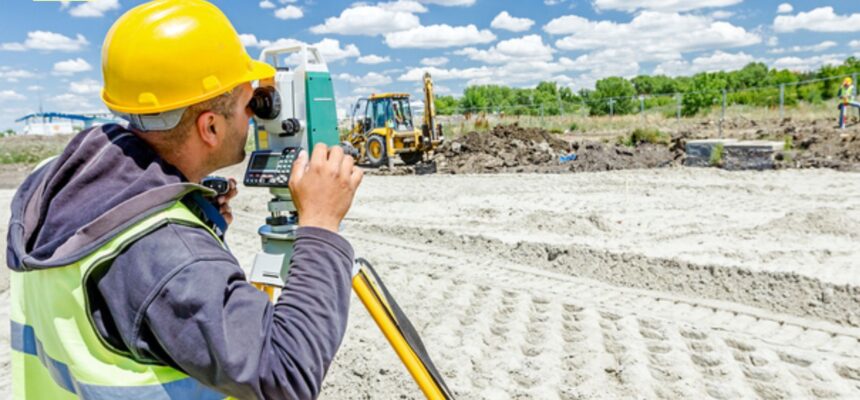

A land surveyor’s monument can outlast the engineer who designed the building, the attorney who wrote the deed, and the owner who commissioned the survey. That monument becomes the physical record of a professional decision, and if that decision was wrong, either technically or ethically, the consequences compound across every future transaction, dispute, and retracement that touches that property.
For land surveyors, ethics isn’t a soft topic saved for license renewal; it’s the operating framework behind every field decision. Land surveyor ethics courses exist precisely because ethical failures in surveying practice don’t announce themselves clearly; they arrive dressed as client pressure, scheduling conflicts, and ambiguous evidence.
Obligation 1: Protecting the Public Interest Above the Client’s Interest
The first and most fundamental ethical obligation a licensed surveyor carries is to the public, not the client. Surveyors in most states function as quasi-public officers, meaning the work they certify carries legal weight that affects property owners, lenders, title companies, and future buyers who were never party to the original engagement.
This obligation becomes real when a client pressures a surveyor to locate a boundary line in a position that maximizes their buildable area, even when the field evidence points elsewhere. The deed calls, found monuments, record of survey documents, and occupation evidence all tell a story; the surveyor’s job is to interpret that story accurately, not to rewrite it in the client’s favor.
Refusing that pressure isn’t a business risk; it’s a professional and ethical requirement that land surveyors’ continuing education courses address directly through case study scenarios pulled from actual disciplinary proceedings.
Obligation 2: Exercising Independent Professional Judgment
A surveyor who allows client preferences, contractor timelines, or developer budgets to override professional judgment isn’t practicing surveying; that surveyor is providing a service with a license attached. Independent judgment means the boundary location, the monument placement, and the plat certification reflect the surveyor’s honest analysis of the evidence, full stop.
This obligation shows up in renovation and subdivision projects where a developer wants a lot line adjusted to fit a site plan before the retracement survey is complete. It appears in ALTA surveys where a title company requests a zoning determination that exceeds the surveyor’s professional scope.
Recognizing where independent judgment ends and where legal or engineering opinions begin is itself an ethical skill, one that land surveying PDH courses on professional practice help surveyors develop and maintain across their careers.
Obligation 3: Maintaining Competency for the Work Accepted
Accepting a project scope that exceeds your current technical competency is an ethical violation, not just a business risk. A surveyor who takes on a hydrographic survey, a monitored control network, or a complex condominium air rights survey without the training and equipment those projects require puts the client, the public, and the profession at risk simultaneously.
Competency isn’t static. GNSS technology, LiDAR data integration, state plane coordinate system updates, and datum modernization all change what technical knowledge a practicing surveyor needs to produce accurate, defensible work. Staying current through structured continuing education isn’t optional enrichment; it’s the mechanism by which a surveyor maintains the right to accept work in those areas.
Obligation 4: Honest Communication with Clients and the Public
Surveyors communicate professional findings through plats, maps, reports, field notes, and legal descriptions. Each of those documents carries a certification, and that certification is a professional statement of accuracy and completeness.
Misrepresenting field conditions, omitting evidence that complicates the client’s preferred outcome, or certifying a document the surveyor knows to be incomplete all constitute ethical violations regardless of whether a client requested the omission.
Honest communication also covers scope limitations. If a boundary survey reveals evidence of encroachment, adverse use, or a deed gap that the surveyor cannot resolve within the project scope, the ethical obligation is to communicate that finding clearly, document it in the field notes, and let the client decide how to proceed with full information.
Burying an unresolved conflict in ambiguous plat language to avoid a difficult client conversation is the kind of decision that generates both disciplinary complaints and litigation.
Obligation 5: Proper Monument Setting and Record Filing
Every monument a surveyor sets becomes part of the public record of boundary evidence. Setting a monument in a position that isn’t supported by the retracement evidence, failing to file a record of survey when state law requires it, or using monument materials that don’t meet durability standards all compromise the integrity of the cadastral record that future surveyors depend on.
This obligation has a long time horizon that most professional decisions don’t carry. A poorly set corner monument creates problems for every retracement survey that searches for it over the following decades.
Proper monument setting and diligent record filing are how individual surveyors contribute to a reliable property boundary system, and they represent one of the clearest expressions of the profession’s obligation to the public over the client.
Obligation 6: Reporting Professional Misconduct
Most state board codes of ethics include an obligation to report known violations of professional standards. This is consistently the obligation that practicing surveyors find most uncomfortable, and it’s the one that land surveying PDH courses on ethics cover with the most nuance.
Reporting another surveyor’s fraudulent plat, falsified field notes, or boundary location that clearly contradicts record evidence isn’t an act of professional aggression; it’s a duty. The license exists to protect the public, and a profession that self-polices effectively maintains the public trust that gives the license its legal authority.
The Monument You Set Today Is the Record Someone Relies on Tomorrow
Ethics in surveying practice isn’t abstract philosophy; it’s the set of professional habits that determines whether the work you produce holds up under scrutiny, in court, in future retractions, and in the broader public record.
Land surveyor ethics courses grounded in real project scenarios give practicing surveyors the framework to handle these obligations confidently, not just at license renewal, but on every project where evidence, client pressure, and professional judgment meet in the field.