

Acne is often a temporary struggle, but the marks it leaves behind can feel like a permanent reminder of past skin frustrations. For many seeking a clearer complexion, understanding the potential of modern technology is the first step toward restoration. Laser Acne Scar treatment in Abu Dhabi has emerged as a transformative solution for those looking to address skin irregularities and reclaim a smooth, radiant appearance through advanced light-based therapy.
Acne scars often persist long after active breakouts have cleared, impacting self-image.
Advanced laser technology offers a non-invasive way to target deep-seated skin concerns.
The primary goal of these treatments is to stimulate the body’s natural healing mechanisms.
Understanding what lasers can—and cannot—fix is essential for setting realistic expectations.
Understanding the Mechanics of Skin Resurfacing
To appreciate how lasers improve the skin, one must understand the biological process of resurfacing. Lasers work by delivering concentrated beams of light into the dermal layers. This energy creates controlled micro-injuries that signal the body to produce fresh collagen and elastin. Over time, this “remodeling” process replaces damaged, scarred tissue with newer, healthier skin cells, leading to a visible change in the skin’s surface.
Laser energy penetrates the epidermis to reach the underlying dermis.
Controlled thermal energy triggers a “wound healing” response without traditional surgery.
Collagen, the protein responsible for skin structure, is boosted significantly.
The process is gradual, as the skin takes time to regenerate and remodel itself.
Addressing Different Types of Scars
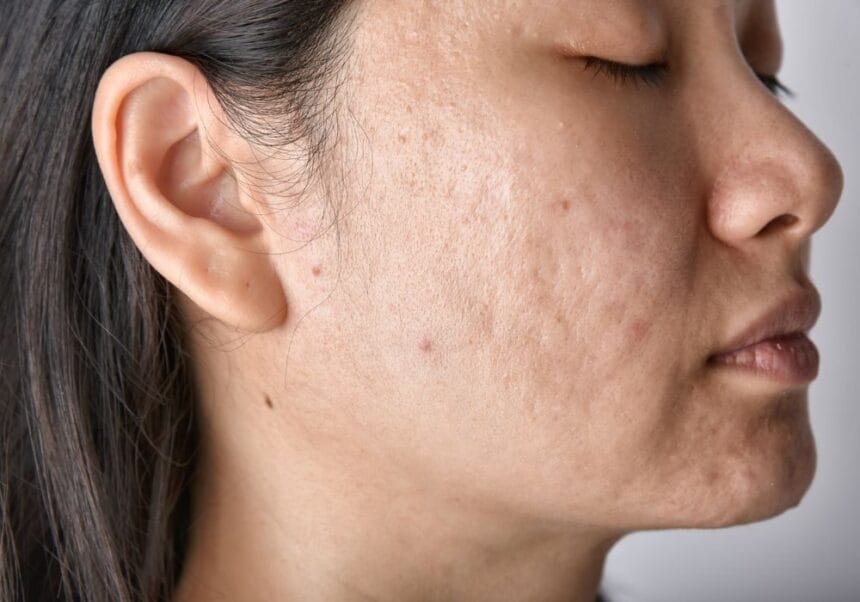
Not all acne scars are created equal, and different laser modalities are used to target specific textures. Atrophic scars, which appear as indentations or pits in the skin, are the most common targets. These include “boxcar” scars with defined edges and “rolling” scars that give the skin a wavy appearance. By targeting the base of these depressions, lasers help “lift” the scar tissue to be more level with the surrounding skin.
Atrophic scars are characterized by a loss of tissue and a sunken appearance.
Boxcar scars benefit from resurfacing that smooths out sharp, vertical edges.Rolling scars are treated by breaking up the fibrous bands that pull the skin downward.
Lasers help bridge the gap between the depth of the scar and the surface of the skin.
Improving Skin Texture and Uniformity
Beyond just filling in deep pits, laser therapy is highly effective at refining the overall “topography” of the face. Many individuals struggle with a rough or pebbled skin texture that makes makeup application difficult. Lasers smooth out these micro-irregularities, resulting in a surface that reflects light more evenly. This leads to what is often described as a “filter-like” effect on the skin’s natural finish.
Textural irregularities are minimized through precise epidermal shedding.
The treatment helps refine the appearance of enlarged pores often associated with acne.
Smoother skin allows for better light reflection, contributing to a healthy “glow.”
The overall feel of the skin becomes softer and more supple as new cells reach the surface.
Correcting Pigmentation and Redness
Acne frequently leaves behind more than just physical indentations; it often leaves “ghost” marks in the form of red or brown spots. This is known as post-inflammatory hyperpigmentation (PIH) or erythema (PIE). Specific laser wavelengths are designed to target the pigment or the blood vessels responsible for these stains. By breaking down excess melanin or collapsing tiny capillaries, the laser helps return the skin to its natural, uniform tone.
Post-inflammatory hyperpigmentation (brown spots) is addressed by targeting melanin.
Post-inflammatory erythema (red marks) is treated by targeting hemoglobin in the blood.
Lasers help “clear the canvas” by erasing the lingering colors of old breakouts.
A more even skin tone reduces the perceived severity of physical scarring.
The Role of Collagen Induction
Collagen is the scaffolding of the skin, and its depletion is the primary reason why scars form in the first place. Laser treatments act as a catalyst for long-term collagen induction. Unlike topical creams that struggle to penetrate the skin’s barrier, laser energy reaches the depths where collagen is produced. This results in skin that is not only smoother but also firmer and more resilient over time.
Collagen synthesis continues for several months following a session.
Enhanced elasticity helps the skin “bounce back” and resist new sagging.
Deeper structural improvements provide a more youthful overall appearance.
The treatment works from the inside out to provide structural reinforcement.
Ablative vs. Non-Ablative Approaches
There are two primary categories of lasers used for scar correction. Ablative lasers are more intensive, removing thin layers of the skin to allow for total regeneration. Non-ablative lasers are gentler, passing through the surface to heat the underlying tissue without damaging the top layer. The choice between these depends on the severity of the scarring and the desired timeline for visible results.
Ablative lasers are generally used for deep, stubborn scars that require significant revision.
Non-ablative lasers are ideal for those seeking a more gradual improvement.
Both methods aim to stimulate the same biological healing pathways.
Fractional technology allows for faster healing by treating only a portion of the skin at a time.
What to Expect During the Healing Phase
The journey to smoother skin involves a period of regeneration. Immediately following a session, the skin typically appears flushed, similar to a sunburn. This is a sign that the thermal energy has successfully stimulated the tissue. As the days progress, the skin may undergo a shedding process as old, damaged cells make way for the new. Patience is key, as the most dramatic results often emerge weeks after the initial session.
Temporary redness and a “warm” sensation are standard indicators of the laser’s action.
The skin enters a phase of rapid cell turnover to replace scarred tissue.
Strict adherence to post-session care, like hydration, supports the healing process.
Results are cumulative, meaning each session builds upon the progress of the last.
Longevity of Results
One of the most appealing aspects of laser scar revision is the permanence of the textural changes. Once the body has produced new collagen to fill in a scar, that tissue remains part of the skin’s structure. While the skin will continue to age naturally, the specific improvements made to the acne scars do not “wear off.” This makes it a high-value option for those seeking a long-term solution to skin damage.
Structural changes in the dermis are generally considered permanent.
New collagen becomes a lasting part of the skin’s architecture.
While skin continues to age, the repaired scars do not revert to their previous state.
Maintenance is usually focused on overall skin health rather than re-treating old scars.
FAQs
Can lasers completely erase deep ice-pick scars?
While lasers can significantly shallow and soften the appearance of deep ice-pick scars, they are often used in combination with other techniques for these specific, narrow indentations. Lasers excel at smoothing the edges and improving the texture, making them much less noticeable to the naked eye.
Is the treatment suitable for all skin tones?
Yes, modern technology has evolved to include specific wavelengths that are safe for a wide range of skin tones. Specialized lasers can target scar tissue without affecting the surrounding pigment, making skin resurfacing an inclusive option for various ethnicities.
How many sessions are typically required?
The number of sessions varies depending on the depth of the scars and the type of laser used. Most individuals see a marked improvement after 3 to 5 sessions, though more intensive lasers may require fewer visits to achieve the desired outcome.
Can I get laser treatment while I still have active acne?
It is generally recommended to wait until active acne is under control before focusing on scar revision. This prevents new scars from forming and ensures the laser can focus entirely on remodeling the existing damaged tissue.