

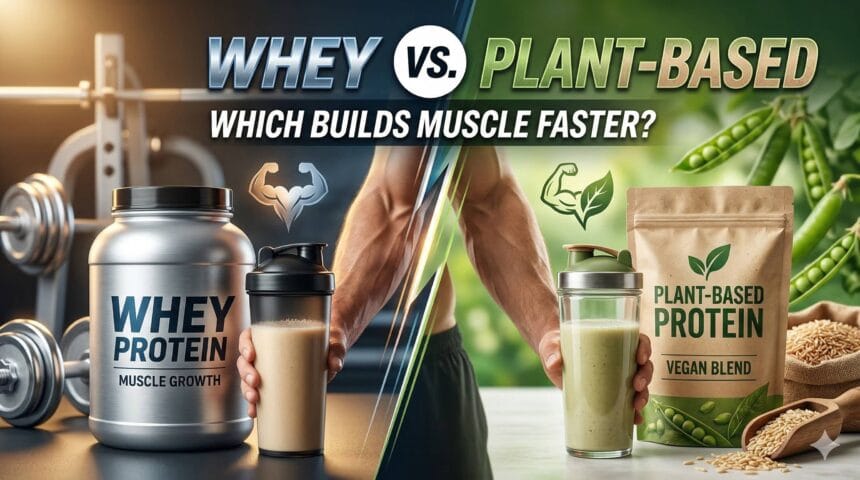

In the world of fitness, few debates are as heated as Whey vs. Plant-based protein. Whether you are a dedicated gym enthusiast or just starting your fitness journey, choosing the right protein source is crucial for muscle recovery and growth.
But which one actually builds muscle faster? Let’s break down the science, the amino acids, and the results.
1. What is Whey Protein?
Whey protein is a byproduct of cheese production. It is a “complete” protein, meaning it contains all nine essential amino acids (EAAs) that the body cannot produce on its own.
Key Benefits:
Rapid Absorption: Whey is digested very quickly, making it ideal for post-workout recovery.
High Leucine Content: It is rich in Leucine, the primary amino acid responsible for triggering Muscle Protein Synthesis (MPS).
Bioavailability: It has one of the highest biological values of any protein source.
Check out 5 Best Whey Protein Powders on Amazon 2026.
2. What is Plant Protein?
Plant protein comes from sources like peas, soy, brown rice, hemp, and seeds. While some plants are incomplete proteins individually, high-quality plant-based blends combine sources to provide a full amino acid profile.
Key Benefits:
Digestion Friendly: Often easier on the stomach for those with lactose intolerance.
Nutrient Dense: Usually contains added fiber, antioxidants, and vitamins.
Sustainable: Generally has a lower environmental footprint than dairy-based proteins.
3. The Science: Which Builds Muscle Faster?
Historically, Whey was considered the undisputed king of muscle building. However, recent studies have challenged this.
The Leucine Threshold
To build muscle, you need to hit a “Leucine threshold”—roughly 2–3 grams per serving. Whey hits this easily with a smaller scoop. Plant proteins (like Pea protein) often have slightly less Leucine, meaning you might need a slightly larger serving to trigger the same muscle-building response.
Research Findings
A 2015 study published in the Journal of the International Society of Sports Nutrition compared pea protein to whey protein. The results showed no significant difference in muscle thickness gains between the two groups over 12 weeks, provided the total protein intake was sufficient.
4. Head-to-Head Comparison
| Feature | Whey Protein | Plant Protein |
| Digestion Speed | Very Fast | Slow to Medium |
| Anabolic Trigger | High (High Leucine) | Moderate (Requires higher dose) |
| Lactose Content | Yes (unless Isolate) | None |
| Taste/Texture | Creamy & Smooth | Often Earthy or Gritty |
5. The Verdict: Which Should You Choose?
If your goal is maximum efficiency, Whey protein has a slight edge due to its high Leucine content and rapid absorption. It is the “gold standard” for a reason.
However, if you are vegan, lactose intolerant, or prefer a plant-based diet, Plant protein can build muscle just as fast as long as you:
Choose a blend (e.g., Pea and Rice) to ensure a complete amino acid profile.
Check for at least 2.5g of Leucine per serving.
Maintain a consistent caloric surplus and progressive overload in your training.
Conclusion
The “fastest” protein is the one you can digest easily and consume consistently. Both whey and high-quality plant blends will get you to your goals—your choice should depend on your dietary preferences and digestive health.