

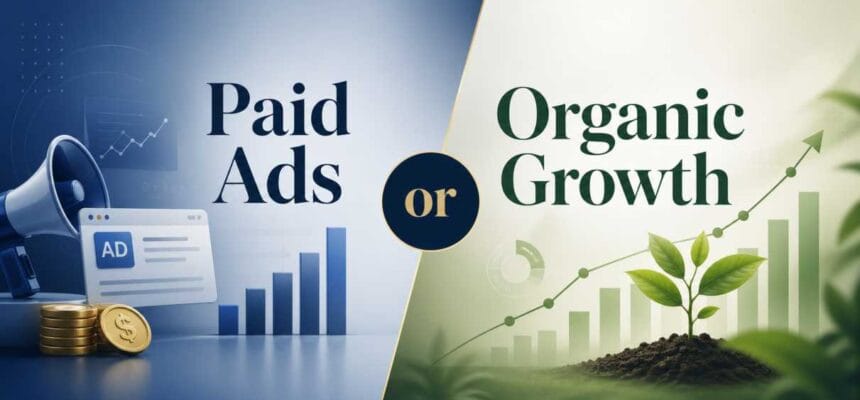

The success of an Initial Coin Offering (ICO) depends heavily on how effectively it attracts, educates, and converts potential investors. In an increasingly competitive and regulated crypto landscape, marketing strategies must be both precise and sustainable. Among the most debated questions in ICO marketing is whether paid advertising or organic growth delivers better results. While both approaches offer distinct advantages, their effectiveness varies depending on timing, execution, and overall strategy.
- Understanding Paid Ads in ICO Marketing
- The Role of Organic Growth in ICO Marketing
- Comparing Effectiveness: Speed vs Sustainability
- The Investor Journey and Marketing Alignment
- Cost Efficiency and ROI Considerations
- Regulatory and Platform Constraints
- Case Study Perspective: Blending Paid and Organic Strategies
- Common Mistakes in Choosing Between Paid and Organic
- The Role of Data in Optimizing Strategy
- The Future of ICO Marketing Strategies
- Conclusion
This is not a simple binary choice. Paid ads and organic growth represent two fundamentally different philosophies of marketing—one focused on speed and scale, the other on trust and sustainability. Understanding how each works, where each excels, and how they can be integrated is critical for any project aiming to maximize its ICO performance.
Understanding Paid Ads in ICO Marketing
Paid advertising in ICO marketing refers to the use of sponsored campaigns across digital platforms to drive traffic, generate leads, and increase visibility. This includes display ads, search engine marketing, social media ads, and programmatic campaigns. The primary advantage of paid ads is their ability to deliver immediate results.
For ICOs operating within tight timelines, paid campaigns can quickly introduce the project to a large audience. Advanced targeting options allow marketers to focus on specific demographics, geographic regions, and behavioral profiles. This precision can significantly improve the efficiency of user acquisition.
However, the effectiveness of paid ads in ICO marketing is influenced by several constraints. Many mainstream advertising platforms have historically imposed restrictions on crypto-related promotions due to concerns about fraud and regulatory compliance. Although policies have evolved, these limitations still affect campaign reach and execution.
Moreover, paid ads often attract a broad audience, not all of whom are genuinely interested in the project. This can lead to high traffic volumes but relatively low conversion rates. Without strong follow-up strategies, such as retargeting and personalized communication, much of this traffic may not translate into investment.
Another consideration is cost. Paid advertising can become expensive, particularly in competitive markets where bidding for attention drives up prices. For projects with limited budgets, inefficient spending can quickly erode resources without delivering meaningful results.
The Role of Organic Growth in ICO Marketing
Organic growth, in contrast, focuses on building visibility and engagement through non-paid channels. This includes content marketing, search engine optimization (SEO), community building, public relations, and social media engagement. Unlike paid ads, organic strategies emphasize long-term relationship building rather than immediate reach.
One of the most significant advantages of organic growth is credibility. In the crypto space, where skepticism is high, trust plays a critical role in investor decision-making. Organic channels—such as educational content, community discussions, and earned media—are perceived as more authentic and reliable.
Community building is a central component of organic growth. Platforms like Telegram, Discord, and Twitter serve as hubs for interaction, allowing projects to engage directly with their audience. Active communities not only support awareness but also drive advocacy, amplifying the project’s reach through word-of-mouth.
Content marketing further strengthens organic growth by providing value to potential investors. In-depth articles, whitepapers, and explainer videos help users understand the project’s technology and use case. This educational approach is particularly important in ICO marketing, where complexity can be a barrier to entry.
However, organic growth requires time and consistency. Building a strong community and establishing authority cannot be achieved overnight. Projects that rely solely on organic strategies may struggle to gain initial traction, especially in the early stages of their campaign.
Comparing Effectiveness: Speed vs Sustainability
The core difference between paid ads and organic growth lies in the balance between speed and sustainability. Paid ads excel at generating rapid visibility, making them ideal for short-term objectives such as initial awareness or event promotion. Organic growth, on the other hand, builds momentum gradually, creating a foundation for long-term engagement and retention.
From an effectiveness standpoint, the choice depends on the specific goals of the ICO campaign. If the objective is to quickly attract attention and drive traffic, paid ads can be highly effective. However, if the goal is to build trust, educate investors, and foster community participation, organic growth is indispensable.
Conversion rates also differ between the two approaches. Organic channels often produce higher-quality leads, as users who engage through these channels are typically more informed and interested. Paid ads may generate larger volumes of traffic, but the quality of that traffic can vary significantly.
The Investor Journey and Marketing Alignment
To fully understand the effectiveness of paid and organic strategies, it is essential to consider the investor journey. ICO participants do not make decisions impulsively; they move through stages of awareness, research, validation, and commitment.
Paid ads are most effective in the early stages of this journey, where the primary objective is to introduce the project and generate interest. Organic growth becomes increasingly important in later stages, where users seek detailed information and reassurance before investing.
This alignment suggests that the two approaches should not be viewed as competitors but as complementary components of a broader strategy. By integrating paid and organic efforts, projects can guide users seamlessly through the entire funnel.
Cost Efficiency and ROI Considerations
Return on investment (ROI) is a critical factor in evaluating marketing effectiveness. Paid ads offer measurable and immediate results, allowing marketers to track metrics such as cost per click (CPC), cost per acquisition (CPA), and conversion rates. This transparency enables precise optimization but also highlights inefficiencies.
Organic growth, while less immediate, often delivers higher long-term ROI. Once content is created and optimized, it can continue to attract traffic and engagement without additional cost. Similarly, a strong community can sustain itself, generating ongoing value through participation and advocacy.
However, measuring the ROI of organic strategies can be more complex. Metrics such as engagement rates, sentiment analysis, and community growth provide insights, but their impact on conversions may not always be directly quantifiable.
Regulatory and Platform Constraints
The regulatory environment plays a significant role in shaping the effectiveness of paid ads in ICO marketing. Advertising policies on major platforms have historically limited the promotion of crypto-related content, requiring projects to navigate a complex set of rules.
These constraints can restrict reach and increase compliance costs. Organic strategies, by contrast, are less affected by such limitations. Content marketing, community engagement, and PR efforts can be executed with greater flexibility, making them more resilient in a regulated environment.
Case Study Perspective: Blending Paid and Organic Strategies
Consider a blockchain startup preparing for an ICO in the decentralized finance sector. Initially, the project invests heavily in paid advertising to generate awareness. While this approach drives significant traffic, engagement remains low, and conversion rates are disappointing.
Recognizing the limitations of a purely paid strategy, the team shifts its focus to organic growth. They develop educational content, host AMA sessions, and actively engage with their community. Over time, this approach builds trust and increases user participation.
In the final phase, the project integrates both strategies. Paid ads are used to retarget engaged users and amplify high-performing content, while organic channels continue to nurture relationships. This hybrid approach results in improved conversion rates and a more sustainable growth trajectory.
Common Mistakes in Choosing Between Paid and Organic
Many ICO projects fall into the trap of favoring one approach at the expense of the other. Overreliance on paid ads can lead to inflated metrics without meaningful engagement, while exclusive focus on organic growth may limit reach and slow momentum.
Another common mistake is misalignment with the campaign timeline. Projects that delay organic efforts until the final stages often struggle to build trust in time, while those that neglect paid ads may fail to achieve sufficient visibility.
Ineffective integration is also a challenge. Without coordination, paid and organic strategies can operate in silos, reducing their overall impact. Successful campaigns require alignment across channels, ensuring that messaging and objectives are consistent.
The Role of Data in Optimizing Strategy
Data-driven decision-making is essential for maximizing the effectiveness of both paid and organic strategies. Analytics tools provide insights into user behavior, campaign performance, and conversion patterns.
For paid ads, data enables precise targeting and optimization. Marketers can identify which audiences respond best, adjust bids, and refine messaging to improve efficiency. For organic growth, data helps identify high-performing content, track engagement trends, and measure community health.
Combining these insights allows for a more holistic approach. For example, data from organic channels can inform paid campaigns, while insights from paid ads can highlight content opportunities for organic growth.
The Future of ICO Marketing Strategies
As the crypto industry continues to mature, the distinction between paid and organic strategies is likely to become less pronounced. Advances in technology, including artificial intelligence and predictive analytics, will enable more integrated and personalized marketing approaches.
Regulatory developments will also shape the landscape, potentially creating new opportunities and challenges for paid advertising. Projects that adapt to these changes and maintain a balanced approach will be better positioned for success.
Conclusion
The question of whether paid ads or organic growth is more effective for ICOs does not have a definitive answer. Each approach offers unique advantages and addresses different aspects of the investor journey.
Paid ads provide speed, scale, and immediate visibility, making them valuable for generating awareness and driving initial traffic. Organic growth builds trust, credibility, and long-term engagement, which are essential for converting interest into investment.
The most effective ICO marketing strategies recognize the strengths of both approaches and integrate them into a cohesive framework. By aligning paid and organic efforts with the investor journey, projects can maximize reach, enhance credibility, and achieve sustainable growth.
In the end, success in ICO marketing is not about choosing one strategy over the other—it is about understanding how to use both effectively to create a seamless path from awareness to investment.