

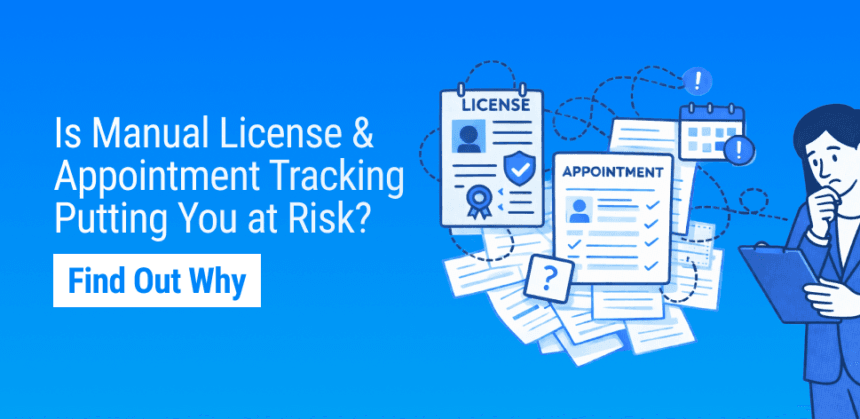

In modern insurance operations, compliance management has become increasingly complex. Insurance agencies, carriers, and MGAs in the United States must continuously manage producer licensing, carrier appointments, and regulatory requirements across multiple jurisdictions.However, many organizations still depend on manual systems such as spreadsheets and disconnected tools. While these methods may have worked in the past, they now introduce significant compliance challenges.
The Role of Licensing and Appointments in Compliance
Insurance compliance requires that producers maintain valid licenses and active carrier appointments before conducting business. A producer code is a unique identifier assigned by a carrier, allowing them to track a producer’s activity and authorization.Insurance carriers must verify licensing and appointment status before approving transactions. In multi-state environments, this process becomes more complex due to varying state regulations.
Compliance teams must monitor:
- License status across multiple states
- Carrier appointment approvals
- Renewal deadlines
- Regulatory updates
This requires accuracy and real-time tracking.
Why Manual Systems No Longer Work
Manual tracking systems are often fragmented and inefficient. Industry observations show that spreadsheet-based systems are prone to human error and inconsistencies.
Common challenges include:
- Missed renewal deadlines
- Data entry errors
- Disconnected compliance records
- Delayed updates
As operations scale, these issues increase exponentially.
The Growing Risk in Regulated Environments
The United States insurance industry operates under strict state-level regulations. Each state has its own compliance requirements, making manual tracking even more difficult.
Failure to maintain accurate compliance can result in:
- Expired licenses
- Missing carrier appointments
- Regulatory penalties
- Business disruptions
Regulatory guidelines require continuous monitoring and accurate documentation.
Manual Workflows Increase Operational Pressure
A standard compliance workflow includes:
- License verification
- Appointment validation
- Producer code assignment
- Record updates
- Renewal tracking
- Reporting
Manual execution of these steps creates delays and increases the risk of oversight. Even a single missed renewal can disrupt business operations and revenue flow.
The Shift Toward Automation in Insurance
Modern insurance organizations are increasingly adopting compliance automation to reduce risk and improve efficiency.
Automation enables:
- Centralized license tracking
- Automated appointment tracking
- Real-time alerts
- Integration with NIPR
- Streamlined producer management
Platforms like Agenzee function as insurance compliance software, helping organizations manage licensing, appointments, and compliance workflows from a single system.
Conclusion
Manual license and appointment tracking is no longer aligned with the needs of modern insurance operations. As regulatory complexity increases, automation becomes essential for maintaining compliance and reducing operational risk.
👉 Read more: https://agenzee.com/is-manual-license-and-appointment-tracking-putting-your-organization-at-risk/ .