

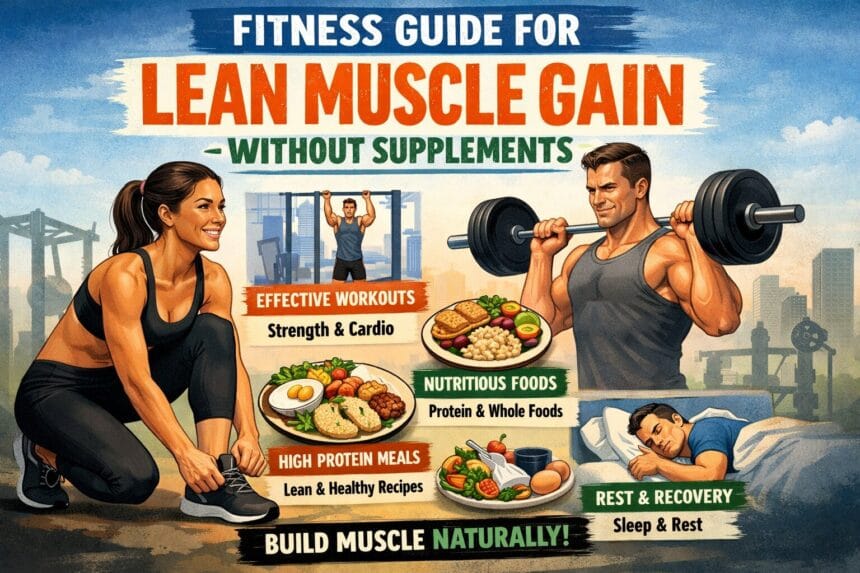

Building lean muscle without supplements is not only possible—it’s often healthier, more sustainable, and cost-effective. While many people rely on protein powders, pre-workouts, and other supplements, the truth is that your body can achieve impressive muscle growth naturally with the right combination of training, nutrition, and recovery.
- Understanding Lean Muscle Gain
- 1. Focus on Strength Training
- 2. Progressive Overload is Key
- 3. Eat Natural Protein-Rich Foods
- 4. Maintain a Slight Calorie Surplus
- 5. Don’t Ignore Carbohydrates and Fats
- 6. Stay Hydrated
- 7. Prioritize Sleep and Recovery
- 8. Use Bodyweight Training Effectively
- 9. Track Your Progress
- 10. Stay Consistent and Patient
- Sample Daily Meal Plan (No Supplements)
- Common Mistakes to Avoid
- Benefits of Building Muscle Naturally
- Final Thoughts
This fitness guide will walk you through proven strategies to gain lean muscle without using supplements, focusing on simple habits that deliver real results.
Understanding Lean Muscle Gain
Lean muscle gain means increasing muscle mass while minimizing fat gain. Unlike “bulking” methods that often lead to excess fat, this approach focuses on building a toned, defined physique.
To achieve this, you need:
Progressive strength training
A balanced, protein-rich diet
Proper recovery and consistency
Your body naturally builds muscle when you challenge it with resistance and provide enough nutrients to repair and grow.
1. Focus on Strength Training
The foundation of lean muscle gain is resistance training. You don’t need a gym full of machines—basic exercises can be highly effective.
Best Exercises for Lean Muscle
Focus on compound movements that target multiple muscle groups:
Squats
Deadlifts
Push-ups
Pull-ups
Bench press
Lunges
Overhead press
These exercises stimulate more muscle fibers, helping you grow faster without relying on supplements.
Training Frequency
Train 4–5 times per week, targeting different muscle groups:
Day 1: Chest & Triceps
Day 2: Back & Biceps
Day 3: Rest or light cardio
Day 4: Legs
Day 5: Shoulders & Core
Consistency matters more than intensity alone.
2. Progressive Overload is Key
If you want to build muscle, you must gradually increase the challenge.
How to Apply Progressive Overload
Increase weights over time
Add more repetitions
Improve form and control
Reduce rest time between sets
Your muscles grow when they are pushed beyond their comfort zone.
3. Eat Natural Protein-Rich Foods
You don’t need protein powders if your diet is balanced. Whole foods can easily meet your protein requirements.
Best Natural Protein Sources
Eggs
Chicken breast
Fish (like Rohu, salmon, tuna)
Paneer (cottage cheese)
Lentils (dal)
Chickpeas
Soy products
Milk and yogurt
Daily Protein Intake
Aim for:
1.6 to 2.2 grams of protein per kg of body weight
For example, if you weigh 70 kg:
You need around 110–150 grams of protein daily
Spread protein intake across meals for better absorption.
4. Maintain a Slight Calorie Surplus
To build muscle, your body needs extra energy.
What is a Calorie Surplus?
A calorie surplus means consuming slightly more calories than you burn.
Add 250–400 extra calories daily
Avoid overeating junk food
Focus on clean, nutrient-dense foods instead of empty calories.
5. Don’t Ignore Carbohydrates and Fats
Protein alone won’t build muscle. Your body also needs carbs and healthy fats.
Role of Carbohydrates
Carbs provide energy for workouts:
Rice
Whole wheat roti
Oats
Fruits
Potatoes
Healthy Fats for Hormones
Fats support hormone production, including testosterone:
Nuts and seeds
Desi ghee (in moderation)
Peanut butter
Fish
Balanced nutrition is essential for natural muscle growth.
6. Stay Hydrated
Water plays a crucial role in muscle function and recovery.
Benefits of Proper Hydration
Improves workout performance
Enhances nutrient transport
Prevents fatigue and cramps
Aim for at least 3–4 liters of water daily, especially if you train hard.
7. Prioritize Sleep and Recovery
Muscle growth doesn’t happen in the gym—it happens during rest.
Importance of Sleep
Repairs muscle tissues
Boosts growth hormone levels
Improves strength and performance
Aim for 7–9 hours of quality sleep every night.
Recovery Tips
Take rest days seriously
Avoid overtraining
Stretch after workouts
8. Use Bodyweight Training Effectively
If you don’t have access to a gym, bodyweight exercises can still build lean muscle.
Effective Bodyweight Exercises
Push-ups (various variations)
Pull-ups
Dips
Squats
Plank
Increase difficulty by:
Adding reps
Slowing down movements
Using one-arm or one-leg variations
9. Track Your Progress
Without tracking, it’s hard to know if you’re improving.
What to Track
Body weight
Strength levels
Workout performance
Body measurements
Take progress photos every 2–4 weeks to stay motivated.
10. Stay Consistent and Patient
Muscle gain is a slow process. Many people quit because they expect quick results.
Realistic Expectations
Noticeable results in 6–8 weeks
Significant changes in 3–6 months
Consistency beats shortcuts every time.
Sample Daily Meal Plan (No Supplements)
Here’s a simple example of a natural muscle-building diet:
Breakfast
4 boiled eggs
2 whole wheat toasts
1 banana
Milk
Lunch
Rice or roti
Chicken or paneer
Dal
Salad
Snack
Peanut butter sandwich
Fruit
Dinner
Grilled fish or chicken
Vegetables
Roti
Before Bed
A glass of milk
This type of diet can easily meet your protein and calorie needs.
Common Mistakes to Avoid
1. Skipping Meals
Muscle growth requires consistent nutrition.
2. Overtraining
Too much exercise without recovery can slow progress.
3. Poor Form
Focus on technique to avoid injuries.
4. Lack of Patience
Natural muscle gain takes time—avoid shortcuts.
Benefits of Building Muscle Naturally
Choosing a supplement-free approach offers long-term advantages:
Better digestion and overall health
No dependency on artificial products
Cost savings
Sustainable lifestyle
You build strength the way your body is designed to—naturally.
Final Thoughts
Gaining lean muscle without supplements is absolutely achievable with the right fitness strategy. Focus on strength training, eat whole foods rich in protein, maintain a slight calorie surplus, and prioritize recovery.
The key is consistency. You don’t need expensive powders or pills—just discipline, proper planning, and patience.
Start today, stay committed, and your body will transform naturally over time.