

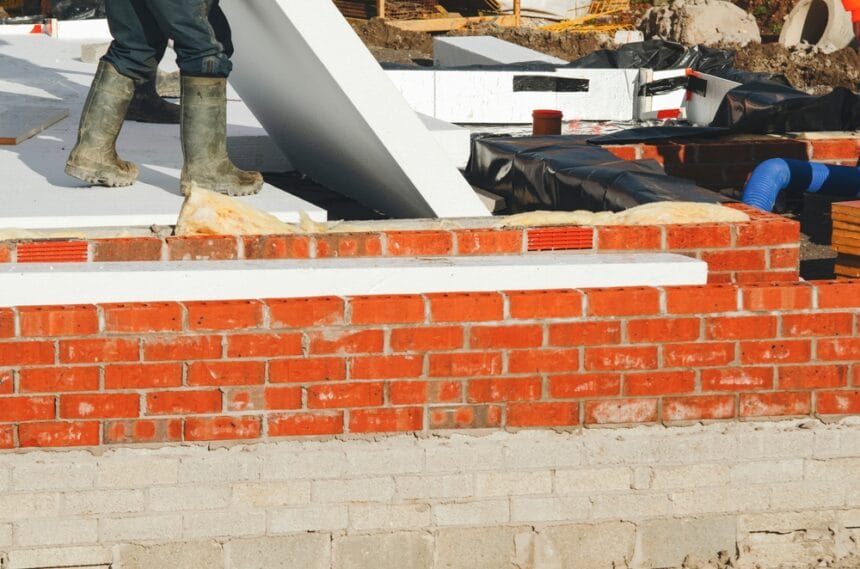

There is a quiet shift happening in construction. Not the kind that shows up in headlines, but the kind you notice when you step into a finished space, and it feels… better. Cooler in summer, quieter during the day, easier to maintain.
- Understanding Where Hard Foam Fits In
- The Shift Toward Lightweight Construction
- Insulation That Actually Performs
- Precision Through Hard Foam Sheet Applications
- Moisture Resistance and Longevity
- Supporting Modern Construction Methods
- Acoustic Comfort: An Often Overlooked Benefit
- Cost Efficiency Over Time
- A Quick Comparison Snapshot
- Environmental Considerations
- Where the Material Is Headed
- Final Thoughts
Materials are changing. Slowly, but steadily.
Among them, hard foam sheet has found its place in ways that were not as obvious a decade ago. It is not flashy. It does not announce itself like glass facades or steel structures. But it sits inside walls, under floors, behind panels, doing its job without drawing attention.
And that is precisely why it matters.
Understanding Where Hard Foam Fits In
Before getting into its impact, it helps to understand what makes this material different.
Hard foam is dense, structured, and designed to hold its shape under pressure. Unlike softer foams that compress easily, this one is built for support and insulation. It is used where stability matters.
You will find it in:
- Wall insulation systems
- Roofing layers
- Cold storage construction
- Prefabricated panels
- Flooring underlays
It does not replace traditional materials entirely. Instead, it works alongside them, filling gaps where conventional options fall short.
The Shift Toward Lightweight Construction
Construction has always balanced strength and weight. Heavier materials often bring strength, but they also add load. That affects design, transport, and cost.
This is where hard foam changes the equation.
It offers structural support without adding unnecessary weight. That may sound like a small benefit, but it influences multiple stages of a project.
Aspect | Traditional Materials | With Hard Foam |
Weight | Higher | Significantly lower |
Installation | Labour-intensive | Faster handling |
Transport | Costly due to bulk | More efficient |
Structural Load | Increased | Reduced |
Lighter materials allow for more flexible design. They also reduce strain on supporting structures.
Insulation That Actually Performs
One of the most practical advantages of hard foam lies in insulation.
Buildings today are expected to manage temperature efficiently. Cooling costs are rising. Energy efficiency is no longer optional.
Hard foam helps regulate internal conditions by limiting heat transfer.
- Keeps interiors cooler during hot weather
- Reduces reliance on air conditioning
- Maintains stable indoor environments
Over time, this translates into lower energy consumption.
What makes it effective is its closed-cell structure. Air gets trapped within, slowing down heat movement. It is a simple principle, but it works consistently.
Precision Through Hard Foam Sheet Applications
The way materials are shaped and applied has also evolved.
A hard foam sheet offers uniform thickness, controlled density, and ease of installation. That combination makes it suitable for applications where consistency matters.
In modern construction, this shows up in:
- Modular wall systems
- Insulated panels
- False ceilings
- Partition structures
The advantage is not just performance, but predictability. Each hard foam sheet behaves the same way, reducing variability during installation.
This consistency improves both speed and finish quality.
Moisture Resistance and Longevity
Water damage is one of the most common issues in buildings. It affects durability, appearance, and maintenance costs.
Hard foam resists moisture better than many traditional materials. It does not absorb water easily, which helps maintain its structure over time.
This becomes especially useful in:
- Basements
- Roofing layers
- External wall systems
Reduced moisture absorption means fewer repairs and longer life cycles.
It also supports hygiene in environments where dampness can lead to mould or deterioration.
Supporting Modern Construction Methods
Construction itself has changed. Projects now move faster. Prefabrication has become more common. On-site work is often reduced in favour of off-site preparation.
Hard foam fits well into this approach.
Its lightweight nature and ease of cutting allow it to be shaped and assembled quickly. It integrates smoothly into prefabricated panels and modular units.
This alignment with modern construction methods is not accidental. It reflects how materials are evolving alongside processes.
Acoustic Comfort: An Often Overlooked Benefit
Noise control is rarely discussed during planning, yet it becomes important once a space is occupied.
Hard foam contributes to acoustic insulation by absorbing and dampening sound.
- Reduces transmission between rooms
- Limits external noise intrusion
- Improves overall indoor comfort
It is not always the primary acoustic material, but it plays a supporting role that enhances results.
Cost Efficiency Over Time
Initial material cost is only one part of the equation. Long-term performance often matters more.
Hard foam supports cost efficiency in several ways:
- Lower energy consumption due to insulation
- Reduced maintenance from moisture resistance
- Faster installation, lowering labour costs
These savings do not always appear immediately. They build gradually.
That makes the material particularly relevant for projects with a long-term view.
A Quick Comparison Snapshot
Feature | Hard Foam | Conventional Alternatives |
Weight | Light | Moderate to heavy |
Insulation | High | Varies |
Moisture Resistance | Strong | Often limited |
Installation Speed | Fast | Slower |
Durability | Long-lasting | Depends on material |
This does not mean traditional materials are obsolete. It simply shows where hard foam adds value.
Environmental Considerations
Sustainability has become part of material selection.
Hard foam contributes by improving energy efficiency, which reduces overall consumption. Some variants are also designed with recyclability in mind, though this depends on composition and application.
The broader impact lies in how buildings perform over time.
- Reduced energy demand
- Lower operational costs
- Extended material lifespan
These factors support more responsible construction practices.
Where the Material Is Headed
If you look closely, the role of hard foam is expanding.
It is being adapted for new applications, refined for better performance, and integrated into systems that did not exist before.
Innovation here is not dramatic. It is gradual, steady, and practical.
That is often how meaningful change happens in construction.
Final Thoughts
The transformation of construction materials is not driven by a single breakthrough. It is shaped by a series of improvements, each solving a specific problem.
In that landscape, hard foam has emerged as a material that quietly improves how buildings perform. It supports insulation, reduces weight, resists moisture, and adapts to modern construction methods without demanding attention.
As the industry continues to evolve, materials that offer this kind of balance tend to stay relevant.
For businesses and developers exploring advanced material solutions, including specialised options like reticulated foam, companies such as Sheela Foam continue to contribute to this evolving space with practical, performance-driven approaches.