
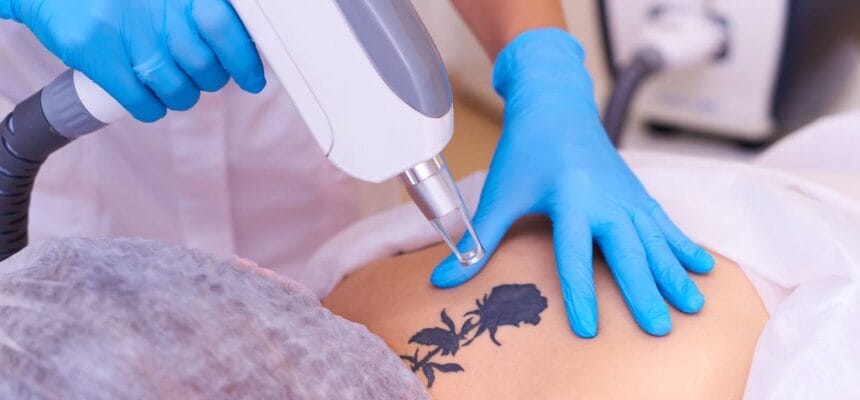

The evolution of aesthetic technology has transformed how we approach body art that no longer fits our personal narrative. While tattoos were once considered permanent fixtures of the skin, modern advancements in light-based physics have made it possible to fade and eliminate ink with remarkable precision. Understanding the science behind Laser Tattoo Removal in Abu Dhabi requires a deep dive into the interaction between concentrated light energy and the biological structure of the dermis. This process is not merely about “erasing” a mark but involves a sophisticated mechanical breakdown of foreign pigments that allows the body’s natural systems to take over the cleaning process.
The Science of Ink Permanence
To understand how a laser breaks down ink, one must first understand why tattoos stay in the skin in the first place. When a tattoo is created, needles deposit ink droplets deep into the dermis, which is the second layer of skin. This layer is much more stable than the epidermis, which sheds and regenerates every few weeks.
The Role of Pigment Size
Tattoo ink particles are naturally too large for the body’s white blood cells to engulf and remove. When the ink is first injected, the immune system recognizes it as a foreign substance and attempts to clear it away. However, because the pigment clusters are significant in size, the white blood cells (macrophages) can only nibble at the edges, failing to transport the bulk of the ink.
The Dermal Suspension
The ink becomes trapped within the fibroblasts and the collagen matrix of the dermis. Over time, some ink may migrate or fade slightly as the body slowly processes tiny fragments, but the majority remains suspended in a permanent state. Breaking this suspension requires an external force that can shatter these large particles into manageable pieces.
The Photomechanical Effect
The primary mechanism by which lasers interact with tattoo ink is known as the photomechanical or photoacoustic effect. Unlike traditional lasers that may use heat to vaporize tissue, tattoo removal lasers operate on an incredibly fast time scale to create a physical impact within the skin.
Ultra-Short Pulse Durations
Modern systems utilize pulses measured in nanoseconds (one-billionth of a second) or picoseconds (one-trillionth of a second). These bursts of energy are so rapid that they target the ink particles before the heat has a chance to dissipate into the surrounding skin tissue. This precision ensures that the energy is focused entirely on the pigment.
The Acoustic Shockwave
When the laser light hits a particle of ink, the pigment absorbs the energy instantly. This rapid absorption causes the ink particle to heat up and expand at an extraordinary rate. This expansion happens so quickly that it generates a microscopic acoustic shockwave. It is this “snap” or mechanical vibration that shatters the ink into thousands of tiny fragments, much like a hammer hitting a piece of glass.
Selective Photothermolysis
The success of the removal process hinges on a principle called selective photothermolysis. This principle dictates that specific wavelengths of light can be used to target specific colors without affecting the surrounding clear or pigmented skin cells.
Wavelength and Color Absorption
Different ink colors absorb different frequencies of light. For instance, black ink is the easiest to treat because it absorbs all laser wavelengths. In contrast, colors like green or blue require specific wavelengths that are highly absorbed by those pigments but reflected by others. By selecting the correct wavelength, the laser passes harmlessly through the upper layers of the skin and is only “caught” by the tattoo ink.
Protecting Surrounding Tissue
Because the laser is tuned to the specific color of the ink, the surrounding skin cells—which do not contain that specific pigment—remain largely unaffected by the light energy. This selectivity is what allows for the removal of ink while maintaining the integrity of the dermal structure.
The Biological Clearing Process
Once the laser has successfully shattered the ink particles into microscopic dust, the mechanical part of the procedure is complete. The remaining work is handled entirely by the human body’s internal waste management system.
Macrophage Recruitment
The immune system’s white blood cells, specifically macrophages, are constantly patrolling the body for foreign debris. Once the ink has been broken down into sufficiently small fragments, these cells can finally do what they couldn’t do before: engulf the particles.
Lymphatic Transport
After the macrophages consume the shattered ink, they enter the lymphatic system. The ink is then transported through the lymph nodes and eventually processed and excreted by the body as natural waste. This is why a tattoo does not disappear instantly after a session; rather, it fades gradually over several weeks as the immune system slowly clears the debris.
Factors Influencing Particle Breakdown
Not every tattoo responds to the breakdown process in the same way. Several variables determine how effectively the laser can shatter the ink and how quickly the body can remove it.
Ink Depth and Density
Professional tattoos tend to have a higher density of ink and are placed deeper in the dermis compared to amateur tattoos. Higher density requires more “shattering” events to break through the layers of pigment. If the ink is stacked heavily, the laser may only reach the top layer in the first session, requiring subsequent visits to reach the deeper deposits.
Chemical Composition of Pigments
Tattoo inks are not standardized; they can be made of various organic and inorganic compounds, including metal salts and industrial pigments. Some chemical compositions are more “brittle” and shatter easily under laser pressure, while others may be more resilient or reflective, requiring more specialized light frequencies to achieve a breakdown.
The Importance of the Healing Interval
A critical component of the ink-breaking process is the time allowed between sessions. Rushing the process does not lead to faster results because the biological clearing phase has a set physiological speed.
Allowing for Lymphatic Drainage
If a second laser application is performed too soon, it may target ink that the body is already in the process of moving. Giving the lymphatic system ample time—usually several weeks—ensures that the “top layer” of shattered dust has been cleared, allowing the next laser pulse to reach the deeper, unshattered particles more effectively.
Skin Recovery and Integrity
The skin needs time to rest after the mechanical stress of the acoustic shockwaves. While the laser targets the ink, the rapid expansion of the particles still creates a temporary environment of activity within the dermis. A full recovery cycle ensures the skin remains healthy and receptive to further sessions.
Summary of the Fragmentation Process
Targeting: The laser identifies the ink based on its color and pulse speed.
Absorption: The ink particle absorbs the high-intensity light energy instantly.
Shattering: Rapid thermal expansion creates a shockwave that breaks the ink into “dust.”
Consumption: White blood cells identify the now-small particles as manageable waste.
Elimination: The lymphatic system carries the particles away for natural excretion.
FAQs
How does the laser know to hit the ink and not my skin?
The laser uses specific wavelengths of light that are only absorbed by certain colors. Because your skin cells are a different color than the tattoo ink, the light passes through the skin without being absorbed, only reacting when it hits the darker or more vibrant pigment of the tattoo.
Why do tattoos look white or “frosted” immediately after the laser hits them?
This is a temporary effect caused by the rapid heating of the ink particles. As the ink shatters, tiny bubbles of carbon dioxide are released and rise to the surface of the skin, creating a white, frosted appearance. This usually subsides within a few minutes to an hour.
Can all tattoo colors be broken down equally?
Black and dark blue inks are the easiest to break down because they absorb almost all laser energy. Brighter colors like neon green, yellow, and light blue can be more challenging and require specific specialized wavelengths to effectively shatter the particles.
Does the ink disappear through the top of the skin?
No, the ink does not come out through the surface. The laser breaks the ink into tiny pieces so that your body’s internal immune system can carry it away. The ink is removed from the inside out through your lymphatic system.