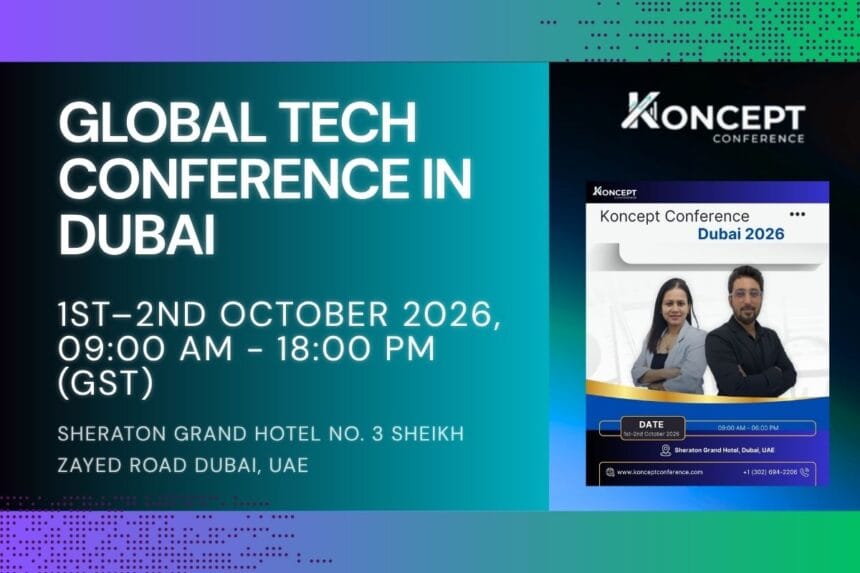

The exhibition hall buzzed with a peculiar rhythm—half human, half machine. Conversations weren’t just happening between people anymore; they were unfolding between humans and systems that could reason, adapt, and, in some cases, walk beside them. At the global tech conference in Dubai, the future of work wasn’t presented as a distant possibility—it was on full display, negotiating contracts, analyzing datasets, and even contributing to strategic discussions.
Yet beneath the spectacle of humanoid coworkers and autonomous systems lies a more nuanced reality—one that leaders must carefully interpret rather than blindly embrace.
Across several IT leadership conferences 2026, a recurring theme has emerged: the rise of agentic teams. These are not just AI tools executing commands but systems capable of goal-setting, decision-making, and iterative learning. In theory, they promise exponential productivity. In practice, they demand a redefinition of leadership, accountability, and trust.
One striking demonstration at the conference featured a humanoid assistant collaborating with a marketing team. It analyzed campaign data in real time, suggested optimizations, and even simulated consumer behavior scenarios. The efficiency gains were undeniable. However, when probed about ethical boundaries and decision transparency, the system’s limitations became evident. It could act—but explaining why it acted remained a challenge.
This is where the conversation shifts from innovation to governance.
Agentic teams introduce a paradox: the more autonomous systems become, the more critical human oversight is. Leaders must now design frameworks that ensure these systems align with organizational values and regulatory expectations. Blind delegation to AI is not leadership—it’s abdication.
For startups and entrepreneurs pitching to investors at the Koncept Conference, this distinction is particularly crucial. Investors are no longer captivated by automation alone; they are asking deeper questions. How does your AI make decisions? What safeguards are in place? How do you ensure accountability when systems act independently? The winners in this space will not be those who build the most advanced AI, but those who build the most trustworthy AI.
Another reality check from the conference floor is the human factor. While humanoid coworkers can enhance efficiency, they also introduce cultural and psychological complexities. Employees must adapt to working alongside entities that do not tire, do not err in predictable ways, and do not operate within traditional social norms. This requires reskilling—not just in technical competencies, but in collaboration, critical thinking, and ethical reasoning.
Moreover, the cost of implementation remains a barrier. Despite the polished demonstrations, deploying humanoid systems at scale is still capital-intensive and operationally complex. For many organizations, the immediate value lies not in physical humanoids but in software-based agentic systems that can integrate seamlessly into existing workflows.
The 2026 conference floor did not present a utopia—it revealed a transition. A shift from tools to teammates, from automation to autonomy. The excitement is justified, but so is the caution.
Humanoid coworkers and agentic teams are not a replacement for human intelligence; they are an extension of it. The organizations that will thrive are those that understand this balance—leveraging AI’s capabilities while reinforcing human judgment at every critical juncture.