
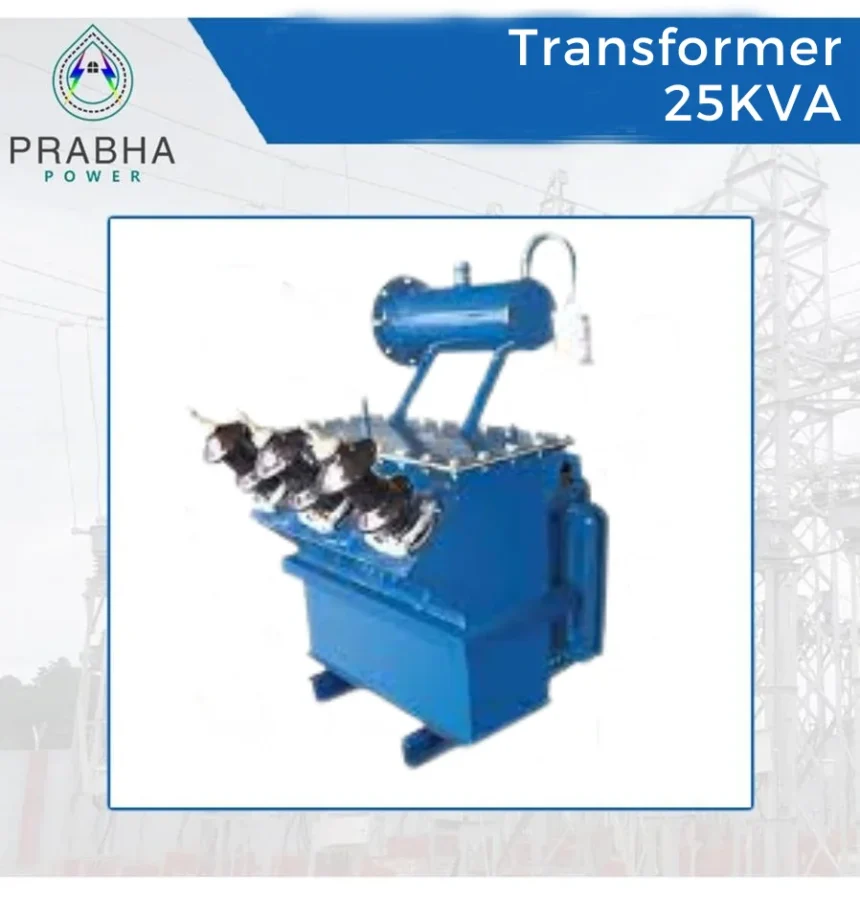

Among the many types of transformers available, the 25 kVA transformer is widely used in small industries, rural electrification, and commercial areas.
- What is a 25 kVA Transformer?
- Basic Working Principle
- Main Components of a 25 kVA Transformer
- Design Features of a 25 kVA Transformer
- 1. Compact Size
- 2. Efficient Cooling System
- 3. High-Quality Materials
- 4. Low Loss Design
- 5. Strong Mechanical Structure
- Types of 25 kVA Transformers
- 1. Distribution Transformer
- 2. Pole-Mounted Transformer
- 3. Pad-Mounted Transformer
- 4. Dry Type Transformer
- Performance of a 25 kVA Transformer
- Applications of 25 kVA Transformer
- 1. Residential Areas
- 2. Small Industries
- 3. Agriculture
- 4. Commercial Buildings
- 5. Rural Electrification
- Advantages of 25 kVA Transformer
- Limitations of 25 kVA Transformer
- Installation Guidelines
- Maintenance Tips
- Factors to Consider Before Buying
- 1. Load Requirement
- 2. Efficiency Rating
- 3. Quality of Materials
- 4. Type of Transformer
- 5. Manufacturer Reputation
- Future Trends in Transformer Design
- 1. Energy Efficient Designs
- 2. Eco-Friendly Materials
- 3. Smart Transformers
- 4. Compact and Lightweight Models
- Conclusion
In this blog, we will explain the design, working, performance, and applications of a 25 kVA transformer in very simple language so that anyone can understand it easily.
What is a 25 kVA Transformer?
A transformer is a device that changes voltage levels without changing the frequency of electricity. The term 25 kVA transformer refers to the power rating of the transformer.
- kVA (kilovolt-ampere) is a unit of apparent power
- A 25 kVA transformer can handle up to 25,000 volt-amperes
This type of transformer is usually used where the power demand is not very high, such as:
- Small factories
- Shops and offices
- Agricultural pump sets
- Rural homes
Basic Working Principle
The working of a transformer is based on a simple concept called electromagnetic induction.
How It Works:
- When electricity flows through the primary winding, it creates a magnetic field.
- This magnetic field passes through the transformer core.
- The magnetic field then induces voltage in the secondary winding.
- The voltage level changes depending on the number of turns in the windings.
Key Point:
- If the secondary winding has more turns → voltage increases (step-up transformer)
- If it has fewer turns → voltage decreases (step-down transformer)
Most 25 kVA transformers are used as step-down transformers.
Main Components of a 25 kVA Transformer
A transformer may look simple from outside, but it has several important parts inside.
1. Core
The core is made of laminated silicon steel sheets.
Purpose:
- Provides a path for magnetic flux
- Reduces energy loss
2. Windings
There are two types of windings:
- Primary winding
- Secondary winding
These are made of copper or aluminum.
Function:
- Carry electric current
- Help in voltage conversion
3. Insulation
Insulation materials are used between windings and other parts.
Importance:
- Prevents short circuits
- Ensures safety
4. Transformer Oil
Most 25 kVA transformers are oil-filled.
Functions:
- Cooling
- Insulation
5. Tank
The tank holds the core, windings, and oil.
Features:
- Strong and sealed
- Protects internal parts from dust and moisture
6. Bushings
Bushings allow safe connection of external wires to internal windings.
Design Features of a 25 kVA Transformer
The design of a transformer is very important for its efficiency and long life.
1. Compact Size
- A 25 kVA transformer is small compared to larger transformers
- Easy to install in limited space
2. Efficient Cooling System
- Oil cooling is commonly used
- Some may have additional cooling fins
3. High-Quality Materials
- Good quality copper or aluminum windings
- High-grade insulation
4. Low Loss Design
- Designed to reduce energy losses
- Improves efficiency
5. Strong Mechanical Structure
- Can handle environmental stress
- Suitable for outdoor installation
Types of 25 kVA Transformers
There are different types based on application and installation.
1. Distribution Transformer
- Most common type
- Used in power distribution systems
2. Pole-Mounted Transformer
- Installed on electric poles
- Common in rural areas
3. Pad-Mounted Transformer
- Installed on the ground
- Used in urban areas
4. Dry Type Transformer
- Does not use oil
- Used indoors where safety is important
Performance of a 25 kVA Transformer
The performance of a transformer depends on several factors.
1. Efficiency
Efficiency means how much input power is converted into output power.
- A good 25 kVA transformer has high efficiency
- Energy loss is very low
2. Voltage Regulation
Voltage regulation shows how stable the output voltage is.
- Low voltage drop is better
- Important for sensitive equipment
3. Load Capacity
- Can handle up to 25 kVA load
- Overloading can damage the transformer
4. Temperature Rise
- Heat is generated during operation
- Proper cooling keeps temperature under control
5. Losses in Transformer
There are two main types of losses:
a. Core Loss (No-load Loss)
- Happens even when no load is connected
- Due to magnetic properties of the core
b. Copper Loss (Load Loss)
- Occurs when current flows through windings
- Depends on load
Applications of 25 kVA Transformer
A 25 kVA transformer is used in many areas because of its suitable size and capacity.
1. Residential Areas
- Provides electricity to small groups of homes
- Ensures stable power supply
2. Small Industries
- Used in workshops and small factories
- Supports machines and equipment
3. Agriculture
- Powers irrigation pumps
- Helps farmers in water management
4. Commercial Buildings
- Used in shops, offices, and small malls
5. Rural Electrification
- Plays a major role in village electrification
- Easy to install on poles
Advantages of 25 kVA Transformer
There are many benefits of using this transformer.
1. Cost-Effective
- Lower cost compared to larger transformers
- Suitable for small-scale use
2. Easy Installation
- Lightweight and compact
- Requires less space
3. Reliable Performance
- Provides stable voltage
- Works efficiently for long periods
4. Low Maintenance
- Requires minimal maintenance
- Long service life
5. Energy Efficient
- Designed to reduce losses
- Saves electricity
Limitations of 25 kVA Transformer
While it has many benefits, there are some limitations.
1. Limited Capacity
- Cannot handle heavy industrial loads
- Suitable only for small to medium usage
2. Overloading Risk
- Overloading can cause overheating
- May reduce lifespan
3. Oil Maintenance (for oil-filled types)
- Oil needs to be checked regularly
- Leakage can be a problem
Installation Guidelines
Proper installation is important for safety and performance.
1. Location Selection
- Choose a dry and safe place
- Avoid water-logged areas
2. Proper Mounting
- Ensure strong support
- Use proper fittings
3. Earthing
- Good earthing is necessary
- Protects from electrical faults
4. Ventilation
- Ensure proper airflow
- Helps in cooling
5. Safety Measures
- Use protective devices
- Follow electrical standards
Maintenance Tips
Regular maintenance increases the life of the transformer.
1. Check Oil Level
- Maintain proper oil level
- Replace if necessary
2. Inspect for Leaks
- Check tank and joints
- Fix leaks immediately
3. Clean Bushings
- Remove dust and dirt
- Prevent electrical faults
4. Monitor Temperature
- Ensure it is within safe limits
5. Test Insulation
- Periodically check insulation strength
Factors to Consider Before Buying
Before selecting a 25 kVA transformer, consider these points:
1. Load Requirement
- Calculate total load
- Choose accordingly
2. Efficiency Rating
- Higher efficiency means less energy loss
3. Quality of Materials
- Better materials ensure longer life
4. Type of Transformer
- Choose oil-filled or dry type based on need
5. Manufacturer Reputation
- Select a trusted manufacturer
Future Trends in Transformer Design
Technology is improving transformer design continuously.
1. Energy Efficient Designs
- Focus on reducing losses
- Better performance
2. Eco-Friendly Materials
- Use of biodegradable oils
- Environment-friendly designs
3. Smart Transformers
- Equipped with monitoring systems
- Real-time performance tracking
4. Compact and Lightweight Models
- Easier to transport and install
Conclusion
A 25 kVA transformer is a reliable and efficient solution for small-scale power distribution needs. It plays an important role in supplying electricity to homes, farms, and small businesses. With proper design, installation, and maintenance, it can provide long-lasting and stable performance.
When choosing a transformer, always focus on quality, efficiency, and safety. A well-designed transformer not only improves performance but also reduces energy loss and maintenance costs.
For those looking for dependable transformer solutions, PRABHA POWER offers quality products designed to meet modern electrical requirements with efficiency and durability.