

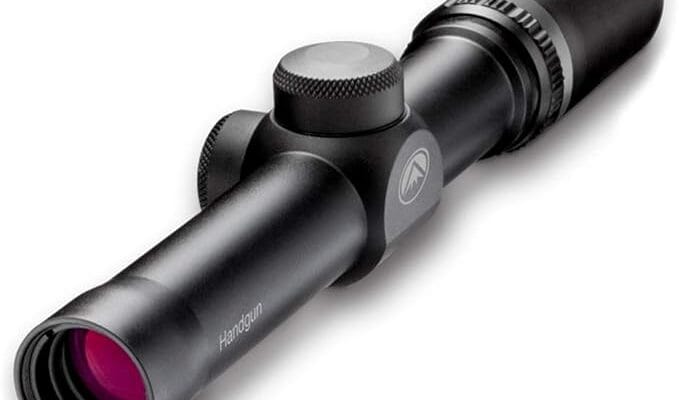
In the professional B2B landscape of 2026, the red dot sight has become a non-negotiable standard for security, law enforcement, and specialized industrial applications. Its primary value proposition—unlimited eye relief and rapid target acquisition—is unparalleled for short-to-mid-range engagements. However, for procurement officers and fleet managers, the transition to high-volume deployment often reveals technical vulnerabilities that lead to decreased accuracy and increased maintenance costs. Solving these “invisible” optical hurdles is essential for maintaining operational readiness and ensuring the safety of those in the field.
- The Problem: Parallax, Astigmatism, and Thermal Shift
- The Solution: A Framework for High-Reliability Reflex Optics
- 1. Implementing Athermalized Optical Housings
- 2. Utilizing Circular Polarizers to Mitigate Astigmatism
- 3. Advanced Aspheric Lens Geometry
- The Strategic Advantage of Modern Reflex Optics
- Conclusion
The Problem: Parallax, Astigmatism, and Thermal Shift
The most pervasive issues in the modern red dot sight ecosystem aren’t about battery life—which has largely been solved in 2026—but about optical consistency. Professional users frequently encounter three “deal-breaking” problems:
Parallax Error at Extreme Angles: While many manufacturers claim their sights are “parallax-free,” the reality is that nearly all reflex sights exhibit some deviation when the eye is positioned near the edge of the optical window. At 50+ yards, this “minor” error can result in several inches of point-of-impact shift.
Dot Distortion (The “Starflying” Effect): Users with even minor astigmatism often see a blurry “starburst” instead of a crisp 2 MOA dot. This distortion makes it impossible to maintain a precise point of aim, particularly in high-stress, high-brightness environments.
Thermal Zero-Drift: In extreme climates—common in the 2026 operational theatre—the internal emitter mount can expand or contract. This microscopic shift in the LED’s position relative to the lens can cause the zero to wander by 1-2 Milliradians, leading to unexplainable misses during mission-critical moments.
The Solution: A Framework for High-Reliability Reflex Optics
To solve these challenges for a B2B fleet, we must move beyond standard consumer-grade fixes and implement a technically grounded, system-level framework.
1. Implementing Athermalized Optical Housings
The most feasible solution for zero-drift is the use of athermalized mounts and high-grade 7075-T6 aluminum housings. By matching the thermal expansion coefficient of the emitter carrier with the lens housing, the internal alignment remains stable despite temperature swings. For B2B procurement, verifying that the red dot sight has undergone “thermal cycling” tests (from -40°C to +70°C) is the only way to guarantee that the zero you set in the armory is the zero you have in the field.
2. Utilizing Circular Polarizers to Mitigate Astigmatism
To solve dot distortion for operators with astigmatism, the solution lies in the application of circular polarization coatings on the objective lens. This technology “cleans up” the light path and reduces the scatter that causes the starburst effect. Additionally, shifting from a 1 MOA dot to a larger 6 MOA dot can often provide a “crisper” visual for those with vision impairments without sacrificing significant accuracy at typical engagement distances.
3. Advanced Aspheric Lens Geometry
To eliminate parallax errors, the industry has shifted toward high-curvature aspheric lenses. Unlike traditional spherical lenses, aspheric surfaces can be mathematically tuned to ensure that the reflected dot remains centered on the target regardless of the viewer’s eye position within the window. For a professional-grade red dot sight, this hardware-level correction is a “must-have” to ensure that the point of aim is the point of impact, even when the rider or operator is in an unconventional shooting position.
The Strategic Advantage of Modern Reflex Optics
Efficiency in 2026 is driven by speed and simplicity. The red dot sight remains the most efficient interface for “both eyes open” shooting, which is critical for maintaining peripheral vision in urban environments. For B2B companies, the move toward “Shake-Awake” technology and solar-fail-safe systems has reduced the logistical burden of battery management across large fleets. By choosing optics that solve the fundamental problems of parallax and thermal drift, organizations can focus on training rather than troubleshooting.
Conclusion
The reliability of a red dot sight is the foundation of modern tactical precision. By addressing the core challenges of dot distortion and parallax through aspheric lens design and athermalized housings, B2B manufacturers can deliver a product that stands up to the uncompromising rigors of 2026. As the demand for rapid-response hardware grows, the organizations that prioritize these technically feasible, high-performance solutions will be the ones that define the next generation of professional sighting systems. Focus on these precision-engineered strategies to ensure your equipment remains a benchmark for reliability and mission success.