
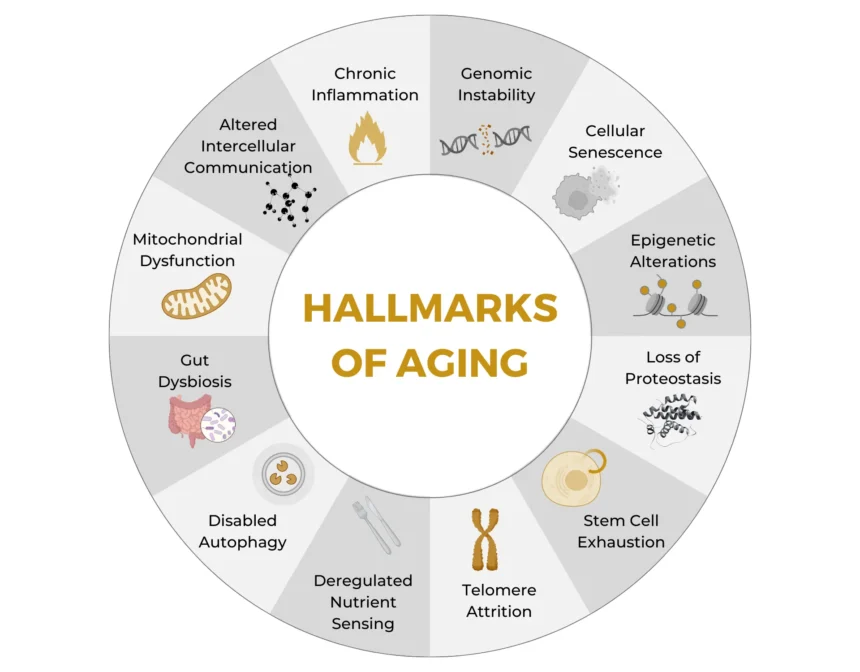

The concept of Hallmarks of Aging helps scientists understand why our bodies age over time. It explains the key biological processes that lead to aging and age-related health problems. By studying these hallmarks, researchers can find ways to support healthier aging and improve quality of life.
- What Are the Hallmarks of Aging?
- Why Understanding Aging at the Cellular Level Matters
- The 9 Hallmarks of Aging Explained
- 1. Genomic Instability
- 2. Telomere Shortening
- 3. Epigenetic Changes
- 4. Loss of Proteostasis
- 5. Deregulated Nutrient Sensing
- 6. Mitochondrial Dysfunction
- 7. Cellular Senescence
- 8. Stem Cell Exhaustion
- 9. Altered Intercellular Communication
- How the Hallmarks Work Together
- Visible Effects of Cellular Aging
- Factors That Accelerate Aging
- How to Support Healthy Aging
- 1. Eat a Balanced Diet
- 2. Stay Physically Active
- 3. Get Enough Sleep
- 4. Manage Stress
- 5. Avoid Harmful Habits
- 6. Support with Advanced Nutrition
- The Future of Aging Science
- Conclusion
In this article, we will explore what the Hallmarks of Aging are, how they affect human cells, and what they mean for overall health.
What Are the Hallmarks of Aging?
The Hallmarks of Aging are a group of biological processes that explain why our bodies gradually lose function over time. These hallmarks were first identified by scientists to simplify the complex science of aging.
They describe how damage builds up in our cells and tissues, leading to aging and diseases such as heart problems, diabetes, and memory loss.
There are nine main hallmarks of aging, and each one plays a role in how our cells and body change as we grow older.
Why Understanding Aging at the Cellular Level Matters
Every organ in our body is made up of cells. When cells are healthy, our body works properly. But when cells start to get damaged, the body begins to show signs of aging.
Understanding aging at the cellular level helps us:
- Learn why diseases happen
- Find ways to slow down aging
- Improve overall health and longevity
- Develop better treatments and supplements
This is why the Hallmarks of Aging are so important in modern science and healthcare.
The 9 Hallmarks of Aging Explained
Let’s take a closer look at each hallmark and how it affects human cells.
1. Genomic Instability
Our DNA carries all the instructions needed for the body to function. Over time, DNA gets damaged due to:
- Environmental factors (like pollution and UV rays)
- Poor lifestyle habits
- Natural cell processes
When DNA damage builds up, cells cannot function properly. This leads to errors in cell activity and increases the risk of diseases such as cancer.
2. Telomere Shortening
Telomeres are protective caps at the ends of chromosomes. They prevent DNA from getting damaged during cell division.
Each time a cell divides, telomeres become shorter. Eventually, they become too short, and the cell can no longer divide. This leads to:
- Slower tissue repair
- Aging of organs
- Increased cell death
Telomere shortening is one of the key reasons why our bodies age over time.
3. Epigenetic Changes
Epigenetics refers to changes in how genes are expressed without altering the DNA itself.
As we age, these changes can:
- Turn off important genes
- Activate harmful genes
- Disrupt normal cell function
This can lead to problems like inflammation, poor cell repair, and increased risk of disease.
4. Loss of Proteostasis
Proteins are essential for almost every function in the body. They need to be properly formed and maintained.
With aging, the body loses its ability to manage proteins effectively. This results in:
- Misfolded proteins
- Protein buildup
- Cell damage
This hallmark is closely linked to conditions like Alzheimer’s disease and Parkinson’s disease.
5. Deregulated Nutrient Sensing
Our body relies on nutrients to regulate growth, energy, and repair.
As we age, the systems that control nutrient sensing become unbalanced. This can lead to:
- Increased fat storage
- Reduced energy production
- Higher risk of metabolic diseases
Pathways like insulin signaling and growth hormones become less effective over time.
6. Mitochondrial Dysfunction
Mitochondria are known as the “powerhouses” of the cell because they produce energy.
With aging, mitochondria become less efficient. This leads to:
- Lower energy levels
- Increased fatigue
- Higher production of harmful molecules (free radicals)
This damage affects how cells function and contributes to aging.
7. Cellular Senescence
Cellular senescence occurs when cells stop dividing but do not die.
These “inactive” cells:
- Build up in tissues
- Release harmful substances
- Cause inflammation
Over time, senescent cells affect surrounding healthy cells and contribute to aging and disease.
8. Stem Cell Exhaustion
Stem cells are responsible for repairing and regenerating tissues.
As we age, stem cells become less active and fewer in number. This results in:
- Slower healing
- Reduced tissue regeneration
- Aging of organs
This is why injuries take longer to heal as we grow older.
9. Altered Intercellular Communication
Cells communicate with each other to maintain balance in the body.
With aging, this communication becomes less effective. This can lead to:
- Chronic inflammation
- Weakened immune system
- Poor coordination between organs
This hallmark plays a major role in many age-related diseases.
How the Hallmarks Work Together
The Hallmarks of Aging do not act independently. They are all connected and influence each other.
For example:
- DNA damage can lead to cellular senescence
- Mitochondrial dysfunction can increase inflammation
- Stem cell exhaustion can reduce tissue repair
This interconnected system makes aging a complex process. When one hallmark worsens, it can trigger others, speeding up the aging process.
Visible Effects of Cellular Aging
While these processes happen inside the body, they lead to visible changes such as:
- Wrinkles and fine lines
- Hair thinning or graying
- Reduced muscle strength
- Slower metabolism
- Fatigue and low energy
These signs are simply the result of deeper cellular changes happening over time.
Factors That Accelerate Aging
Certain lifestyle and environmental factors can speed up the aging process by affecting the hallmarks.
1. Poor Diet
Lack of nutrients can damage cells and affect energy production.
2. Lack of Exercise
Physical inactivity weakens muscles, reduces circulation, and affects cellular health.
3. Stress
Chronic stress increases inflammation and damages DNA.
4. Pollution and Toxins
Exposure to harmful substances increases oxidative stress and cellular damage.
5. Poor Sleep
Sleep is essential for cell repair. Lack of sleep accelerates aging.
How to Support Healthy Aging
While aging cannot be stopped, it can be managed. Supporting the body at a cellular level can help slow down the effects of aging.
1. Eat a Balanced Diet
Focus on:
- Fruits and vegetables
- Healthy fats
- Lean proteins
- Whole grains
These provide essential nutrients for cell repair.
2. Stay Physically Active
Regular exercise helps:
- Improve mitochondrial function
- Reduce inflammation
- Support heart and muscle health
3. Get Enough Sleep
Aim for 7–8 hours of quality sleep each night to allow the body to repair and regenerate.
4. Manage Stress
Techniques like meditation, deep breathing, and relaxation can reduce stress and protect cells.
5. Avoid Harmful Habits
Limit:
- Smoking
- Excess alcohol
- Processed foods
These habits increase cellular damage.
6. Support with Advanced Nutrition
Modern science is exploring advanced nutritional solutions to target the Hallmarks of Aging. These may include:
- Antioxidants
- Vitamins and minerals
- Cellular support compounds
Such approaches aim to improve overall health and support longevity.
The Future of Aging Science
Research into the Hallmarks of Aging is growing rapidly. Scientists are working on:
- Anti-aging therapies
- Cellular repair technologies
- Longevity-focused treatments
The goal is not just to live longer, but to live healthier and maintain quality of life.
Companies like JUVINA BIOSCIENCE are focusing on innovative approaches that support cellular health and help address aging at its root.
Conclusion
The Hallmarks of Aging provide a clear and simple way to understand how and why our bodies age. These nine biological processes affect our cells, tissues, and overall health over time.
By understanding these changes, we can take better care of our bodies and make informed lifestyle choices. While aging is natural, supporting cellular health can help slow down its effects and improve well-being.
With ongoing research and advancements from brands like JUVINA BIOSCIENCE, the future of healthy aging looks promising.