
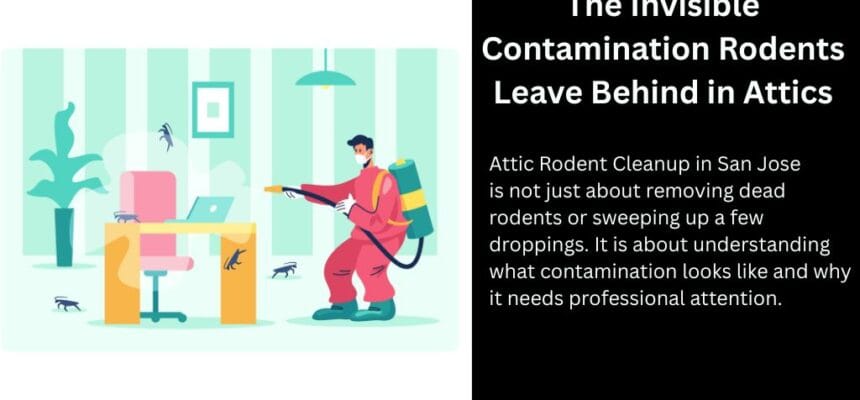

Attic Rodent Cleanup in San Jose is not just about removing dead rodents or sweeping up a few droppings. It is about understanding what contamination looks like and why it needs professional attention.
What Rodents Actually Leave Behind
Rodents do not just pass through an attic. They live there, breed there, and treat the space like their own home. In that time, they leave behind layers of waste that go far beyond what the eye can see.
Rat urine soaks into insulation, wood beams, and drywall. It dries and becomes nearly invisible, but the bacteria and pathogens it carries do not go away on their own. Droppings pile up in corners and along walls, and even when dried out, they can still spread harmful particles when disturbed.
Nesting materials like shredded insulation, paper, and fabric hold moisture and become breeding grounds for mold and bacteria. Also consider the dead rodents themselves, which may be hidden deep inside walls or beneath insulation layers. As they decompose, they attract insects and release gases that affect air quality throughout the house, not just the attic.
The Hidden Health Risks You Cannot See or Smell
This is where things get serious. Many of the diseases carried by rodents spread through the air, not through direct contact. Hantavirus, for example, is a respiratory illness linked to rodent droppings and urine. It spreads when contaminated dust gets stirred up, which can happen easily during cleaning or even just moving things around in the attic. Leptospirosis is another bacterial infection found in rat urine that can survive in damp environments for weeks.
Salmonella is also commonly spread through rodent droppings, and it does not need any visible mess to cause infection. People sometimes fall sick without even realizing the attic above them was the source.
In addition, mold that grows from moisture left behind by nesting materials can trigger allergies, asthma, and respiratory issues, especially in children and older adults.
How Contamination Spreads Through the House
An attic might feel far away, but what happens up there does not stay up there. Air moves through a home constantly. Gaps in the ceiling, recessed lights, HVAC systems, and attic vents all allow air, and whatever is in it, to circulate downward into living spaces. So the contamination sitting in your attic insulation can quietly make its way into bedrooms, kitchens, and common areas.
HVAC systems are a major concern. Rodents often nest near ductwork because it is warm. Their droppings and urine can enter the duct system and then get pushed through vents every time the heat or air conditioning runs. This means the contamination is not limited to the attic; it is actively being distributed throughout the home.
Why Standard Cleaning Is Not Enough
Many homeowners assume that removing droppings with a vacuum or wiping surfaces down is enough. Unfortunately, that approach can make things worse. A regular vacuum without a HEPA filter releases contaminated particles back into the air. Sweeping dried droppings spreads dust that carries bacteria and viruses.
Proper cleanup requires:
Protective gear, including gloves, masks, and full-body suits
HEPA-filter vacuums designed for hazardous materials
Enzyme-based disinfectants that break down biological waste
Safe removal and replacement of contaminated insulation
Sealing all entry points to prevent re-entry
Each of these steps matters. Skipping even one can leave hidden contamination in place, which continues to pose risks long after the rodents are gone.
The Damage to Insulation and Structural Materials
Insulation is one of the biggest casualties of a rodent infestation. Rats and mice shred it for nesting, urinate on it constantly, and press it down so it loses its ability to insulate properly. Over time, energy bills go up because the home loses heating and cooling efficiency. What started as a pest problem quietly becomes an expense problem.
Wood beams and structural materials can also absorb urine over time. In severe cases, this leads to rot and weakening of the structure. It also creates a smell that lingers for years if not properly treated. For example, a homeowner might notice a persistent musty odor without knowing that contaminated insulation above them is the cause.
When to Call a Professional
Timing matters a lot when it comes to attic contamination. The longer the waste sits, the deeper it penetrates into materials, and the harder it becomes to fully remove. If you have confirmed or suspected rodent activity in your attic, getting a professional inspection right away is the smart move.
Rat Removal Services Near You specialize in more than trapping. They assess the full scope of the contamination, recommend appropriate cleanup methods, and help restore the attic to a safe condition. They also identify and seal the entry points rodents use, which stops the problem from coming back.
Protect Your Home Before It Gets Worse
Rodent contamination is one of those problems that gets quieter but more serious over time. The scratching stops, life goes back to normal, and the attic gets forgotten. But up there, the invisible contamination keeps doing damage to the air, to the structure, and potentially to the health of everyone in the house.
Attic Rodent Cleanup in San Jose done the right way means treating the space thoroughly, replacing what cannot be saved, and making sure the home is genuinely safe again. Do not wait for symptoms to show up before taking action. The best time to clean up and protect your attic is right now, before the invisible becomes undeniable.