

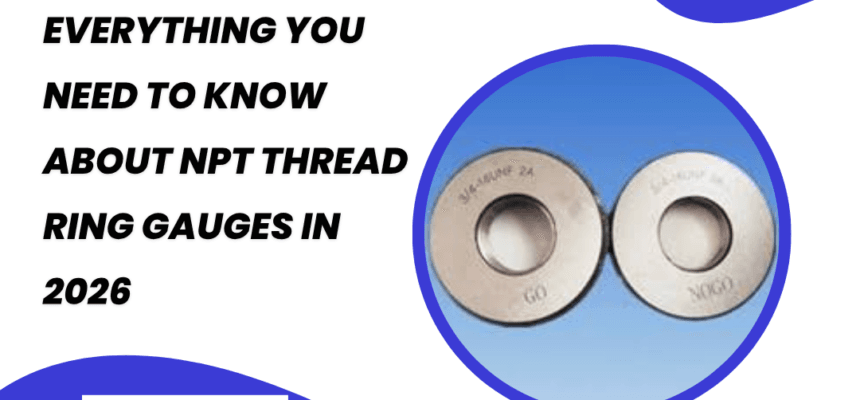

In today’s precision-driven manufacturing environment, accuracy is not just a requirement—it’s a necessity. Among the many tools that ensure dimensional integrity and compliance, NPT thread ring gauges play a crucial role in verifying tapered pipe threads. As we move through 2026, advancements in quality control standards, automation, and calibration practices have made these gauges more relevant than ever.
- What Is an NPT Thread Ring Gauge?
- Why NPT Thread Ring Gauges Matter in 2026
- Types of NPT Thread Ring Gauges
- 1. Standard NPT Thread Ring Gauges
- 2. NPTF (Dryseal) Thread Ring Gauges
- 3. Adjustable Thread Ring Gauges
- 4. Wear Check Gauges
- Applications Across Industries
- Standards and Specifications
- How to Use an NPT Thread Ring Gauge
- Calibration and Maintenance
- Common Mistakes to Avoid
- Innovations in Thread Gauging (2026 Trends)
- Choosing the Right NPT Thread Ring Gauge
- Conclusion
This comprehensive guide will walk you through everything you need to know about NPT thread ring gauges, including their purpose, types, applications, standards, and best practices for use and maintenance.
What Is an NPT Thread Ring Gauge?
An NPT (National Pipe Taper) thread ring gauge is a precision measuring tool used to inspect the external threads of tapered pipe fittings. These gauges are designed to ensure that threaded components meet specific dimensional and tolerance requirements as defined by industry standards.
Unlike straight threads, NPT threads are tapered, which means the diameter decreases along the length of the thread. This taper creates a tight seal when mated with internal threads, making them widely used in applications involving fluid or gas transfer.
Thread ring gauges are typically used as “GO” and “NO-GO” gauges:
- GO Gauge: Confirms that the thread fits within acceptable limits.
- NO-GO Gauge: Ensures the thread does not exceed maximum tolerance.
Why NPT Thread Ring Gauges Matter in 2026
With industries such as oil & gas, plumbing, aerospace, and manufacturing demanding higher precision and compliance, the role of thread gauging tools has become increasingly critical. In 2026, several factors highlight their importance:
- Stricter Quality Standards: Global manufacturing standards continue to tighten, requiring more accurate inspection tools.
- Automation Integration: Modern production lines increasingly integrate gauging systems for real-time quality checks.
- Reduced Failure Rates: Proper thread inspection minimizes leakage, equipment failure, and costly downtime.
- Global Trade Compliance: Export-oriented industries must meet international specifications consistently.
Types of NPT Thread Ring Gauges
Understanding the different types of NPT thread ring gauges is essential for selecting the right tool:
1. Standard NPT Thread Ring Gauges
These are used for general-purpose inspection of tapered threads and conform to standard specifications.
2. NPTF (Dryseal) Thread Ring Gauges
Designed for dryseal applications, these gauges ensure a tighter, leak-proof seal without the need for sealants.
3. Adjustable Thread Ring Gauges
These allow for minor adjustments and are often used for calibration or extended usability.
4. Wear Check Gauges
Used to verify whether a working gauge has worn beyond acceptable limits.
Applications Across Industries
NPT thread ring gauges are indispensable across a wide range of industries:
- Oil & Gas: Ensuring leak-proof connections in pipelines and drilling equipment.
- Automotive: Inspecting threaded components in engines and fluid systems.
- Aerospace: Maintaining high precision in critical systems.
- Plumbing & HVAC: Verifying fittings used in water and gas systems.
- Manufacturing: General quality control in machining and fabrication.
Standards and Specifications
To ensure consistency and reliability, NPT thread ring gauges are manufactured according to recognized standards:
- ANSI/ASME B1.20.1: Governs the dimensions and tolerances for NPT threads.
- ISO Standards: Used for international compatibility in certain applications.
- API Standards: Relevant in oil and gas industries.
Adhering to these standards ensures that threaded components fit properly and function safely under operational conditions.
How to Use an NPT Thread Ring Gauge
Using a thread ring gauge correctly is essential for accurate results. Here’s a step-by-step overview:
- Clean the Threads: Remove any debris, तेल (oil), or contaminants.
- Align Properly: Ensure the gauge is aligned with the thread axis.
- Apply by Hand: Do not force the gauge; it should screw on smoothly.
- Check Engagement: The GO gauge should engage fully within limits, while the NO-GO gauge should not.
- Record Results: Document measurements for quality control and traceability.
Calibration and Maintenance
In 2026, calibration practices have become more advanced, often involving digital tracking and automated systems. However, the fundamentals remain the same:
Calibration Tips
- Calibrate gauges periodically based on usage frequency.
- Use certified master gauges for comparison.
- Maintain calibration records for audits and compliance.
Maintenance Best Practices
- Store gauges in protective cases to prevent damage.
- Avoid exposure to moisture and extreme temperatures.
- Clean after each use to prevent buildup.
- Inspect regularly for wear and tear.
Common Mistakes to Avoid
Even experienced professionals can make errors when using thread ring gauges. Here are some common pitfalls:
- Forcing the Gauge: This can damage both the gauge and the thread.
- Ignoring Calibration: Leads to inaccurate measurements.
- Using Worn Gauges: Compromises inspection reliability.
- Improper Storage: Causes corrosion and dimensional changes.
Innovations in Thread Gauging (2026 Trends)
The field of metrology continues to evolve, and thread gauging is no exception. Some key trends include:
- Digital Gauging Systems: Integration with software for real-time data analysis.
- Smart Calibration Tracking: IoT-enabled devices that monitor usage and calibration schedules.
- Advanced Materials: Improved durability and resistance to wear.
- Automation Compatibility: Gauges designed for robotic inspection systems.
These innovations are helping manufacturers improve efficiency, reduce human error, and maintain consistent quality.
Choosing the Right NPT Thread Ring Gauge
Selecting the correct gauge depends on several factors:
- Thread Size and Pitch
- Application Requirements
- Industry Standards
- Frequency of Use
- Budget and Longevity
Working with a trusted supplier like Gaugestools ensures that you receive high-quality, certified gauges tailored to your needs.
Conclusion
NPT thread ring gauges remain a cornerstone of precision measurement in 2026. As industries continue to demand higher accuracy, reliability, and compliance, these tools play a vital role in maintaining quality standards across applications. From understanding their types and uses to adopting best practices in calibration and maintenance, investing in the right thread gauging solutions can significantly impact your operational efficiency and product reliability.
Whether you are in manufacturing, oil & gas, or any field that relies on threaded connections, staying informed about the latest developments in NPT thread ring gauges will help you stay ahead in a competitive landscape. For high-quality gauging solutions and expert support, Gaugestools continues to be a trusted name in the industry.