

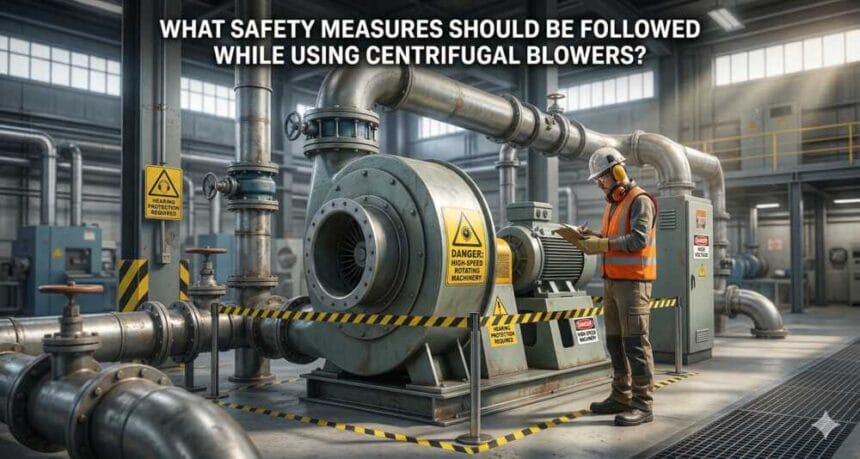

Key Takeaways
• Always inspect centrifugal blowers before starting operation
• Install protective guards around moving components
• Follow proper electrical safety procedures
• Operate the blower within recommended speed limits
• Keep air passages and ducts clear for smooth airflow
• Monitor vibration noise and unusual performance changes
• Maintain regular cleaning and maintenance schedules
• Lubricate bearings properly to prevent overheating
• Train operators on safe equipment handling
• Use monitoring systems to detect issues early
- Key Takeaways
- People often ask questions like –
- How do they work?
- Why Safety Measures For Centrifugal Blowers Matter In Daily Operations?
- Essential Safety Measures To Follow When Using Centrifugal Blowers
- Always Inspect The Blower Before Starting
- Ensure Proper Guarding Around Moving Parts
- Follow Correct Electrical Safety Procedures
- Avoid Operating The Blower At Excessive Speed
- Maintain Proper Airflow & Ventilation
- Final Words
Have you ever wondered why safety guidelines are so important when working with heavy centrifugal blowers?
Many industries rely on centrifugal blowers for ventilation dust control cooling and air movement. These machines move large volumes of air with strong pressure.
But the thing is any equipment that operates at high speed and pressure can become risky if it is not handled carefully.
People often ask questions like –
What safety precautions are needed for centrifugal blowers. How can workers avoid accidents while operating blowers. What should be checked before starting a blower system. Why do maintenance teams follow strict safety rules around industrial blowers.
How do they work?
Centrifugal blowers work by using a rotating impeller that pulls air into the unit and pushes it outward through ducts. This simple concept hides powerful mechanical movement inside the machine. When the blower runs it creates high airflow strong rotation and continuous vibration.
Because of this, operators must follow certain safety measures to avoid injuries equipment damage or system failure.
Why Safety Measures For Centrifugal Blowers Matter In Daily Operations?
If you work in a factory plant warehouse or industrial environment centrifugal blowers may already be part of your daily operations. Even if you are not directly operating the equipment you may still work around it.
For you this means safer work conditions fewer breakdowns and better equipment life. Simple precautions can prevent costly repairs and ensure the system keeps running smoothly.
Essential Safety Measures To Follow When Using Centrifugal Blowers
Always Inspect The Blower Before Starting
A quick inspection before starting the blower can prevent many problems.
Operators should check whether the impeller housing and duct connections are secure. Loose bolts or misaligned components can cause strong vibration when the blower starts running. Vibration can damage bearings and other moving parts.
You should also look for any visible wear cracks or dust buildup around the blower system. A simple visual inspection often reveals issues early.
Ensure Proper Guarding Around Moving Parts
These contain rotating parts that move at very high speed.
If these parts remain exposed, they can become dangerous for workers standing nearby. Safety guards and protective covers prevent accidental contact with rotating components.
You should never operate the blower if protective guards are missing or removed. Proper guarding creates a safer work environment for everyone around the equipment.
Follow Correct Electrical Safety Procedures
Blowers operate using powerful electric motors. Electrical safety is therefore very important.
Before operating the system ensure wiring connections are secure and the control panel is functioning properly. Damaged cables or loose connections can cause electrical faults or short circuits.
Maintenance teams should also follow lockout and isolation procedures before working on the equipment.
Avoid Operating The Blower At Excessive Speed
Running a centrifugal blower beyond its recommended speed can cause serious damage.
High speed increases stress on the impeller bearings and motor. Over time this may lead to overheating imbalance or mechanical failure.
Always follow the manufacturer’s operating guidelines and keep the blower within its safe operating range.
Maintain Proper Airflow & Ventilation
Blowers need proper airflow to operate safely.
If the inlet or outlet ducts become blocked the blower will struggle to push air through the system. This can increase internal pressure and temperature inside the machine.
Regularly checking air passages filters and ducts helps maintain smooth airflow and prevents system overload.
Final Words
Centrifugal blowers and axial flow fans play an important role in many industrial processes. They help move air control dust support ventilation and maintain safe working environments. But because these machines operate with high speed and pressure they must always be handled carefully. When safety becomes part of daily operation centrifugal blowers work efficiently reliably and safely for a long time.
FAQS
What basic safety checks should be done before starting a centrifugal blower?
Before starting the blower check loose bolts guards power connections and ensure the air path is clear.
Why is it important to install proper guards on centrifugal blowers?
Safety guards protect workers from rotating parts and prevent accidental contact that can cause serious injury.
How can workers protect themselves while operating centrifugal blowers?
Workers should wear safety gloves ear protection and proper clothing to reduce risk from noise vibration and moving parts.
What should be done if a centrifugal blower starts making unusual noise?
Stop the blower immediately and inspect for loose parts imbalance or damage before restarting the machine.
Why is regular maintenance important for centrifugal blower safety?
Regular maintenance keeps parts in good condition and reduces the risk of sudden failure or dangerous breakdown.
How important is proper ventilation around centrifugal blowers?
Proper ventilation prevents overheating and allows the blower motor and components to work safely for longer time.
What electrical safety measures should be followed with centrifugal blowers?
Ensure proper grounding use correct wiring and avoid operating the blower with damaged electrical connections.
Why should only trained people operate centrifugal blowers?
Trained operators understand machine controls risks and correct handling which helps prevent accidents and equipment damage.
How can dust and debris affect centrifugal blower safety?
Dust buildup can block airflow increase pressure and create fire risk if not cleaned regularly.